11 Ekim 2026
açık


Waves of anti-immigrant unrest in South Africa ignite fires, looting and violence, displacing communities and prompting urgent security and humanitarian responses.
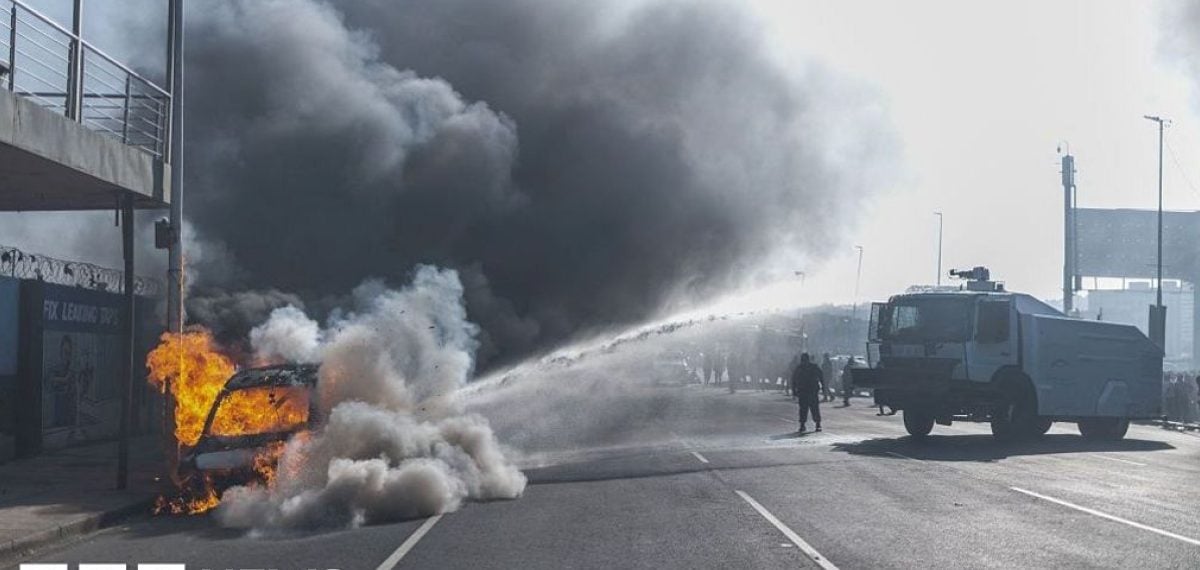
Widespread anti-immigrant demonstrations in South Africa escalated into violent episodes in two major urban centres this week, leaving dozens of vehicles destroyed and numerous foreign-owned businesses looted. Protests flared in Soweto, near Johannesburg, and in Durban, a key eastern port city, as tensions around asylum policies boiled over.
Authorities linked the unrest to public anger over a recent Constitutional Court ruling that removed previous barriers blocking some migrants from applying for asylum. Demonstrators said they feared the change would lead to a surge in undocumented migration, while officials warned that misinformation had intensified hostilities.
In Durban, clashes reportedly began after allegations that a foreign national assaulted a protester. Police detained three foreign nationals in connection with that incident. Crowds gathered outside a refugee reception centre demanding it stop accepting asylum claims; police used rubber bullets to break up the demonstrations and businesses in the city centre temporarily closed.
Police confirmed that 14 vehicles were torched in Durban, while Soweto saw 10 vehicles set alight. In Soweto’s Orlando West neighbourhood, residents initially convened to demand the closure of small convenience stores, known locally as spaza shops, run by foreign nationals. Some foreign traders were forced to flee certain areas as shops were attacked and at least one building was set on fire.
Acting national police commissioner Lt Gen Puleng Dimpane condemned the destruction and said reinforcements were deployed to curb further violence. Authorities have pledged to identify and prosecute those responsible for the arson and looting.
The unrest was fuelled by a July Constitutional Court decision that struck down rules preventing some people from lodging asylum claims because of how they entered the country or missed filing deadlines. As a result, officials say individuals must be allowed to submit asylum applications regardless of their entry status, though each claim will still undergo individual assessment and immigration checks.
Government spokesman William Baloyi stressed that the ruling does not automatically confer refugee status or permanent residency. He also said that deliberate misinformation had circulated, creating the false impression that undocumented migrants would automatically gain legal status.
Earlier this year, anti-immigration protests pressured undocumented foreigners to leave by a government-imposed deadline, prompting mass displacement and repatriation efforts. South Africa has faced recurrent xenophobic violence for nearly two decades, including deadly attacks in 2008 that left more than 60 people dead and thousands displaced.
The latest incidents occur against a wider backdrop of persistent poverty, deep inequality and high unemployment—factors that often amplify fears about job competition and strain on public services. While migrants are frequently blamed for economic and social problems, researchers caution that such broad claims are not borne out by evidence.
Despite economic challenges, South Africa remains a principal destination for migrants across the continent seeking employment, safety and better prospects. Officials say asylum applications will continue to be processed on a case-by-case basis as part of ongoing immigration procedures.
Go to BBCAfrica.com for more news from the African continent. Follow us on Twitter @BBCAfrica, on Facebook at BBC Africa or on Instagram at bbcafrica.