04 Ekim 2026
az bulutlu


MHP Chairman Devlet Bahçeli said Türkiye has faced significant economic costs due to terrorism, wars, earthquakes and economic sanctions, offering a comprehensive assessment of the economy, corruption allegations involving municipalities and the ongoing fund investigation. Bahçeli said public losses must be identified, confidence in financial markets must be protected and oversight mechanisms must be strengthened. Emphasizing justice, an independent judiciary, ethics and accountability, Bahçeli called for the implementation of the goal of “clean politics, clean governance and a prosperous society.”
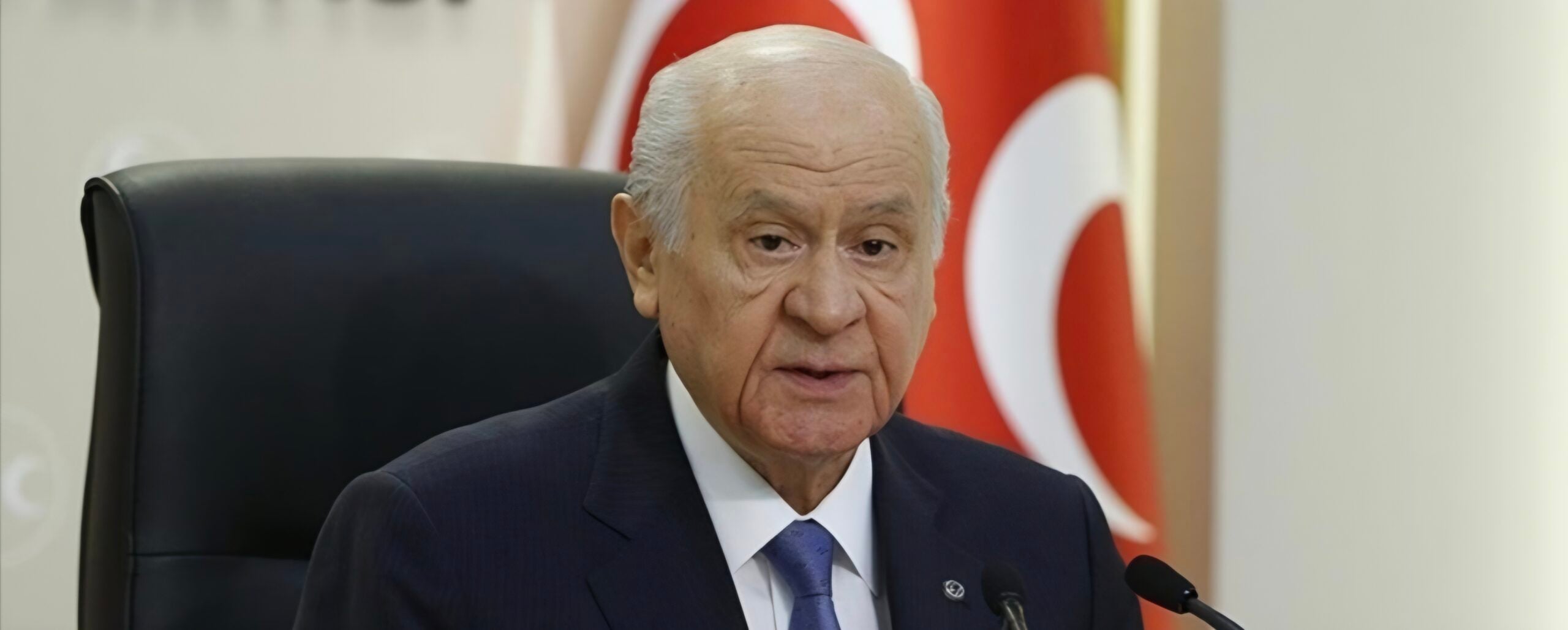
MHP Chairman Devlet Bahçeli said Türkiye has faced significant economic costs in recent years due to terrorism, wars, earthquakes, economic sanctions and geopolitical risks, arguing that the country has nevertheless built a strong economic structure. In his statement, Bahçeli focused on corruption investigations involving municipalities and recent developments in financial markets, emphasizing the importance of the rule of law, oversight, public trust and ethical governance.
In his written statement, Bahçeli said Türkiye’s recent history had been shaped by major challenges, including terrorism, economic sanctions, the July 15 coup attempt, the February 6 earthquakes, the U.S./Israeli-Iran war, the Russia-Ukraine war, the conflict in Syria, migration and various geopolitical risks, all of which have had significant economic consequences.
Bahçeli cited President Recep Tayyip Erdoğan’s assessment that the economic cost of the PKK’s terrorism to Türkiye amounted to $2.3 trillion. He also referred to a TASAV study estimating the cost between 1984 and 2024 at $2.17 trillion. Bahçeli added that the economic cost of the February 6 earthquakes exceeded $110 billion.
He said wars have affected numerous strategic products, ranging from energy and fertilizer to raw materials used in semiconductor production. According to Bahçeli, disruptions in global supply chains have tightened financial conditions and negatively affected the foreign trade balance. He also argued that Türkiye managed the pandemic without leaving citizens unprotected and said international sanctions had negatively affected trade as well as economic and social policies.
Despite these challenges, Bahçeli said Türkiye had increased its national income to $1.7 trillion and per-capita national income to $18,000. He argued that the country has a strong economic structure characterized by low unemployment, high export capacity, a sustainable current-account balance, sound debt management and budget discipline. He also described the banking and capital markets as secure and stable, while acknowledging that retirees, farmers, tradespeople and workers continue to face problems that need to be addressed.
A significant portion of Bahçeli’s statement focused on corruption allegations involving municipalities. He said corruption, bribery and irregularity allegations that began with the Istanbul Metropolitan Municipality had extended to municipalities in other parts of the country. Bahçeli stated that numerous municipalities had faced investigations over allegations including bribery, abuse of office, bid rigging and organized corruption over the past two years.
Bahçeli noted that judicial proceedings were still ongoing and said the allegations, testimonies and public statements emerging from the investigations indicated that the scale of the cases required serious attention. Describing municipalities as a public trust rather than merely political power centers, he said those responsible for managing them must fully assume their legal and ethical responsibilities.
He argued that conflicts of interest involving tenders, zoning, permits, real estate, municipal subsidiaries, personnel and public spending should be assessed not only from the perspective of criminal law but also in terms of ethics and governance. Bahçeli called for public losses to be clearly established through judicial decisions and findings by the Court of Accounts and other relevant oversight bodies. He also argued that public funds lost through corruption should be recovered and redirected toward retirees and citizens living on low or fixed incomes.
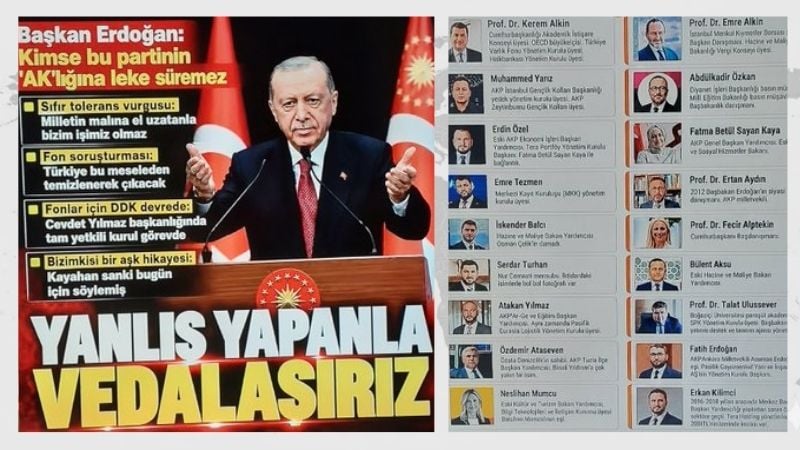
Bahçeli also devoted considerable attention to the recent fund investigation. He said developments in the investigation pointed to allegations that a limited group had violated the law and manipulated financial markets. He stated that announcements by state institutions indicated that steps had been taken to identify those responsible and establish a roadmap for addressing the grievances of those who may have suffered losses.
Emphasizing that economic stability in Türkiye depends heavily on financial stability, Bahçeli said trust is the foundation of the financial system. He noted that when citizens invest their savings in banks or capital-market instruments, they are not merely investing in a financial product but are also placing confidence in the institutions responsible for managing and supervising the financial system.
Bahçeli argued that the consequences of alleged market manipulation would not be limited to investors who directly lose money. A loss of confidence, he said, could affect the broader financial markets, relevant institutions and the economy as a whole.
He said citizens living under high inflation naturally seek ways to protect the purchasing power of their savings. Bahçeli argued that the question of whether effective mechanisms exist to safeguard those savings could transform the issue from a purely economic matter into a broader problem concerning the system, governance and social trust.
Bahçeli said taking investment risks is a legitimate choice for investors, but emphasized that authorities must determine whether unlawful practices such as market manipulation, information leaks, fraudulent transactions or abuse of trust occurred during the management of the funds.
He argued that Türkiye’s fundamental problem appears to lie less in the absence of rules than in their implementation, pointing to weaknesses and deficiencies in supervision and oversight.
Bahçeli stressed that allegations involving municipalities and developments in the fund market should be evaluated separately.
He claimed that statements and allegations made public in connection with municipalities pointed to an open system of corruption and bribery, while describing fund-market transactions as voluntary investments, subject to the separate question of whether manipulation occurred.
Bahçeli said he was neither attempting to compare different corruption cases nor seeking to absolve anyone. He warned political actors against attempting to redirect public attention or use the fund investigation to conceal alleged unlawful practices in municipalities.
He also argued that politics should not be conducted according to an approach in which the country’s interests are sacrificed merely for the sake of removing the government from power. According to Bahçeli, every political party should act as a party of Türkiye and place the country first.
He warned that allegations of corruption, irregularities and favoritism should not be allowed to deepen a broader crisis of public confidence or create a perception of institutional decay. Instead, he said such developments should be treated as an opportunity for institutional cleansing and for addressing the structural causes behind the problems.
Bahçeli placed significant emphasis on law and justice, describing justice as the foundation of the state and the safeguard of fundamental rights and freedoms. He stressed the importance of fully implementing the principles of an impartial and independent judiciary.
He said corruption, bribery, plunder and favoritism must not be tolerated and argued that those who commit such offenses should face the strongest penalties permitted under the law.
In the final section of his statement, Bahçeli referred to the ideas of economist and thinker Prof. Dr. Sabri Ülgener concerning the relationship between social mentality, morality and economic life. He argued that justice and morality are interconnected and that the relationship between individuals, society and politics should be built on a strong ethical foundation.
Bahçeli stated that a state whose moral foundations have deteriorated would ultimately see its system of justice weakened as well.
He concluded his statement by calling for the principles of morality, justice, merit, fairness and accountability to be transformed into a concrete program of intellectual and ethical reform centered on the goal of establishing “clean politics, clean governance and a prosperous society.”
Bahçeli’s statement brings economic vulnerabilities, institutional trust and legal accountability to the forefront of Türkiye’s political and economic agenda. His remarks emphasize the need to determine the extent of alleged corruption investigations involving municipalities, protect public resources and establish the financial scale of any potential public losses.
His comments on the fund investigation also draw attention to weaknesses in the supervision of financial markets and underline the importance of restoring investor confidence through legal and administrative measures.
At the same time, Bahçeli highlighted what he described as economic progress despite the external shocks Türkiye has experienced, while acknowledging the continuing difficulties faced by various segments of society. His statement therefore combines a defense of the country’s economic resilience with calls for stronger oversight, accountability and institutional reform.