21 Eylül 2026
açık


Philippines denounces China Daily’s AI ‘monkey’ clip as racist propaganda, calling for accountability and respectful media standards.
The Philippines called out an AI-generated video posted by China Daily on 10 July as “dehumanising and racist”, saying the clip distorts its stance in the South China Sea and demanded its removal while reiterating longstanding diplomatic protests against Beijing’s maritime actions.
The video depicts a monkey wearing a Filipino shirt being shoved by hands bearing US and Japanese flags onto a rickety karaoke stage on a boat, then displaying a sheet reading “South China Sea arbitration award” before being flung into the sea and hit by a water cannon. Manila’s foreign ministry said such imagery “has no place in the civil public discourse of a responsible state.”
Defence Secretary Gilbert Teodoro described the clip as “contemptible propaganda” that reveals the “moral and intellectual bankruptcy of China’s propaganda machine.” The clip remained on China Daily’s Facebook page at the time of reporting.
The incident resurfaces tensions rooted in overlapping territorial claims around the Spratly Islands and Scarborough Shoal (Huangyan Island), located roughly 160 km from the Philippines and 500 miles from China. The dispute has produced recurring stand-offs and occasional violent encounters between Philippine and Chinese vessels.
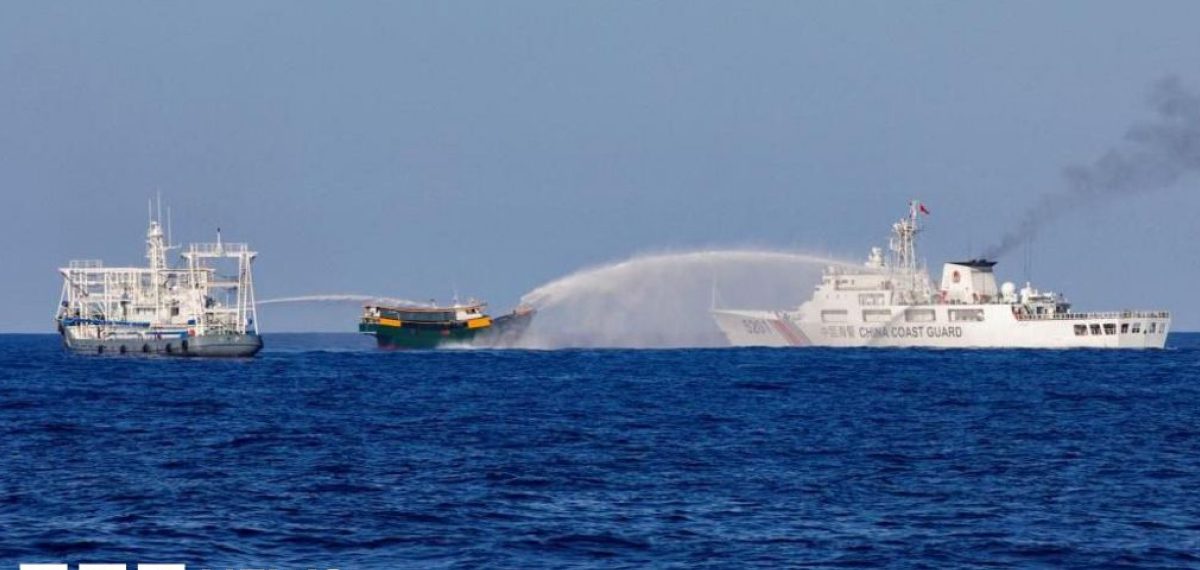
Manila noted repeated use of high-pressure water cannons by the Chinese Coast Guard against Philippine boats, incidents that have caused damage and injuries. The episode comes a decade after the Permanent Court of Arbitration in The Hague ruled in favor of the Philippines, declaring China’s expansive claims void under international law—an award Beijing rejects as lacking jurisdiction.
Recent months have seen stepped-up frictions: Beijing installed a temporary floating barrier at Scarborough Shoal in June that was later removed after Philippine diplomatic protests, and China barred Defence Secretary Teodoro and his immediate family from entering mainland China, Hong Kong and Macau.
The propaganda clip amplifies a cycle of symbolic escalation that deepens mistrust without resolving core legal and maritime issues. For Manila, portraying the Philippines as a pawn or caricature undermines diplomatic channels and hardens domestic public opinion in favor of firm pushback; for Beijing, such messaging projects deterrence to both regional audiences and domestic viewers.
Economically, continued maritime confrontations risk disrupting fishing livelihoods and regional supply chains if incidents escalate; politically, repetitive provocations and inflammatory media increase pressure on both governments to adopt clearer, potentially riskier policies rather than negotiated de-escalation.
In short, the episode is not merely an offensive post on social media but part of a broader information campaign that can shape regional perceptions and influence state behavior at sea.