03 Kasım 2026
gök gürültülü yağmurlu


Kenya reports a second Ebola death as authorities scramble to contain cross-border cases and accelerate emergency response.

Kenya has recorded a second fatality linked to Ebola amid its first-ever outbreak of the virus. The 65-year-old woman, a close family contact of the initial victim who had recently travelled from the Democratic Republic of Congo (DRC), died while under quarantine, the health ministry reported. Seven other patients remain under treatment across two isolation centres, and authorities say all infections belong to a single cluster with no current evidence of community transmission.
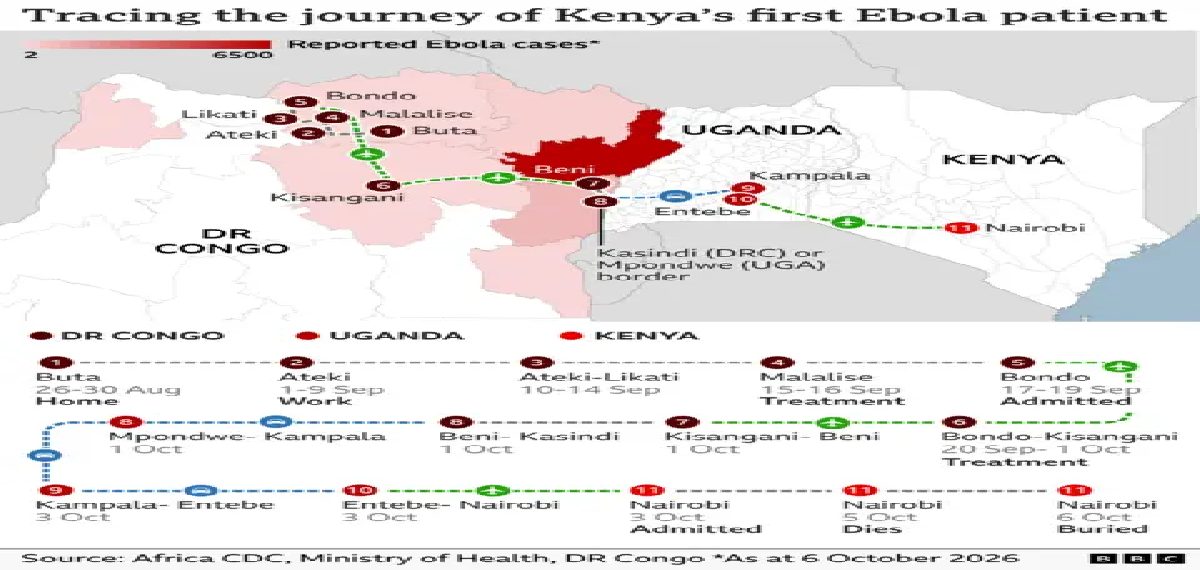
Health officials note that the second victim developed symptoms on 13 October while already in quarantine as a direct contact of the first deceased patient, who died in Nairobi in early October after falling ill in September in the DRC. The earlier death involved a man who had been treated in several hospitals in the DRC before arriving in Kenya.
Of those receiving care, three are family members of the index case, three are health workers and one is a hospital cleaner. In response to the incident, Kenya has strengthened entry screening for travellers from the DRC and nine additional countries deemed high-risk: Uganda, Tanzania, Rwanda, Burundi, Angola, Zambia, Ethiopia, South Sudan and the Central African Republic.
Arrivals from these nations must complete a digital surveillance form before boarding and present a QR code to port health officials on arrival. Kenyan authorities have also intensified public health screening of incoming aircraft from the listed countries to reduce the risk of further imported infections.
The government is disseminating targeted public messages urging people to report suspected cases promptly and to seek hospital care. Hygiene and protective behaviours — such as regular handwashing and avoiding close contact with the ill — are being emphasised to lower transmission risk.
Ebola is a severe viral illness that can cause vomiting, diarrhoea and, in some patients, internal or external bleeding and multi-organ failure. The virus transmits via contact with infected bodily fluids, including blood and vomit. The Bundibugyo species detected in these cases is relatively uncommon and, currently, has no approved vaccine or specific treatment, although clinical trials are ongoing.
With the DRC reporting more than 9,500 cases and over 4,000 deaths since May, organisations such as the International Rescue Committee warn Kenya remains at steady risk of imported cases across porous borders. The United States has advised its citizens to avoid non-essential travel to Kenya, and neighbouring countries — including Uganda, Ethiopia and Somalia — remain on alert.
In a related development, Nigeria has reported a single confirmed Ebola case that appears genetically linked to a strain identified earlier in Kenya. Nigeria’s health minister, Professor Ali Pate, said there is currently no clear evidence the Kenyan patient travelled to Nigeria, and further testing and epidemiological investigations are ongoing. Officials are examining whether both patients may have passed through Uganda’s Entebbe International Airport in the same timeframe.
Authorities continue to monitor contacts closely, expand screening and share public guidance as they work to prevent community spread.