02 Kasım 2026
parçalı bulutlu


Swiss foreign minister resumes direct talks with North Korea, aiming to ease tensions and revive diplomatic channels for dialogue and stability.
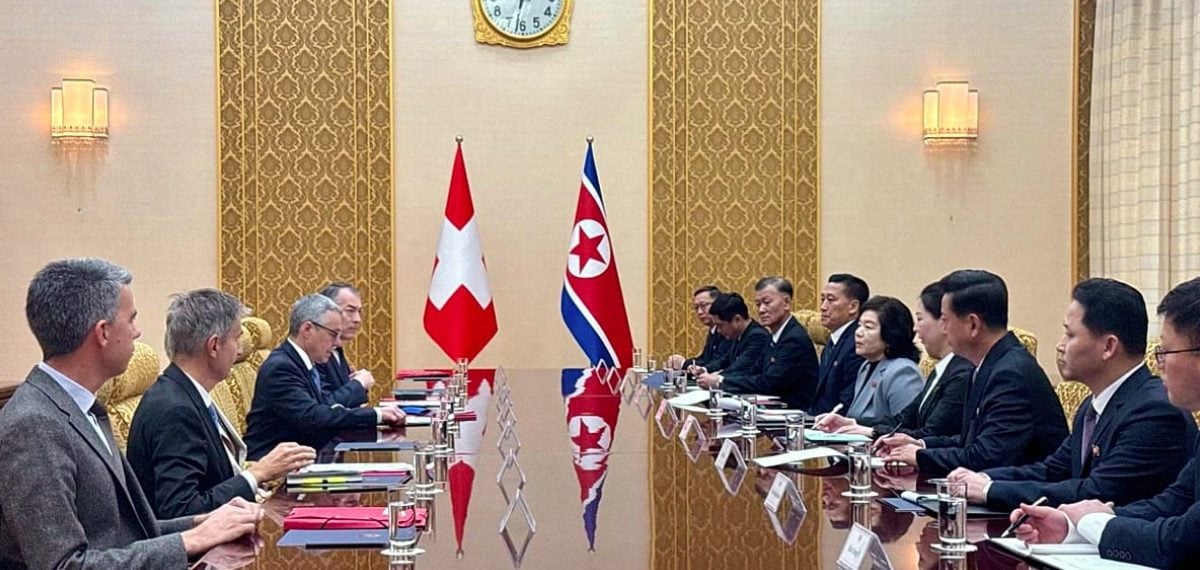
Swiss Foreign Minister Ignazio Cassis visited Pyongyang on 29 and 30 October and reopened Switzerland’s diplomatic office in North Korea, which resumed operations on 19 October under the authority of the Swiss embassy in Beijing.
During the visit Cassis met North Korean Foreign Minister Choe Son Hui and Jo Yong Won, secretary of the ruling Workers’ Party’s Central Committee, to discuss restoring political dialogue, security on the Korean Peninsula and wider security challenges in Europe and Asia.
Switzerland’s previous office in Pyongyang, which handled humanitarian cooperation, closed in 2020 during the COVID-19 pandemic, while diplomatic relations between the two countries have existed since 1974 with regular political consultations having stopped after 2019.
Cassis told the Swiss news agency Keystone-ATS that he offered Switzerland’s help in facilitating dialogue to ease tensions on the peninsula, and a Swiss foreign ministry statement said the office would allow Switzerland to deal directly with North Korean authorities and follow developments in the region.
North Korea’s state news agency KCNA reported that discussions took place in a friendly atmosphere but provided no detailed account. A Swiss foreign ministry spokesperson declined further comment beyond the statement when asked about wider European dialogue.
Following Pyongyang, Cassis travelled to Seoul on 30 and 31 October where he met National Security Adviser Wi Sung-lac and senior foreign ministry official Jeong Yeon-du and briefed Jeong on his talks in Pyongyang.
Seoul’s foreign ministry said Jeong expressed hope that the Swiss office would help South Korea engage with the North, and South Korea separately reported that Foreign Minister Cho Hyun urged support for inter-Korean dialogue at a G20 meeting in Atlanta.
Amid the visits, South Korea’s military reported North Korea fired around 10 short-range ballistic missiles towards the sea a day after Seoul renewed calls for military talks to prevent accidental border clashes, and Cassis met the head of the Swiss delegation to discuss the security situation related to Switzerland’s role in monitoring the 1953 armistice through the Neutral Nations Supervisory Commission based at Panmunjom.
The reopening of Switzerland’s diplomatic office in Pyongyang and Ignazio Cassis’s visit signal a deliberate Swiss effort to restore direct political channels with North Korea while maintaining diplomatic oversight through the Swiss embassy in Beijing. By meeting senior North Korean officials and offering facilitation for dialogue, Switzerland positions itself as a conduit for communication across the peninsula. The sequence of visits to Pyongyang and Seoul, coupled with South Korea’s response and regional military developments, underscores the office’s potential role in closely following and reporting regional security dynamics.