24 Ağustos 2026
açık


Iranian Parliament Speaker Mohammad Bagher Ghalibaf responds to Donald Trump’s “we hold all the cards” remark. Details of a message that could impact energy and geopolitical balances.
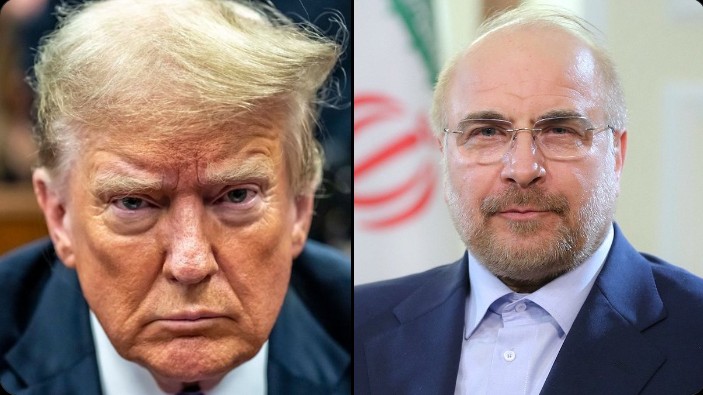
Trump said to Iran: “We hold all the cards.” Iran’s response is brilliant.
Iranian Parliament Speaker Ghalibaf posted a tweet yesterday.
A single analysis inside it explains everything.
Trump had written days earlier:
“We hold all the cards, they have none.”
A response came.
It was short. But it contained a picture Trump did not account for.
I explain…
Trump’s “we hold all the cards” statement was not random.
With this sentence, Trump made three points:
He emphasized that the U.S. has all kinds of pressure tools: sanctions, blockades on ports, military power, allied support.
He claimed Iran has nothing: a weak economy, a constrained military position, and no allies.
Therefore, he implied Iran must come to the table on U.S. terms.
In reality, Trump was addressing two audiences at once.
To the American public: “Don’t worry, we are winning.”
To the Iranian leadership: “Don’t resist, come to the table.”
This sentence was essentially a negotiation-opening move.
Ghalibaf responded in two ways:
First, he accepted the “card game” analogy: “Fine, let’s play cards.”
Second, he listed the cards one by one.
Ghalibaf’s reply to Trump was:
The cards you mentioned are already played cards. The cards we are talking about are still unplayed.
The U.S. has already used three major cards:
These three cards share one thing:
They are largely used up. And they damage the U.S. economy itself.
Iran, however, still holds three major cards:
The common feature of these cards:
None directly hit the U.S., but all of them corner it. And all three remain largely untouched.
Ghalibaf added one more card to the table:
Summer travel season.
In the U.S., summer is the peak gasoline consumption period. Millions of families travel by car, and oil demand peaks.
In short, Ghalibaf is saying: the U.S. has already played its cards, but Iran still holds its hand.
Moreover, the U.S. is using its remaining cards at the cost of its own citizens, while Iran’s potential moves could shake global markets.
One side pays the price internally. The other side exports the cost outward.
Final point:
Trump said in one sentence: “We hold all the cards.”
Ghalibaf revealed the underlying reality in a single tweet.
This is Ghalibaf’s second strategic message.
The first was about the bond markets.
The second is about energy markets.
This is my personal analysis.
What do you think about this issue?
Kaynak: Penguin X @ThePenguinBTC