07 Eylül 2026
açık


Investigation expands into Fontainebleau blaze as authorities probe a volunteer firefighter’s potential involvement; updates on inquiry and evidentiary review.

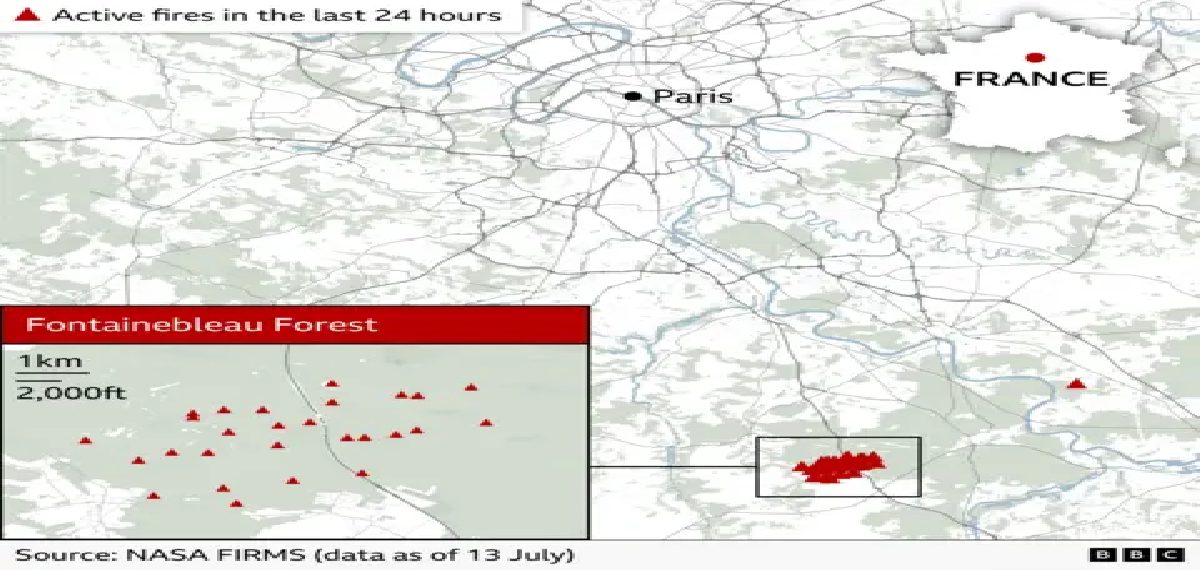
An 18-year-old volunteer firefighter has been placed under formal investigation on suspicion of starting the Fontainebleau forest fire south of Paris, prosecutors said, while authorities continue inquiries into at least six people questioned over the blaze that has scorched more than 2,000 hectares and forced about 1,000 residents to evacuate.
Prosecutor Diane Ngomsik told AFP the suspect initially admitted to “setting fire to twigs with a lighter and petrol” but later retracted the confession; BFMTV reported a second 18-year-old was also formally placed under investigation, a procedural step that can lead to charges and trial.
The fire began last Sunday and, although contained, remains not fully extinguished. The blaze partly closed France’s main north-south motorway and damaged roughly 10% of the UNESCO-listed Fontainebleau forest, home to the Palace and Park of Fontainebleau.
President Emmanuel Macron visited the area and vowed there would be no leniency for arsonists, noting the scale of recent blazes amid a season of exceptional heat across Europe that French authorities say has produced the most fires since World War Two.
France has recorded nearly 11,000 fires this year. The Copernicus climate service highlights that Europe is warming twice as fast as the global average, intensifying summer heatwaves, straining water supplies and increasing wildfire risk.
The investigation into a volunteer firefighter underscores tensions between overstretched emergency services and the social pressures of climate-driven extreme weather. As heatwaves become more frequent, resource allocation for prevention and rapid response faces growing strain, raising policy questions on forest management, volunteer training and accountability procedures.
For local communities and tourism—particularly sites tied to cultural heritage like Fontainebleau—such fires pose economic and reputational risks. Policymakers may need to balance stricter legal deterrents against arson with investments in early detection, public awareness and resilient infrastructure to reduce recurrence.