24 Eylül 2026
açık


Political scientist Prof. Doğu Ergil warned that democracies are often eroded not by coups but by the gradual disappearance of the boundary between the state and political power, emphasizing the importance of the rule of law and institutional neutrality.
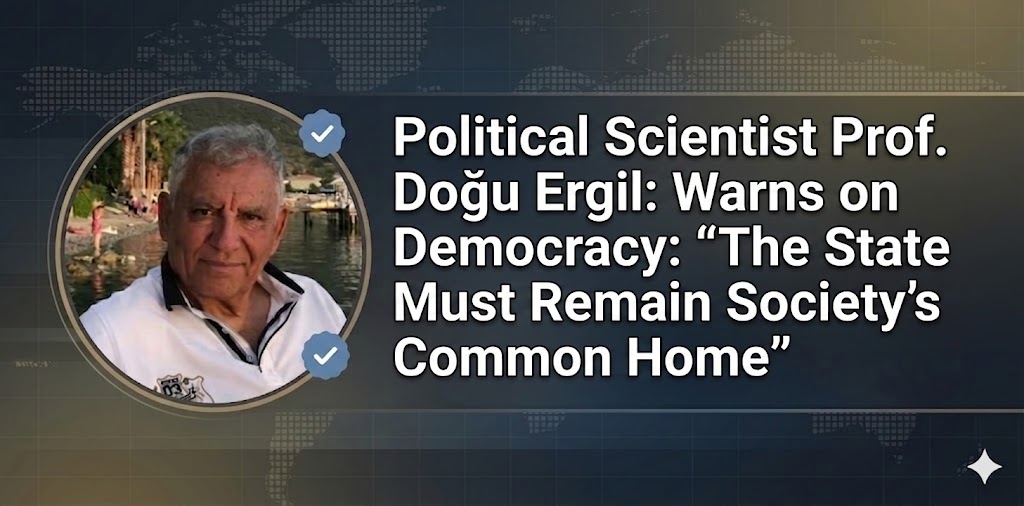
As history has shown, democracies are often eroded not by a coup, but by the gradual blurring of the line between the state and those in power. And when that line disappears, societies face not only poor governance but also the deterioration of public order.
The real danger is that society gradually begins to accept this transformation as normal. Democratic backsliding rarely advances through the overnight disappearance of freedoms; rather, it progresses when citizens become accustomed to injustice, view lawlessness as ordinary, and regard the state’s service to particular interest groups as inevitable.
At that point, the issue is no longer simply who holds power, but the erosion of public morality and civic consciousness. A state’s true strength comes not from the power of its leaders, but from the impartiality of its institutions, its respect for the equality of its citizens, and the equal application of the law to everyone.
For this reason, the struggle for democracy is not merely a struggle to win elections; it is a struggle to rebuild the state as a public trust. This is also the essence of the debate stretching from Hungary to Türkiye: not to capture the state, but to make it once again the common home of society.
Because when the state ceases to be the common property of its citizens and becomes the privilege of a particular group, it is not only the opposition that loses, but society as a whole.