18 Ekim 2026
hafif yağmur


Liberal Party Spokesperson Engin AVCI analyzed the 2025 judicial activity report, highlighting workload, appeal outcomes, and reinstatement case statistics involving courts reviewing State of Emergency Decree Law decisions.
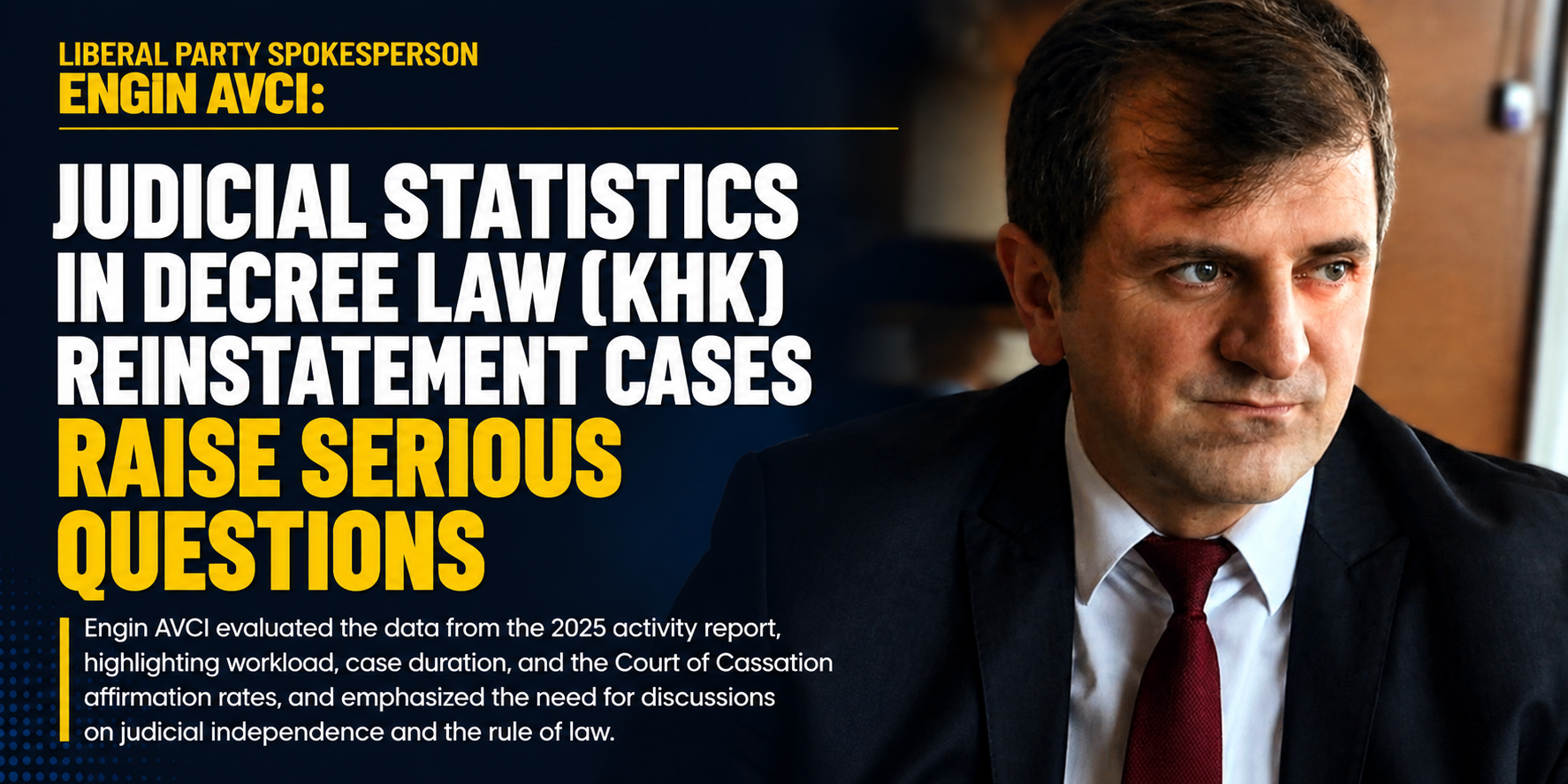
Liberal Party Spokesperson Engin AVCI has evaluated the statistical findings contained in the 2025 Judicial Activity Report regarding reinstatement lawsuits filed against decisions of the State of Emergency Procedures Review Commission. His assessment focused on the workload of the 13th, 14th, and 15th Administrative Litigation Chambers of the Ankara Regional Administrative Court, the duration of proceedings, and the appellate outcomes before the Council of State (Danıştay).
According to AVCI, the report indicates that these three chambers handle the largest volume of reinstatement cases among all administrative litigation chambers. At the same time, the report shows that proceedings before these chambers generally take considerably longer, with many cases reaching a final decision only after two to two and a half years.
Referring to the appellate statistics, AVCI argued that most rejection decisions are upheld by the Council of State, while a significant portion of the comparatively few reinstatement rulings are overturned on appeal. He stated that this statistical pattern raises important legal questions regarding the direction and scope of appellate review.
AVCI included the following remarks in his statement:
“An examination of the statistics contained in the 2025 Annual Activity Report shows that the 13th, 14th, and 15th Administrative Litigation Chambers of the Ankara Regional Administrative Court, which are responsible for hearing reinstatement lawsuits filed against the decisions of the State of Emergency (OHAL) Procedures Review Commission, carry by far the heaviest caseload compared with the other administrative litigation chambers. The same report also reveals that the average time required to conclude cases in these chambers is significantly longer than in the other chambers, with many cases being resolved only after two to two and a half years.
Despite this, the overwhelming majority of the decisions issued by these chambers are upheld by the Council of State, while reversal decisions remain extremely limited. The report further indicates that the affirmation rates of the 13th, 14th, and 15th Chambers are remarkably higher than those of the other administrative litigation chambers. By contrast, reversal rates in the remaining chambers are considerably higher. This suggests that the judicial approach adopted by these chambers in KHK-related cases has remained consistent over many years.
Another notable aspect of the statistics is that even the already limited number of reinstatement decisions issued by these chambers are, to a significant extent, overturned by the Council of State, whereas rejection decisions are largely upheld and become final. Taken together, the data suggest that appellate review effectively preserves rejection decisions while eliminating reinstatement rulings. In particular, the fact that even the limited number of reinstatement decisions rendered by the regional appellate courts are frequently overturned, whereas rejection decisions are overwhelmingly affirmed, raises serious legal questions regarding the direction and scope of appellate review.
The resulting statistical picture raises significant concerns as to whether judicial review in KHK reinstatement cases provides an individualized and genuinely effective examination. The markedly different affirmation rates compared with other administrative litigation chambers, the systematic preservation of rejection decisions, and the reversal of even exceptional reinstatement rulings at the appeal stage together create a strong statistical impression that may undermine public confidence in the ability of these courts to conduct independent and impartial assessments. In a state governed by the rule of law, courts must not only be independent and impartial but must also inspire legitimate and objective public confidence. From this perspective, the findings contained in the activity report deserve careful consideration.”
AVCI’s assessment has once again brought decree law reinstatement cases, judicial independence, appellate review, and the rule of law into public discussion. The statistical observations and legal evaluations presented in his statement have contributed to renewed debate over the effectiveness of judicial oversight and public confidence in the justice system.