24 Eylül 2026
açık


Workers tell BBC they are increasingly having to put two inmates in single occupancy cells because of overcrowding.
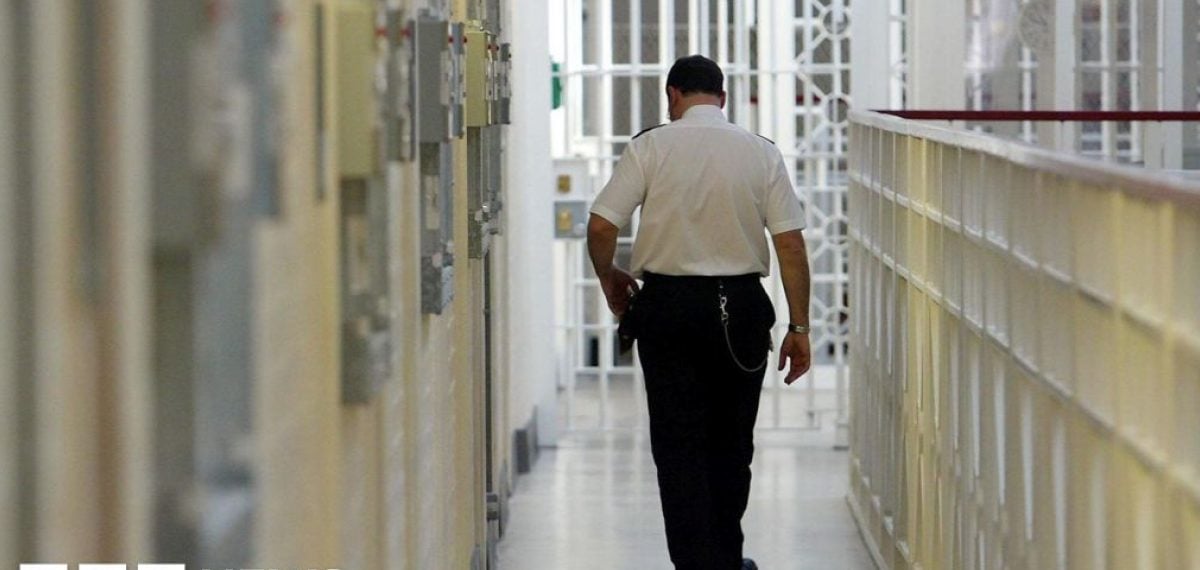
Prison governors across England and Wales have been warned not to use cells that fail to meet health and safety requirements as mounting overcrowding puts increasing pressure on the adult male prison estate.
A six-page document circulated by the Prison Governors’ Association (PGA) and obtained by the BBC reminds governors of their legal responsibilities when allocating prison accommodation. It stresses that cells must be properly certified and suitable for the number of prisoners being held.
The warning comes as prison staff report that more inmates are increasingly being placed in cells designed for single occupancy.
Staff members told the BBC that some prisons are struggling with ageing infrastructure, including faulty heating, plumbing and sanitation. They said the shortage of suitable accommodation was making it increasingly difficult to maintain safe conditions while keeping prisons operational.
One governor described the situation as a growing conflict between maintaining capacity and meeting basic safety requirements.
The Ministry of Justice said cells were only being used for two prisoners when it was considered safe to do so.
The PGA guidance cites requirements under the Prisons Act 1952, the Prison Rules and the Young Offender Institution Rules. It states that a cell cannot be used unless an inspector has certified that its size, lighting, heating, ventilation and fittings are adequate for prisoners’ health.
The guidance also states that prisons should not hold more people than the number of spaces available.
Concerns among prison staff have intensified over how operational capacity is being determined. The maximum operational capacity is not set by individual governors but by Prison Group Directors, who assess factors including accommodation, security and the ability of a prison to operate safely.
Some staff members believe the latest guidance amounts to a warning to senior officials responsible for setting those limits.
One prison worker told the BBC that there were not enough staff or suitable infrastructure to safely accommodate additional prisoners, arguing that those making capacity decisions should also be accountable for the consequences.
The pressure is particularly acute in the adult male prison estate, where staff say only a limited number of spaces remain available.
The broader prison system has been under sustained capacity pressure for years. An official government assessment published in September warned that the prison population would remain extremely high despite planned measures to create additional space. HM Inspectorate of Prisons said overcrowding was already having a significant impact on living conditions and prison operations.
The Ministry of Justice has also acknowledged the scale of the challenge. Its latest capacity plans include the creation of thousands of additional prison places, while the government is simultaneously changing release arrangements to reduce pressure on existing facilities.
A new progression model is scheduled to begin in October, under which eligible prisoners serving standard determinate sentences will generally spend at least one-third of their sentence in custody.
The government’s modelling estimates that 4,500 prisoners will be released across 10 initial tranches between October 2026 and June 2027. The first tranche is expected to involve about 700 releases, followed by an estimated 650 in the second tranche.
The government says the measures are intended to address the shortage of prison places while allowing authorities to manage releases in a controlled manner. Certain serious offences, including rape, unlawful killing and specified child sexual offences, have been excluded from the progression model.
However, prison inspectors have warned that releasing prisoners will not by itself resolve the underlying capacity problem. HM Inspectorate of Prisons said in September that the population was likely to remain extremely high and that overcrowding would continue to affect many establishments.
The Ministry of Justice has defended its response, saying the government inherited a severe capacity shortage and is pursuing several measures simultaneously.
The department says it plans to create 14,000 additional prison places, with nearly 3,300 already delivered. The strategy includes converting suitable existing facilities, acquiring land for new prisons and speeding up the removal of foreign national offenders.
Official projections underline the longer-term nature of the challenge. Previous Ministry of Justice modelling projected that the prison population in England and Wales could reach between 98,000 and 103,600 by March 2030, depending on future demand within the criminal justice system.
The immediate concern for prison governors, however, is whether existing facilities can safely accommodate the current population.
Older prisons can face particular difficulties because of ageing buildings and infrastructure. Staff have warned that adding beds to cells does not necessarily create safe or suitable accommodation, particularly where sanitation, heating or other essential facilities are already defective.
The dispute therefore extends beyond the number of available beds. It also concerns whether prisons have enough staff, functioning infrastructure and appropriate accommodation to manage the people already in custody.
With the government preparing a major expansion of prison capacity while simultaneously introducing earlier release arrangements, prison authorities face continued pressure to keep the system operating without exceeding legal and safety requirements.