21 Eylül 2026
açık


Iran’s Parliament Speaker Kalibaf questions the stability of the U.S. Treasury market, highlighting structural weaknesses and comparing it to oil markets anchored by Dated Brent.
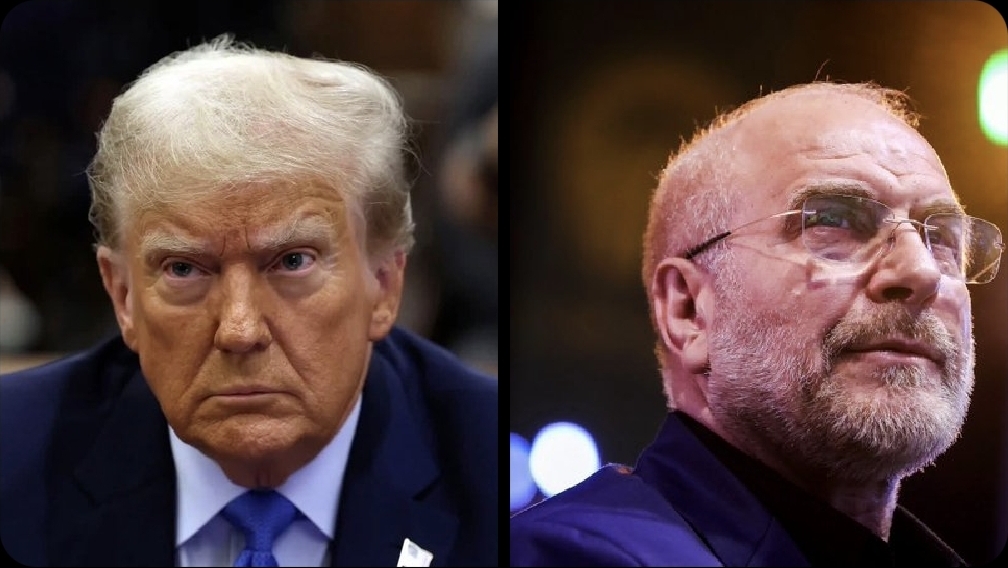
The Speaker of the Iranian Parliament pointed directly at the most sensitive weakness of the U.S. Treasury system yesterday.
Kalibaf posted a tweet last night.
It contained three words most commonly used by finance professionals:
Vibe.
Risk-off.
Dated Brent.
With these three words, he argues that the foundation of the $36 trillion U.S. Treasury market is not as solid as it is believed to be.
Let me explain…
Kalibaf’s tweet reads:
“Trading digital oil through vibe-trading is like doing vibe-hedging into bonds during a Hormuz risk-off moment. Both are houses of cards operating on paper. The difference: oil at least has Dated Brent. Bonds? Just vibe on top of vibe.”
To understand this sentence, you need to know how the global oil market works.
Oil is traded through two channels.
The first is the physical oil market. There is real oil in the field. Tankers, pipelines, storage. The buyer pays, the seller delivers.
The second is the paper oil market. There is no real oil here. Only contracts are traded.
An investor buys a contract but never sees a barrel. They only take positions on price movements. If they profit, they sell; if they lose, they close.
Every day, contracts worth hundreds of times the physical oil volume are traded in this market.
What Kalibaf calls “digital oil” is exactly this: vibe-trading.
Why doesn’t this system collapse? Because there is a control point.
Dated Brent is that control point.
When a contract expires, someone must take delivery of real oil. The paper game ends at that point. You face real barrels.
Dated Brent is the price at that moment of delivery. It is the physical trading price of Brent crude extracted from the North Sea. Real barrels. Real buyers.
This price anchors the paper market to the real world.
Kalibaf is saying: Even if oil trading is largely paper-based, it ultimately ties back to something real. Bonds do not have this.
So what are bonds based on?
To answer this, you need to understand the 80-year journey of the dollar.
In 1944, the Bretton Woods Agreement was signed. The dollar became the world’s currency. For every $35, the U.S. Treasury would give you one ounce of gold. The dollar was backed by real gold.
In 1971, Nixon broke this link with a single decision. You could no longer convert dollars into gold.
So why didn’t the dollar collapse? Because the U.S. found a new anchor.
In 1974, Kissinger signed an agreement with Saudi Arabia. Saudi oil would be sold only in dollars. Any country that wanted to buy oil first had to obtain dollars.
This became known as the petrodollar system. The dollar was no longer backed by gold, but by oil. This system worked for 50 years.
Now, that system is also unraveling.
A major shift has begun over the past three years.
In 2023, Saudi Arabia started selling oil to China in yuan. For the first time, a currency other than the dollar was used in Saudi oil trade.
BRICS countries are building their own payment systems. Russia is shifting reserves from dollars to gold. India buys Russian oil in rupees. China pays Iran in yuan.
Oil is no longer traded only in dollars.
The dollar was first backed by gold. That ended in 1971. Then it was backed by oil. Now that is weakening too.
What remains is only trust.
Today, the dollar relies on the belief that “the U.S. economy is strong,” “the world needs dollars,” and “the U.S. keeps its promises.”
Bonds, being tied to the dollar, exist within the same chain of trust. The true foundation of the $36 trillion market is this abstract confidence.
Kalibaf points exactly to this. He says: In a Hormuz crisis, you flee to bonds, but what you are fleeing to has no physical backing. Oil at least has Dated Brent. Bonds have no tangible anchor. Only trust.
And trust has always been the most fragile asset in history.
This tweet is not a coincidence. It is a strategic move.
Iran wants to sit at the negotiation table with stronger leverage.
The way to achieve this is through higher oil prices.
As oil prices rise, pressure on the U.S. increases. American consumers feel it at gas stations. Inflation rises. Elections approach. Trump becomes more open to negotiation.
Iran knows this—and is preparing every possible ground to push prices higher.
This is my personal analysis.
I will continue to monitor developments and keep you informed.
Kaynak: Penguin X @ThePenguinBTC