28 Ekim 2026
parçalı bulutlu


Egypt’s parliament approves limited military support to help defend Saudi Arabia, signaling cautious regional cooperation and strategic solidarity.
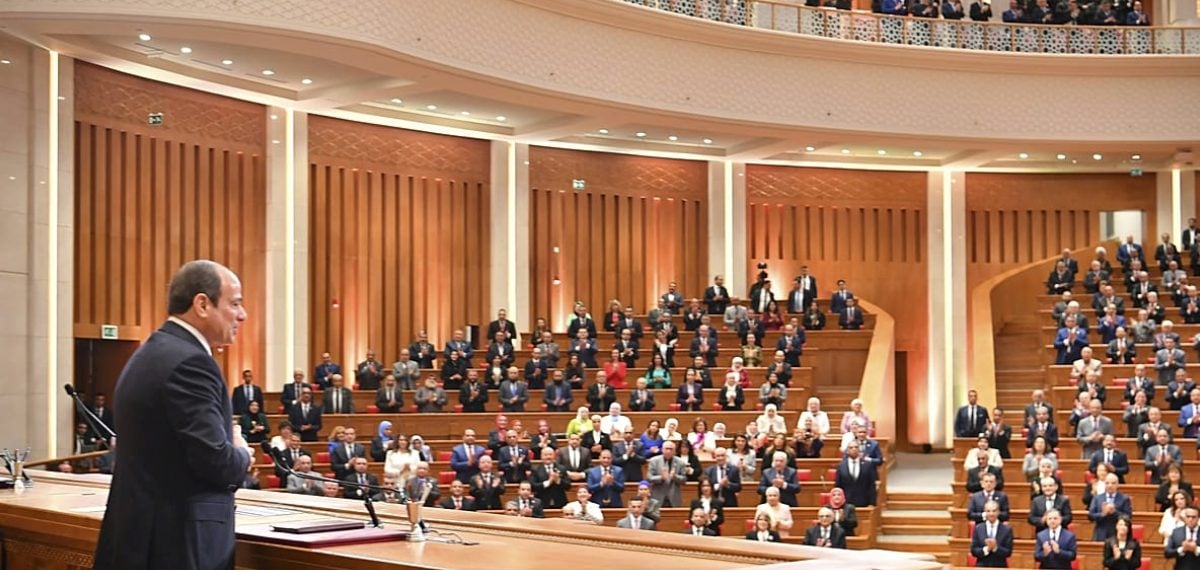
Egypt’s House of Representatives on Monday authorised President Abdel Fattah el-Sisi to provide military assistance to defend Saudi Arabia if Riyadh requests help, a decision that passed with the constitutionally required two-thirds majority. The authorisation empowers el-Sisi, in coordination with Saudi authorities, to take measures to protect Saudi territory, sovereignty and holy sites against external attacks, without specifying the nature or timing of any deployment.
Parliament deliberated the request across three closed sessions after el-Sisi first sought backing on 17 October and MPs met behind closed doors on 18 and 19 October before postponing a vote until Monday. Deputy Speaker Assem El-Gazzar reported that nearly 500 MPs had sought to speak during the discussions. While most parties supported the request, some lawmakers raised questions about the terms of a potential mission and the Egyptian Social Democratic Party instructed its MPs to abstain, citing insufficient information on the mission’s scope, duration, cost and risks.
The National Defence Council, chaired by Abdel Fattah el-Sisi, had endorsed support for Saudi Arabia on 18 October, while Egypt’s constitution requires approval from two-thirds of MPs before its armed forces can be sent on combat missions abroad. El-Sisi stated that any Egyptian military role would be limited to defending Saudi territory and borders and that attacks on Yemen were ruled out.
Diplomatic efforts unfolded as the authorisation was granted, with Saudi Defence Minister Prince Khalid bin Salman meeting Iranian leaders in Tehran alongside Pakistani and Turkish officials in an apparent push to open negotiation channels and avert further escalation. Fighting continued between the Iran-backed Houthi movement and the Saudi-led coalition, with the Houthis reporting attacks on Saudi infrastructure including pumping stations on the East-West oil pipeline and King Khalid International Airport in Riyadh, while the Saudi-led coalition reported intercepting a missile and striking Houthi missile launchers and storage facilities in Yemen.
The conflict threatens shipping through the Bab el-Mandeb Strait, a key route to Egypt’s Suez Canal. Economic repercussions were visible as Egypt’s main stock index closed 1.7% lower on Monday ahead of the parliamentary vote, while trading had been halted for 30 minutes on Sunday after the broader EGX100 index fell 10%. Saudi Arabia remains a major political ally and financial supporter of Egypt, providing aid, energy supplies and deposits at Egypt’s central bank. Egypt previously joined the Saudi-led coalition in Yemen in 2015 with a limited combat role, primarily through naval operations.
The parliamentary authorisation formalises Egypt’s readiness to provide defensive military support to Saudi Arabia within constraints emphasised by President Abdel Fattah el-Sisi and constitutional safeguards requiring a two-thirds parliamentary majority. The measure reflects continued strategic alignment between Cairo and Riyadh amid ongoing hostilities between the Houthis and the Saudi-led coalition. Parliamentary debate and the Social Democratic Party’s abstention indicate domestic caution over open-ended commitments, while concurrent diplomatic engagement in Tehran underscores simultaneous efforts to prevent further escalation.