
03 Kasım 2026
gök gürültülü yağmurlu


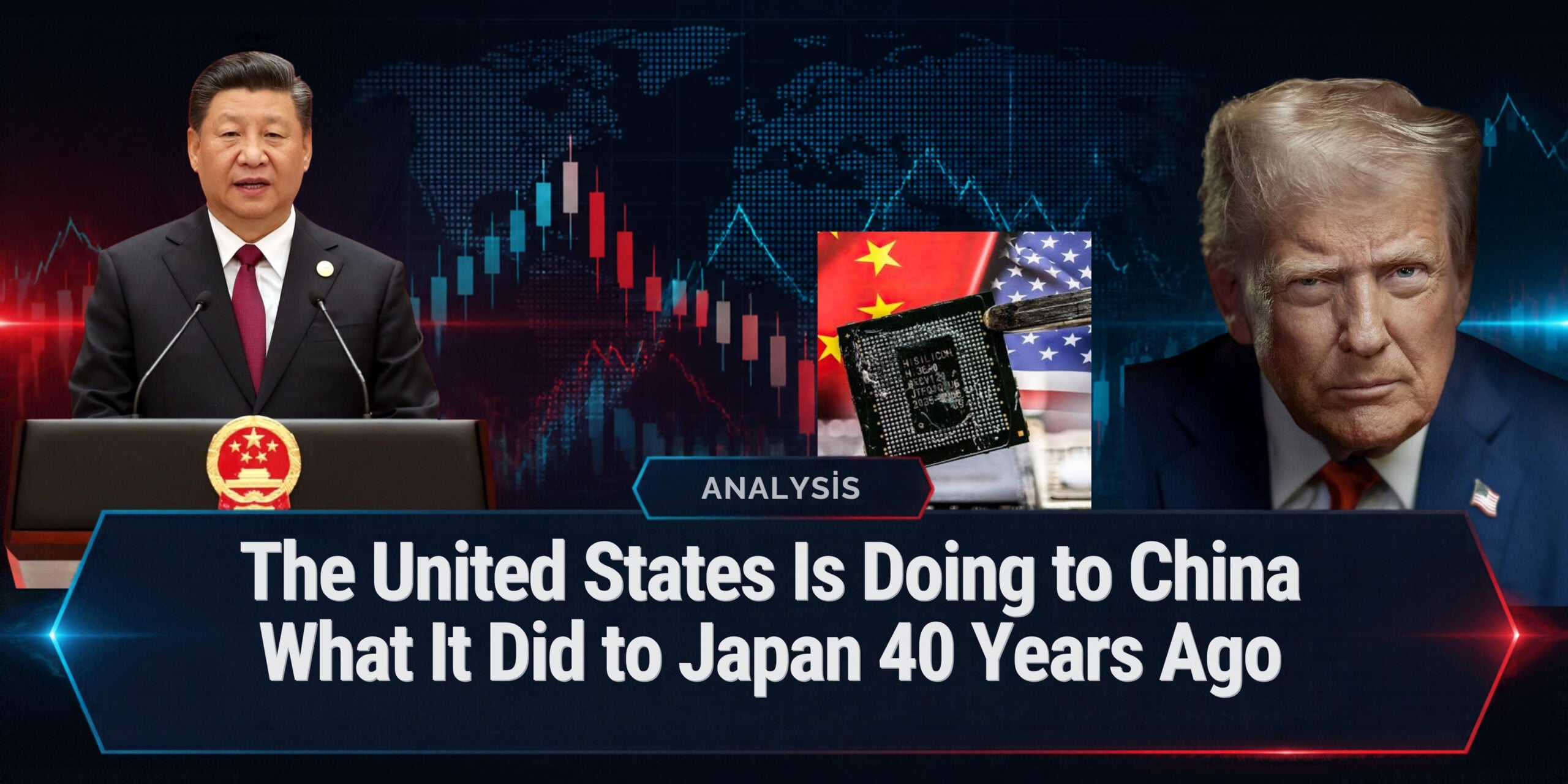
The United States is doing to China today what it did to Japan 40 years ago.
China can no longer purchase the most advanced chips.
The machines used to manufacture them have also been placed off-limits to China.
The United States is behind these decisions. It does not want China to become stronger in this field.
But this is nothing new.
Forty years ago, Japan was the country facing this kind of pressure.
At the time, Japan had nearly caught up with the United States in almost every field.
It was ahead in automobiles, electronics, banking and semiconductors.
Even the world’s largest banks were Japanese.
Moreover, Japan was a military ally of the United States, but that did not protect it.
As Japan grew stronger, the significance of that alliance began to fade.
The United States responded with two moves.
The 1985 Plaza Accord strengthened the yen and made Japanese goods more expensive.
The 1986 semiconductor agreement placed restrictions on Japan’s exports.
Japan was forced to open its market to foreign-made chips.
Following these measures, Japan began to lose momentum.
Over the years, semiconductor leadership shifted to South Korea and Taiwan.
Today, China is experiencing the same thing.
China is also moving ahead in many sectors, from electric vehicles to artificial intelligence.
It is achieving all this through low-cost production.
It enters an industry at lower prices than its competitors, drives them into losses and pushes them out of the market.
Eventually, it determines both prices and market rules on its own.
That is precisely what China did in solar panels and batteries.
The United States is responding with the same old strategy it used against Japan. This time, the target is semiconductors.
Because the United States has tied its future and a large part of its stock market to artificial intelligence.
And artificial intelligence cannot function without advanced chips.
For this reason, the United States wants to secure its own semiconductor production.
However, this investment has a vulnerable side.
Companies are taking on heavy debt today in anticipation of future profits.
If those profits turn out to be smaller than expected, the debt burden and inflated valuations could become a serious problem.
The IMF has also drawn attention to this risk.
But this is not the only problem facing the United States.
China possesses a strategic advantage that Japan did not have.
The raw materials essential to semiconductors and technology are predominantly processed in China.
China can exert pressure by halting the supply of gallium and germanium, both essential to chip production.
Meanwhile, Japan, once the original target, is back on the scene.
Today, Japan does not manufacture the most advanced chips domestically. It imports almost all of them from Taiwan.
Taiwan, meanwhile, lies right next to China, in an extremely sensitive geopolitical region.
If that supply is cut off, Japan’s economy could grind to a halt.
Japan recently experienced what this risk could mean.
Angered by Japan’s stance on Taiwan, China restricted shipments of certain rare earth elements to Japan in early 2026.
What is happening with rare earth elements today could happen with semiconductors tomorrow.
That is why Japan wants to free itself from foreign dependence.
To achieve this, it announced a $2.3 trillion plan centered on semiconductors and artificial intelligence.
Now, instead of opposing Japan, the United States is supporting it.
Because China’s position as America’s new rival has changed everything.
British statesman Palmerston said it back in 1848:
There are no permanent friends or permanent enemies; only permanent interests.
The strategy once applied to Japan is now being applied to China.
This is my personal analysis.
I am following developments closely. I will keep you informed.
Kaynak: Penguin X (@ThePenguinBTC)