02 Kasım 2026
parçalı bulutlu


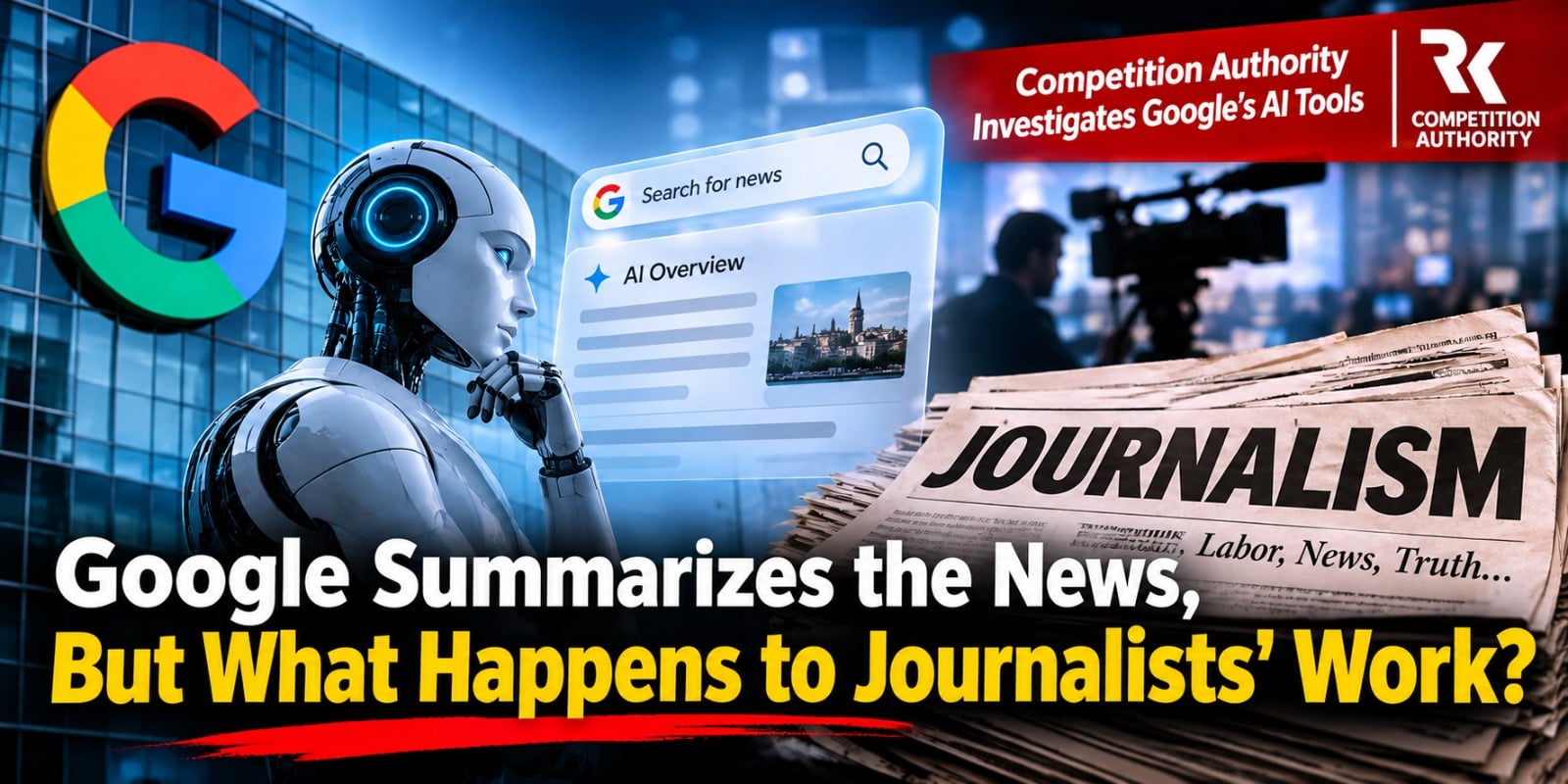
Turkey’s Competition Authority has launched an investigation into Google’s AI-powered search features, bringing the future of digital journalism back into focus. As artificial intelligence summarizes stories produced by news organizations, a fundamental question emerges: Who protects the work of journalists and publishers?
Have you ever stopped to think about how many people it takes to produce a single news story?
A reporter investigates, contacts sources and verifies information. An editor prepares the story, while the publisher invests in getting it to readers. Sometimes hours, sometimes days of work go into producing a report that helps the public understand what is happening around them.
Then Google steps in.
It takes that reporting, uses artificial intelligence to summarize it and presents the result directly to users. The reader gets the information they were looking for. But what does the publisher who produced the original story receive in return?
That is the question at the heart of today’s digital publishing crisis.
The Turkish Competition Authority’s investigation into Google’s AI Overviews and AI Mode is therefore far more than a routine competition-law dispute. The Authority’s decision to impose interim measures makes the issue even more significant.
This is a debate about the future of journalism itself.
For years, search engines and publishers operated within a relatively familiar arrangement. Publishers produced the news, while Google directed readers to their websites. The system was far from perfect, but search traffic became one of the essential sources of revenue keeping digital journalism alive.
Now, that balance is changing.
Google’s AI-generated summaries can provide users with the information contained in a news report without requiring them to visit the original source. Readers get the answers they need without opening the article. Publishers, meanwhile, risk losing the visitors they depend on to cover the cost of producing that journalism.
Will publishers be left with the work while technology giants capture the economic value of their reporting?
For a news organization, the issue is not simply a matter of losing a few clicks.
Fewer visitors can mean lower advertising revenue. Lower revenue makes it harder to produce news. And when news production becomes financially unsustainable, independent journalism begins to suffer.
This may be called digital transformation. But if the people producing the news are the ones paying the price, there is a serious question of fairness.
No one is arguing against artificial intelligence.
Technology should advance. People should be able to access information more quickly. There is nothing wrong with that.
But can it be acceptable for a technology company to benefit from content created by others while undermining the economic survival of the very organizations producing it?
AI can summarize the news. But who will continue writing it?
Where will reliable information come from if reporters stop going into the field, journalists stop investigating and publishers can no longer afford to invest in original reporting?
The stories Google summarizes today are built on someone’s work. If publishers cannot earn enough to sustain that work, will they still be able to produce the news tomorrow?
One of the greatest contradictions of the digital age is a system that weakens journalism’s revenue while continuing to benefit from the information journalism produces.
The Competition Authority’s investigation and interim measures are significant developments for publishers.
The issue is not simply what kind of technology Google has developed. It is also about how a company with substantial market power treats the rights of the content creators whose work contributes to its services.
Google will have the opportunity to present its defense, and the investigation’s outcome remains to be seen. But a problem publishers have been raising for years can no longer be ignored.
The power of technology companies must be balanced by meaningful protection for content creators.
If an independent publisher has little bargaining power against Google, fair rules are needed to govern that relationship. How publishers’ content is used, the economic consequences of that use and the rights of those who produce it must be clearly established.
The issue today is not whether Google should reach more users.
It is how the economic value of information created through other people’s work should be shared.
If a news story is built on a journalist’s labor, that labor deserves compensation. If a publisher invests in original content, it should be able to benefit from the economic value of that work.
Artificial intelligence should advance without pushing journalism into decline.
Because without journalism, there will be no original reporting left for artificial intelligence to summarize.
The Competition Authority’s investigation could mark the beginning of a new era for digital publishing. But the fundamental question remains:
Can technology benefit from the information created by people while ensuring that the people who produce it can continue to survive?
Or will the new digital order leave journalists with the work and technology giants with the profits?
The answer matters not only to publishers, but to everyone who depends on reliable information.
Because the value of news lies not only in being read, but also in protecting the people whose work makes it possible.