28 Ekim 2026
parçalı bulutlu


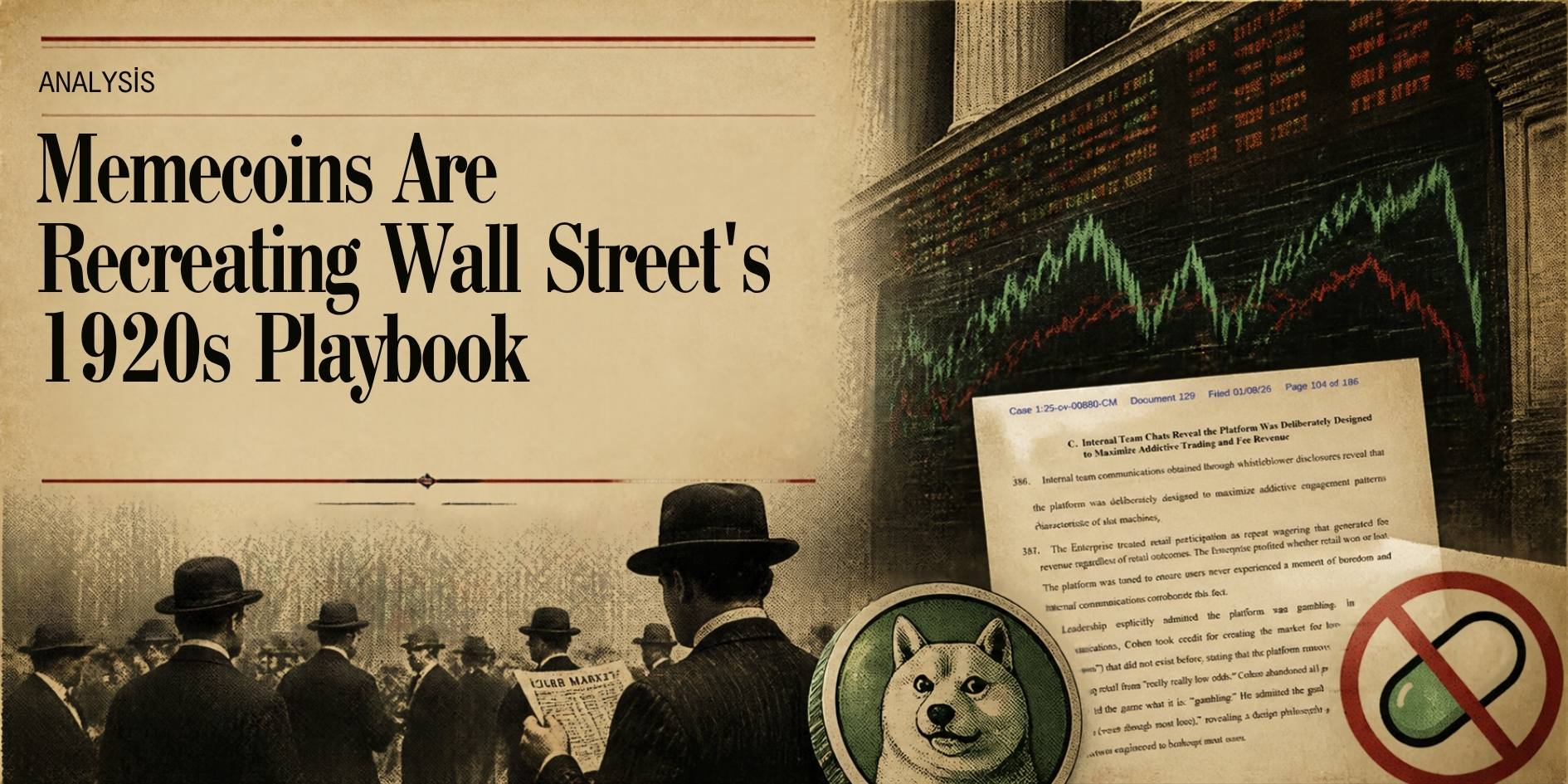
The memecoin market is reliving the speculative games that once dominated Wall Street in the 1920s.
I’m going to show you how this game works and trace its roots back a century.
On October 22, Alon, one of PumpFun’s founders, published a post promoting a new memecoin.
Within minutes, the coin’s market capitalization plunged from $14 million to just $600,000.
Wallets that bought early and sold into the rally made more than $385,000.
Those who bought later were left holding a coin that had lost most of its value.
The United States witnessed the same kind of scheme on Wall Street in the 1920s and outlawed it in 1934.
Today, memecoins remain outside the scope of that protection.
The story begins in New York in March 1929.
A group of wealthy investors pooled their money and began buying shares in RCA, a radio company. Wall Street called such groups pools.
Their purchases pushed the stock price higher, attracting public attention. As ordinary investors bought in, the group sold its holdings.
The operation lasted seven days and generated roughly $5 million in profit. Those who bought last were left with shares that had lost value.
Why did the public trust these stocks so much?
Because the groups paid certain financial journalists to promote them.
What readers assumed was an independent opinion was actually paid advertising.
Following the 1929 crash, the US Senate spent two years investigating these practices.
The legislation enacted in 1934 prohibited this kind of manipulation and established the Securities and Exchange Commission, or SEC, as the market regulator.
Nearly a century later, the same game has moved onto the phones in our pockets.
In 1929, running a stock pool required a wealthy group of investors and journalists willing to take payment.
On PumpFun, a coin can be launched in seconds.
Because every purchase can push the price higher, the earliest buyers get access to the lowest prices.
The stock pools of 1929 made money through four steps.
Now, I’ll walk you through how those same four steps play out on PumpFun.
The developer launching a coin makes the initial purchases through their own wallets.
In October, a data company examined more than eight million PumpFun coins.
In 21% of those coins, wallets belonging to the developer were buying at the moment the coin launched.
Developers and these wallets made at least $579 million in profit over eight months. That works out to an average of more than $2 million a day.
Imagine concert tickets going on sale. In the first second, the organizer’s own associates buy a portion of the tickets at the cheapest price. They then turn around and sell those same tickets to you at a much higher price.
Before PumpFun, an influencer might buy a memecoin and hold it alongside their community. If the coin rose, both the influencer and their followers could profit.
On PumpFun, however, some influencers buy coins before the public and then sell them to their own followers.
An on-chain analysis published in October examined 49 coins promoted by one such influencer.
Wallets linked to this person bought the coins before the promotional posts appeared and began selling, on average, just three minutes after publication.
According to the analysis, the influencer’s estimated earnings amounted to $125,000.
One wallet appeared to have turned $4,000 into $4.9 million in just 57 minutes.
But nearly all the purchases had been made by a buyer to whom that wallet had transferred $1.4 million over the preceding two days.
A data company examined 3,170 reported gains exceeding $100,000.
For every $100 in reported profits, only $26 came from genuine trading activity.
Most of the remainder came from free token distributions and transactions between wallets controlled by the same person. Such activity can create an impressive-looking track record designed to attract new followers.
In 65% of coins, the developer makes their first sale within one minute. Approximately four out of every five PumpFun coins never see any trading activity after their first day.
This month, signs of the same four-step pattern also emerged in PumpFun’s own promotional campaign.
PumpFun ran the campaign with trader Kimchi. On the first night, a coin called KIMCHI was launched, and the wallet that created it purchased 79% of the supply for approximately $9,000.
Within one minute, that wallet transferred 75% of the supply to a wallet identified on the platform as Kimchi.
The share of every transaction allocated to the coin’s creator was also permanently linked to this wallet.
Alon introduced Kimchi as the first trader to become a celebrity.
The platform claimed that Kimchi had earned more than $40 million from the TRUMP coin. On-chain data, however, supports a verifiable gain of approximately $6 million.
Three interconnected wallets made roughly $104,000 from KIMCHI in just nine minutes. The wallet that created the coin also made approximately $26,000 in profit.
The coin mentioned at the beginning of this story was subsequently promoted through Kimchi’s account two days later, on October 22. Alon then withdrew the promotional post, while Kimchi deleted the post and removed PumpFun from the profile.
PumpFun has not commented on the matter.
Most of the time, you do.
If you buy coins on PumpFun or follow an influencer who constantly promotes these tokens, the system can operate as though your losses are built into the business model.
When you see a promotional post, you may think you’re getting in early. In reality, those who bought before the post appeared have already secured the lowest prices.
According to the latest monthly data, roughly seven out of every 10 wallets trading PumpFun coins are losing money. Of those that do make a profit, nine out of 10 earn less than $500.
Regardless of who wins or loses, PumpFun collects its share from every purchase and sale.
In February 2025, the SEC stated that memecoins generally do not qualify as securities.
As a result, someone buying these coins falls outside the protections that the 1934 securities framework provides to stock investors.
There is another important difference between 1929 and today.
The RCA stock pool completed its operation in seven days.
For half of PumpFun coins, however, the final trade occurs approximately three minutes after the first.
What took a week in 1929 now takes just three minutes.
In 1873, Walter Bagehot, an editor of The Economist in the 19th century, wrote:
People are most ready to believe when they are happiest.
In one of approximately 5,000 internal messages brought to light by a whistleblower, Alon also wrote that people would be happier even if most of them lost money.
Kaynak: Penguin X (@ThePenguinBTC)