21 Eylül 2026
açık


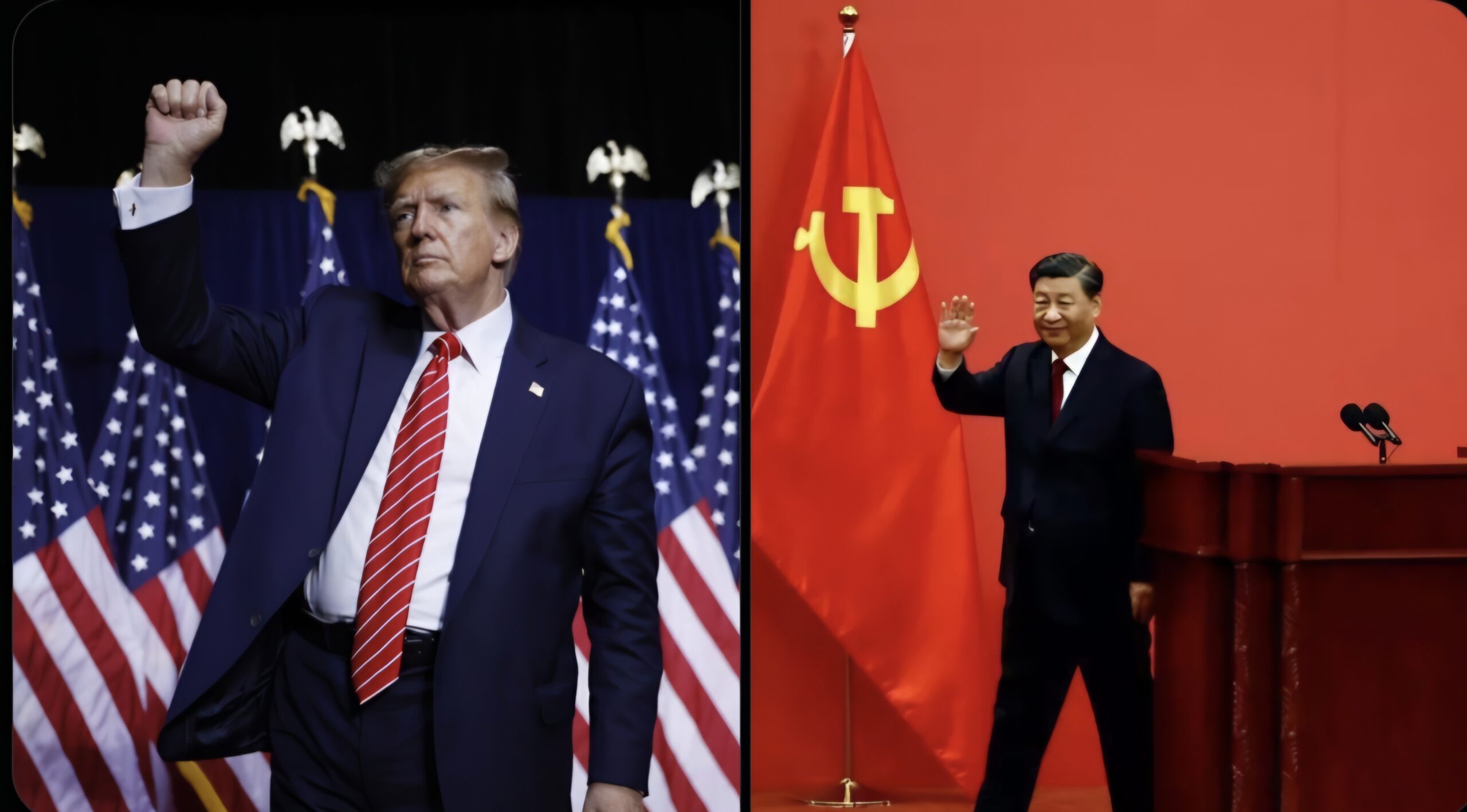
Trump today placed U.S. scrap exports under new restrictions. The reason is China.
Today, President Trump signed an executive order.
From now on, U.S. scrap containing critical metals will require government authorization before it can be exported.
The order identifies three categories:
Spent batteries, end-of-life magnets, and tungsten-bearing scrap.
At first glance, a country protecting its own scrap may seem unusual.
But that scrap contains a metal the United States can no longer reliably obtain elsewhere.
The reason is China.
That metal is tungsten.
Tungsten is one of the hardest metals on Earth.
It is used in armor-piercing ammunition, missile components, cutting tools, and high-performance industrial applications. There is no easy substitute.
The United States has not operated commercial tungsten mines since 2015.
Because buying it from China was cheaper.
Think of it this way.
You used to manufacture a critical component in your own workshop. Then you stopped because importing it cost less. Years passed. You sold the machinery, the skilled workers moved on, and the know-how disappeared.
Then one day, your supplier closed the door.
Now you’re dismantling everything in the workshop just to recover that same component.
That is exactly where the United States finds itself today.
China dominates global tungsten production and exports. For the U.S., recycled scrap has become the last significant domestic source.
Now look at the timeline. This is where the real story begins.
In December 2024, China banned exports of gallium, germanium, and antimony to the United States. These are indispensable materials for semiconductor manufacturing and defense technologies.
In November 2025, Beijing temporarily suspended the ban as a goodwill gesture during trade negotiations.
But the suspension is not permanent.
It expires on November 27, 2026.
Trump’s new export restrictions take effect on January 1, 2027.
The timing suggests Washington is preparing for the possibility that China could tighten the tap once again.
So where had this scrap been going?
The United States exports roughly 33,000 metric tons of electronic waste every month.
Most of it has been shipped to Southeast Asia, with Malaysia becoming the largest destination. Between 2023 and 2025, those shipments exceeded $1 billion in value.
There is another important detail.
In 2017, China banned imports of foreign waste.
Chinese recycling companies responded by relocating much of their processing capacity to Southeast Asia, particularly Malaysia.
In other words, American scrap was no longer going directly to China.
It was going to where Chinese recycling companies had moved.
Then Malaysia closed that door as well.
On April 1, 2026, Malaysia imposed a complete ban on electronic waste imports.
That route had already disappeared.
Today, Trump closed the American side of the equation.
The United States is not alone.
Japan has spent months dismantling discarded air conditioners, extracting magnets from compressors, and recovering the rare elements inside them.
The program is being carried out by Mitsubishi Electric.
When the initiative became public, Chinese state media mocked it, publishing articles describing the idea of recovering strategic metals from old air conditioners as an international joke.
Japan’s motivation is the same as America’s.
Following rising tensions over Taiwan, China reduced exports of rare earth materials to Japan.
Both countries are now trying to solve the same strategic problem.
Their return to scrap is not driven by environmental policy.
It is driven by necessity.
Step back and look at the bigger picture.
A country does not permanently lose its mineral deposits.
It loses the factories that process them.
The ore remains underground and can always be mined again.
But once the refining facilities shut down, the expertise disappears, and the skilled workforce is gone, only one domestic source remains.
The metal that was imported years ago and is now embedded inside old products.
That is what the United States chose to protect today.
A mine closed in 2015 because imported material was cheaper.
The cost of that decision was signed into policy today.
Kaynak: Penguin X @ThePenguinBTC