31 Ekim 2026
parçalı bulutlu


Major stablecoin issuers froze billions after the Binance hack, detailing asset impacts, regulatory concerns, and market stability efforts.
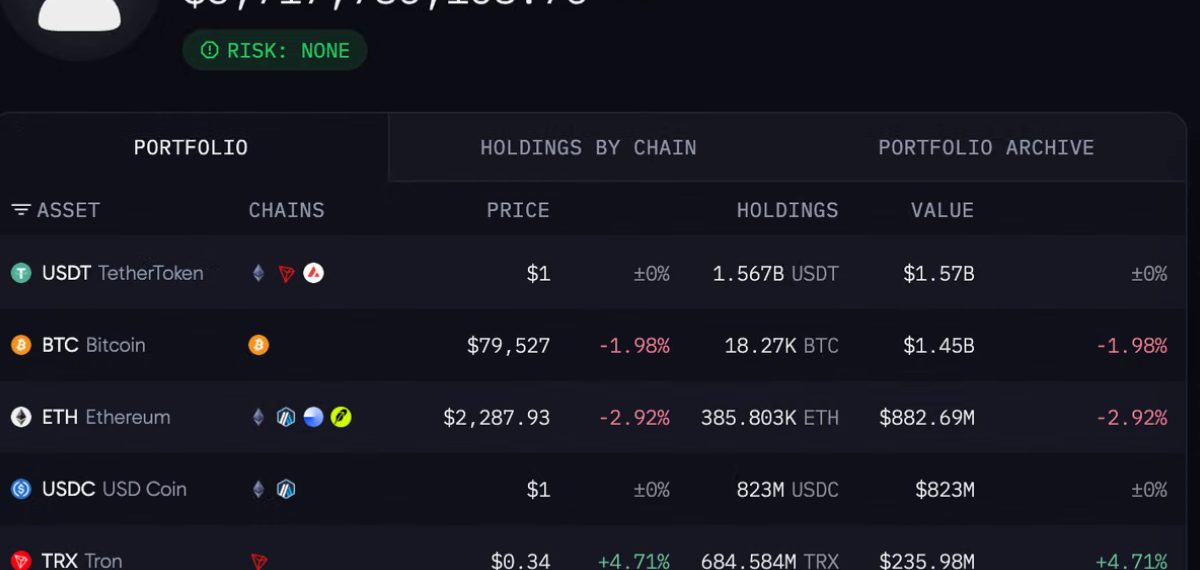
Crypto firms froze large volumes of tokens within hours after a reported $6.3 billion theft from Binance linked by investigators to North Korean hackers. Tether blocked more than $1.567 billion in USDT, Circle froze about $823 million in USDC, and Ripple and World Liberty Financial also intervened, while Binance said it had frozen roughly $3 billion and earmarked over $6.34 billion of its own reserves to cover customer losses.
Industry figures and legal experts broadly supported the rapid freezes but raised questions about consistency, noting that similar swift action has not always been taken for smaller victims. Anton Golub, head of exchange go-to-market at Forte and a former exchange executive, praised the intervention but said the apparent disparity in responses between large and smaller hacks suggests a double standard. He contrasted the swift freezes in this case with earlier incidents such as the April Drift hack, when Circle faced criticism for not acting as quickly.
Stablecoin issuers have differing stated policies on freezes. Paolo Ardoino, Tether’s CEO, confirmed on X that Tether froze over 1.567 billion USDT, framing the move as protecting the industry and partners, without stating whether law enforcement directed the action. Circle CEO Jeremy Allaire said on X that the company froze more than 800 million USDC in coordination with law enforcement, while Allaire previously stated Circle freezes USDC only when directed by authorities or a court. Tether similarly said in 2022 it would not freeze certain addresses without law enforcement instructions.
Legal and operational risks accompany freezing tokens, experts warned. Frank Hepworth, founder and CEO of New Market Trading, noted potential liability and the operational burden of distinguishing legitimate claims. Irina Heaver, founder of NEOSLegal, said freezing halts further movement but does not automatically recover assets; issuers can invalidate frozen tokens and reissue replacements or law enforcement can obtain court orders to seize frozen assets. Max Atallah, managing partner at Nordic Law, emphasized that freezing does not itself determine ownership rights.
The ability to intervene varies by asset. Tether and Circle can block transfers of their stablecoins because those tokens include issuer-controlled functions, whereas bitcoin lacks a central issuer and cannot be frozen at the network level. CoinDesk traced about $1.4 billion of the stolen bitcoin into 19 wallets, coins that cannot be network-frozen though service providers can block them on their platforms. Reports also suggested that Arbitrum used emergency controls to move stolen assets, illustrating differing powers available across networks.
Calls for clearer legal standards grew as commentators said protections for companies freezing assets in good faith could help smaller victims receive comparable treatment. Stefan Muehlbauer, head of U.S. government affairs at CertiK, suggested that establishing clearer rules and safeguards might make rapid freezes a norm for all victims rather than an exception driven by scale.
The swift freezes by major stablecoin issuers after the Binance theft show that issuer controls can be decisive in stopping further dispersal of stolen tokens but they do not by themselves resolve ownership or guarantee recovery. The interventions highlighted a practical divergence between assets with issuer governance and decentralized assets like bitcoin, increasing pressure on issuers to act and on regulators to clarify legal liabilities and procedures. The episode underscores a trend where market scale influences rapid industry cooperation, raising questions about equal treatment for smaller victims and the need for standardized legal frameworks to manage freezes and asset restitution.