20 Ekim 2026
parçalı bulutlu


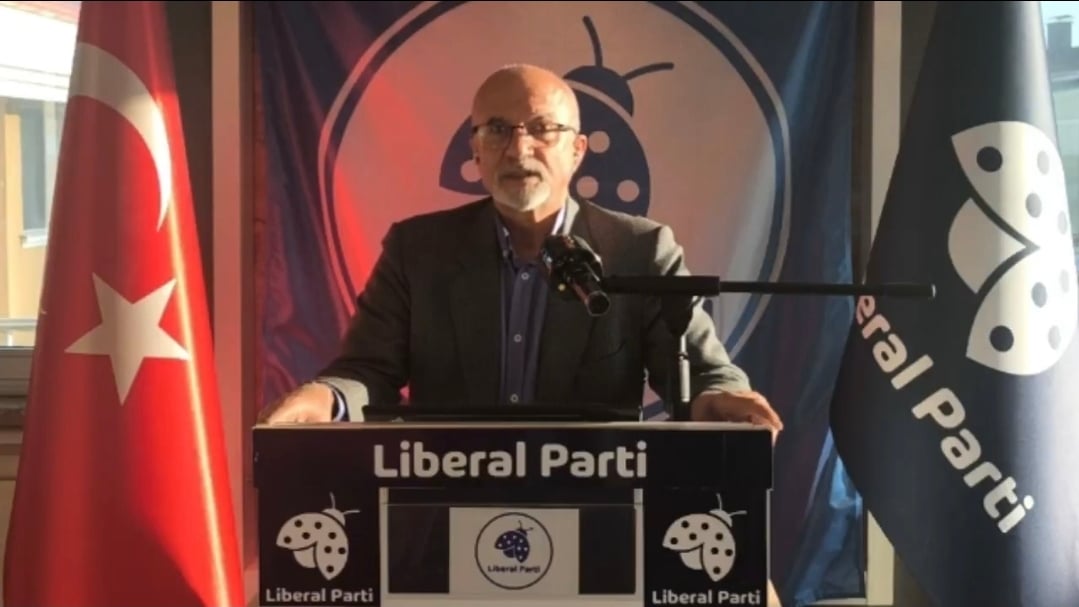
Liberal Party Chairman Zübeyir Gülabi addresses investment fund losses, judicial independence, municipal operations, and civil society autonomy in Türkiye.
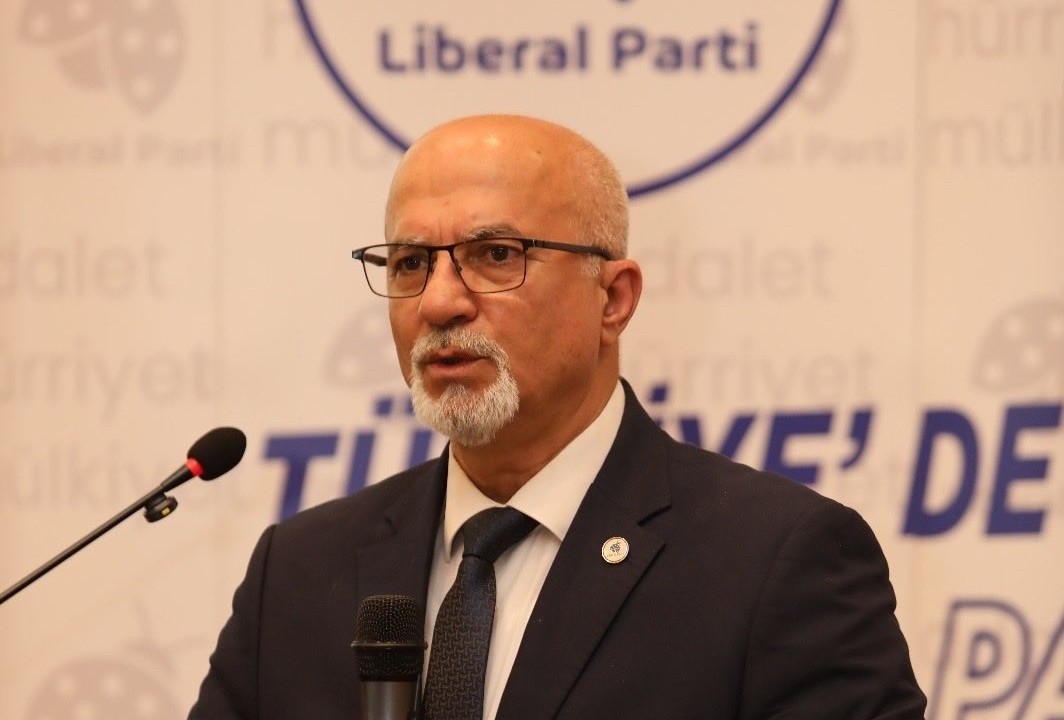
Liberal Party Chairman Zübeyir Gülabi addressed alleged investment fund scandals, judicial independence, operations targeting municipalities, and the politicization of civil society in a statement dated October 19, 2026. Calling for stronger public oversight, protection of citizens’ property rights, and respect for voters’ choices, Gülabi declared: “We will not surrender to corruption.”
Liberal Party Chairman Zübeyir Gülabi said Türkiye was facing not merely an economic crisis but a multifaceted governance crisis in which public confidence in the rule of law, political ethics, social solidarity, and state institutions had been severely shaken.
In his statement, titled “From the Fund Scandal to the Collapse of Civil Society: A Manifesto Against a Corrupt System,” Gülabi argued that the country’s problems could no longer be treated as isolated incidents.
“This is no longer a matter of individual incidents; it is a case of systemic decay,” he said.
Criticizing the tendency to equate prolonged political power with effective state governance, Gülabi argued that identifying the government with the state deepens social divisions, erodes ethical standards, and generates fear instead of trust.
He stressed that Türkiye needed not cosmetic changes to the existing system but a fundamental reconstruction based on the rule of law, justice, and freedom.
One of the central issues in Gülabi’s statement was the alleged financial harm suffered by investors through investment funds. He said that citizens losing money accumulated through years of hard work was not merely an economic loss but also a serious blow to labor, property rights, and public confidence in the state.
Recalling that repayment of Türkiye’s $23 billion debt to the International Monetary Fund (IMF) had previously been presented as a major political achievement, Gülabi drew attention to the scale of the investment fund losses reported in the public domain.
He called for a comprehensive investigation into the reported fund and investment losses and demanded that those responsible be brought before the courts, regardless of their identities or political connections.
Gülabi directed questions at the Capital Markets Board of Türkiye (SPK), Borsa İstanbul (BIST), the Financial Stability Institution, the Banking Regulation and Supervision Agency (BDDK), the Financial Crimes Investigation Board (MASAK), and the Ministry of Treasury and Finance.
He questioned whether warning signs had been detected in time, why effective intervention had not taken place if the risks were known, and whether individuals with political influence or privileged connections had been protected.
Gülabi demanded concrete explanations about the measures being taken to compensate affected investors. He argued that a system unable to protect ordinary citizens’ savings while safeguarding the interests of powerful circles faced a problem extending beyond simple regulatory shortcomings.
“Our demand is clear: equal protection under the law for all citizens, not privileges for those with political influence,” he said.
Gülabi argued that when proximity to the government becomes an advantage and maintaining a critical distance becomes grounds for punishment, political parties, religious communities, and civil society organizations risk losing their autonomy.
He said groups that had once united around morality, service, and brotherhood could become embroiled in struggles over power, influence, and financial interests.
Gülabi cited criticism emerging from the Erenköy community and controversies surrounding the Safa Foundation as examples of what he described as this deterioration.
He opposed the use of religious and moral values as instruments in political power struggles and called for the independence of religious communities, foundations, and civil society organizations to be protected.
“The state exists not to bring religious communities under its control or divide them, but to ensure that every individual can organize freely within the framework of the law,” Gülabi said.
Gülabi also addressed building safety, infrastructure deficiencies, and oversight problems in Istanbul.
He stated that five people had lost their lives in a building collapse in Maltepe and criticized the city’s long-standing governance, arguing that Istanbul had been left vulnerable to building collapses, road failures, and flooding.
He also referred to six additional fatalities during recent rainfall, arguing that such tragedies should not be explained solely by natural conditions and that infrastructure deficiencies and inadequate oversight must also be examined.
Gülabi said buildings do not collapse solely because of a single event; years of neglected maintenance, ignored structural cracks, and inadequate inspections can leave them vulnerable to collapse.
He argued that the same principle applied to state administration, emphasizing that institutions should not depend on the goodwill of those in power but on rules capable of preventing abuse, including by officials acting in bad faith.
He also criticized construction in riverbeds and neglected infrastructure, arguing that rainfall could turn into a disaster when planning and oversight failed.
“We want a state governed by rules, not arbitrary administration dependent on individuals,” he said.
Gülabi said investigations into elected mayors were legitimate when serious allegations of criminal conduct existed. However, he warned that legal proceedings must not become instruments for taking control of opposition-led municipalities or eliminating political rivals.
He argued that elections derive their meaning not simply from holding a vote but from protecting the outcome within the framework of the law.
Referring to operations and detentions involving Çukurova Municipality in Adana, Gülabi said the proceedings should be conducted in accordance with the principles of judicial independence.
He also noted that the governing party had failed to win a single township municipality in Adana and Mersin in the 2024 local elections.
Gülabi argued that cities should not be punished for failing to support the government at the ballot box. Where corruption exists, he said, the law must take its course. However, he maintained that politically engineering municipal administrations would amount to an attempt to usurp the people’s democratic will rather than uphold the rule of law.
Gülabi identified the legal proceedings involving Ekrem İmamoğlu as one of the most significant sources of political tension in Türkiye.
He described İmamoğlu’s detention, which he said had lasted approximately a year and a half, as an issue extending beyond an individual’s legal circumstances and raising broader questions about judicial independence and the legal protections afforded to elected officials.
Gülabi said universal legal principles must guide judicial proceedings, emphasizing that trial without detention should be the norm and pretrial detention the exception.
He called for strict adherence to the right to a trial within a reasonable time and the presumption of innocence.
He also warned against turning the judiciary into an instrument for punishing political opponents.
According to Gülabi, justice must not be a privilege granted to allies of those in power or a punishment imposed on their rivals. It must mean that everyone is subject to the same laws.
Addressing recent operations targeting the Süleymancılar religious community, Gülabi said a clear distinction must be maintained between combating crime and targeting social groups for political purposes.
He stressed that membership in the Süleymancılar, Furkan, or any other religious community should not, by itself, constitute grounds for suspicion of criminal activity.
Investigations, he argued, must focus on specific alleged criminal acts rather than abstract affiliations.
Gülabi called for independent judicial oversight and maintained that using a group’s proximity to or distance from the government as a determining factor in investigations would be incompatible with the principles of the rule of law.
Gülabi emphasized the importance of the historical and strategic ties between Türkiye and Azerbaijan, saying that genuine friendship required mutual respect for sovereignty and sincerity.
He called for debates over restrictions on headscarves in Azerbaijani schools to be addressed within the framework of freedom of religion and conscience. He said clothing regulations in educational institutions should be distinguished from restrictions on fundamental human rights.
Gülabi also argued that Türkiye’s foreign policy should not be subordinated to the regional preferences of another country, emphasizing that both Türkiye and Azerbaijan had the right to assess their national interests independently.
He further criticized the development of intelligence-related allegations without concrete evidence involving individuals who had previously worked within the Turkish Cooperation and Coordination Agency (TİKA).
Turkish civil society organizations operating abroad, he said, should not be portrayed as extensions of the state’s intelligence apparatus simply because they maintain ties with Türkiye.
Gülabi emphasized that civil society derives its strength from independence and warned that placing voluntary activities under official command could damage Türkiye’s international reputation.
Gülabi argued that attributing Türkiye’s problems to a single individual or institution was an oversimplification. He identified the weakening of mechanisms designed to oversee and constrain political power as the underlying problem.
The Liberal Party, he said, advocates a transition from power centered on individuals to a state governed by rules, built around six core principles:
Concluding his statement, Gülabi said Türkiye needed trust rather than fear, equality rather than privilege, merit rather than loyalty tests, and laws applied equally to everyone rather than justice that changed according to individuals.
He argued that instead of continually searching for foreign powers or new enemies to blame, Türkiye needed to change the mechanisms that produced its recurring problems.
Emphasizing that the Liberal Party was not the enemy of any individual or group, Gülabi said the party envisioned a Türkiye where different social groups could exist freely and no one would face discrimination because of their identity.
He stressed that freedom was essential to justice, justice to social peace, and the rule of law to lasting prosperity.
Gülabi concluded with a firm declaration:
“We will not surrender to corruption! We will rebuild the rule of law, freedom, and prosperity. The power of the state exists to protect the freedom of its citizens; citizens’ freedom is not a privilege granted by any government!”
The October 19, 2026, statement by Liberal Party Chairman Zübeyir Gülabi calls for systemic change based on the rule of law, accountability, and individual freedoms, addressing issues ranging from investment fund losses and civil society independence to judicial proceedings, municipal governance, and foreign policy.