27 Ekim 2026
parçalı bulutlu


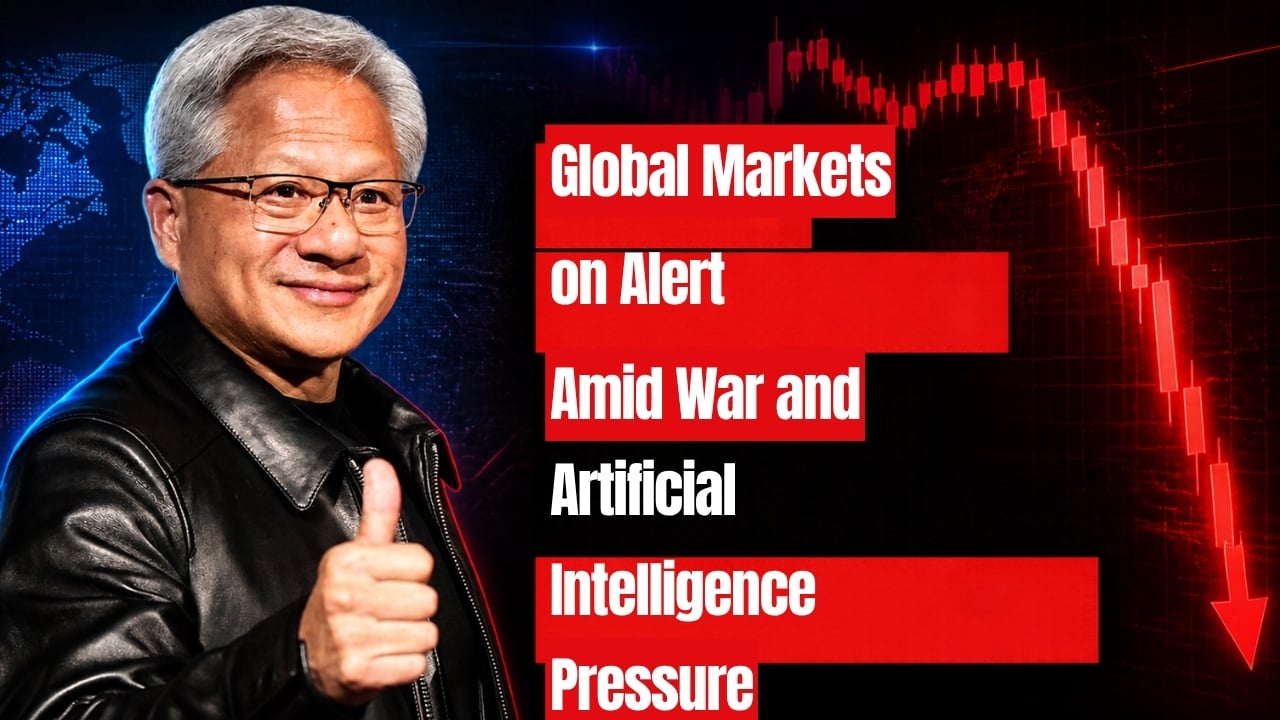
Why are markets falling? Nvidia’s CEO has offered an explanation.
Today, stock markets, gold, silver and Bitcoin all fell at the same time. Oil, meanwhile, climbed to its highest level since May.
On the same day, Nvidia CEO Jensen Huang gave a television interview. According to Huang, demand for artificial intelligence is extremely high. But the money needed to meet that demand is becoming scarce.
These words came from the head of a company that sells AI chips.
When money becomes scarce, power shifts from those who need it to those who provide it.
So why has money become scarce?
Two major forces are behind this squeeze.
First: War
The war with Iran began on February 28, and oil shipments through the Strait of Hormuz have yet to return to normal. Tensions in the Middle East escalated again this week, pushing Brent crude above $110 a barrel.
Expensive oil has fueled inflation. US inflation rose to 3.7% in September, with gasoline accounting for more than half of that month’s price increase.
In September, the Federal Reserve raised interest rates for the first time in three years.
The yield on the 10-year US Treasury, which stood at 3.97% before the war with Iran, climbed above 5.30% this month. In its October 13 report, the IMF also noted that government bond yields were rising because of energy prices.
According to the minutes of the Fed meeting at which the rate increase was discussed, some officials also viewed AI investment as a new source of upward pressure on prices.
Second: Artificial Intelligence
Debt is growing rapidly in the AI race.
The same report says major technology companies are borrowing more, while investors are also taking on debt to buy AI stocks.
The IMF examined 14 major AI deals made since 2023.
Under these agreements, large technology companies invested $300 billion in financially weaker AI companies and lent them another $650 billion.
In return, those smaller companies promised to purchase $1.4 trillion worth of future services and products from the larger companies.
These arrangements resemble a car dealer lending money to a customer and then selling that customer a car with the same money.
The dealer’s sales grow, but the money effectively leaves one cash register and returns to the same place.
If the customer cannot repay the loan, the dealer risks losing both the money lent and the payment expected for the car.
According to results Meta announced yesterday, the company’s capital expenditure reached $34.9 billion over the past three months. That was more than the cash generated by its business operations.
Meta also announced plans to introduce an additional class of shares that could be used to raise more capital.
War is making borrowing more expensive just as AI companies’ need for money continues to grow.
When debt becomes more expensive, the first to fall are often those who need money the most.
This time, chipmakers and AI companies suffered some of the steepest declines.
According to a US investment expert, nearly every stock market index in the world has effectively become an AI index.
Stocks in South Korea fell 3.5%, Hong Kong declined 3%, and Japan dropped 2.7%. The Nasdaq also fell by more than 2% during the trading session.
Debt can amplify these declines.
In the United States, margin debt used by investors to buy stocks hit a record $1.5 trillion in June.
When stocks purchased with borrowed money fall, investors may be forced to sell other assets to meet additional collateral requirements.
Expectations that the Fed will raise interest rates again in December also dragged down gold and silver.
Gold fell below $4,100 an ounce and has lost more than 25% of its value since its record high in January. Silver has fallen to less than half its record price.
Bitcoin also dropped below $81,000, falling alongside AI stocks.
US Treasury bonds, however, gained value.
Investors sold riskier assets and moved into US Treasuries, bringing the 10-year yield down to around 5%.
Even so, yields remain far above their pre-war levels.
According to the IMF, interest rates may be returning to levels last seen before the 2008 financial crisis.
After that crisis, the world economy operated for years on cheap money.
In the United States, interest rates remained near zero between 2008 and 2015, and again between 2020 and 2022.
During the years of cheap money, borrowers had the advantage. Today, those who have money are setting the terms.
Even hedge funds based in the Cayman Islands, among the largest buyers of US Treasuries, hold these bonds using borrowed money. The banks lending to them determine the terms of that borrowing.
What Happens Next?
Five important dates are approaching.
The US Energy Information Administration expects Brent crude to average around $105 a barrel during the final three months of the year.
Under the IMF’s adverse scenario, a sharp decline in AI investment would also push asset prices lower.
In that scenario, the global economy would be 1.1% smaller in 2028 than otherwise expected.
Huang said the shortage would eventually be resolved, but he did not explain how.
The two major developments shaping this year are war and artificial intelligence.
Today’s shortage of money stems from both.
In 1933, American economist Irving Fisher wrote:
Excessive investment and excessive speculation are often important factors. If they were not financed with borrowed money, the consequences would be far less severe.
That is precisely the risk the IMF is warning about in the AI sector.
Kaynak: Penguin X @ThePenguinBTC