29 Eylül 2026
kapalı


Russia has been accused of launching sabotage attacks across a number of European Nato countries which have been helping Ukraine.

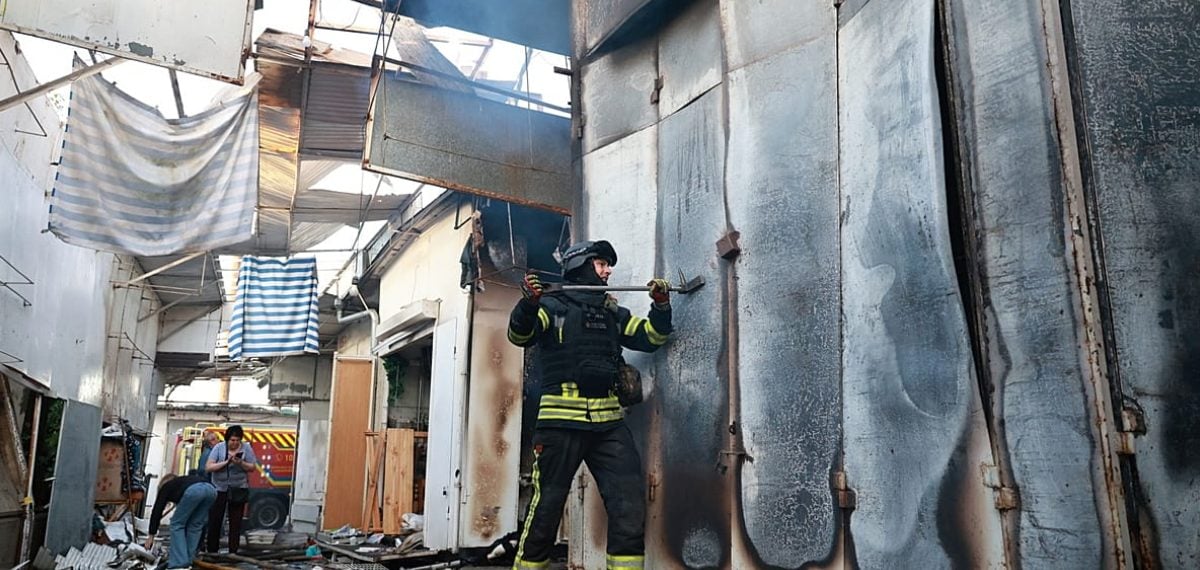
Russia was behind an arson attack on an Estonian defence company in Tallinn last month, according to Estonian authorities, who said the incident was ordered by Russian special services.
Prime Minister Kristen Michal said the target, Milrem Robotics, supplies Ukraine with unmanned military vehicles. He did not provide further details about the alleged Russian involvement.
The incident has added to accusations that Moscow is carrying out sabotage operations in Nato countries supporting Ukraine since Russia launched its full-scale invasion in February 2022.
Russia has denied such allegations and rejected Estonia’s claim. EU countries, however, have expressed support for Estonia and said such incidents would not deter them from assisting Ukraine.
The fire at Milrem Robotics took place during the night of 14-15 August.
Estonian Foreign Minister Margus Tsahkna said information gathered by the country’s Internal Security Service showed “with certainty” that the arson was an act of sabotage ordered by Russian special services.
Margo Palloson, head of Estonia’s Internal Security Service, told broadcaster ERR that Russia was “constantly planning, looking for opportunities, trying to find people who would carry out attacks”. He said the Milrem Robotics arson was the first successful attack linked to Russia in Estonia this year.
The perpetrators were arrested, according to Tsahkna. Palloson said they were Latvian nationals who had been living in Russia and had previously taken part in attacks.
Three suspects were arrested in Latvia and extradited to Estonia earlier this month.
Tsahkna said the incident formed part of what he described as Russia’s wider campaign across Europe, aimed at intimidating European countries and weakening support for Ukraine.
French President Emmanuel Macron backed Estonia’s assessment, saying that the increasing number of hostile incidents represented “a dangerous escalation by Russia”.
Macron also referred to an incident at Leipzig airport in Germany in August, when an explosive-laden drone was found near Ukrainian cargo aircraft.
“Russia needs to know that it will not overcome our unity or our determination to continue supporting Ukraine,” Macron said.
An EU spokesman said the 27-member bloc would continue its support for Ukraine.
Nato Secretary General Mark Rutte also urged European governments to remain calm while maintaining their support for Kyiv.
“Russia continues its reckless campaign of hostile actions against Nato allies. It is trying to weaken our resolve and stop our support for Ukraine,” Rutte said.
He added that Russia was failing to undermine Nato’s unity and support for Ukraine.
The allegations against Russia come after a series of incidents across Europe in August in which Moscow was accused or suspected of involvement.
These included the incident at Leipzig airport, a major fire at a defence company warehouse in Bulgaria, a large explosion at a munitions factory outside Rome, an attempted arson attack targeting a Ukrainian-owned drone manufacturer in Slovakia and two suspicious fires in Poland.
The term “hybrid warfare” is commonly used to describe non-military methods such as cyberattacks, sabotage and disinformation intended to exert pressure on or destabilise an adversary.
Estonia’s internal security service, known as Kapo, said Russia was continuing to search for opportunities to carry out sabotage and other hostile activities.
Palloson said people recruited for such operations could be deceived or manipulated and given false or fabricated explanations for their actions in an effort to conceal the involvement of the Russian state.
Russia has repeatedly denied involvement in attacks of this kind despite what authorities in several countries have described as growing evidence.
On Tuesday, Kremlin spokesman Dmitry Peskov dismissed Estonia’s latest accusation.
“Such statements are baseless, ill-considered, have absolutely no relation to reality, and lack any form of reasoning,” Peskov said.
“We cannot and will not take such statements seriously,” he added.