30 Eylül 2026
parçalı bulutlu


Good morning. Angela Skujins here on Friday newsletter duties. Let’s dive in.
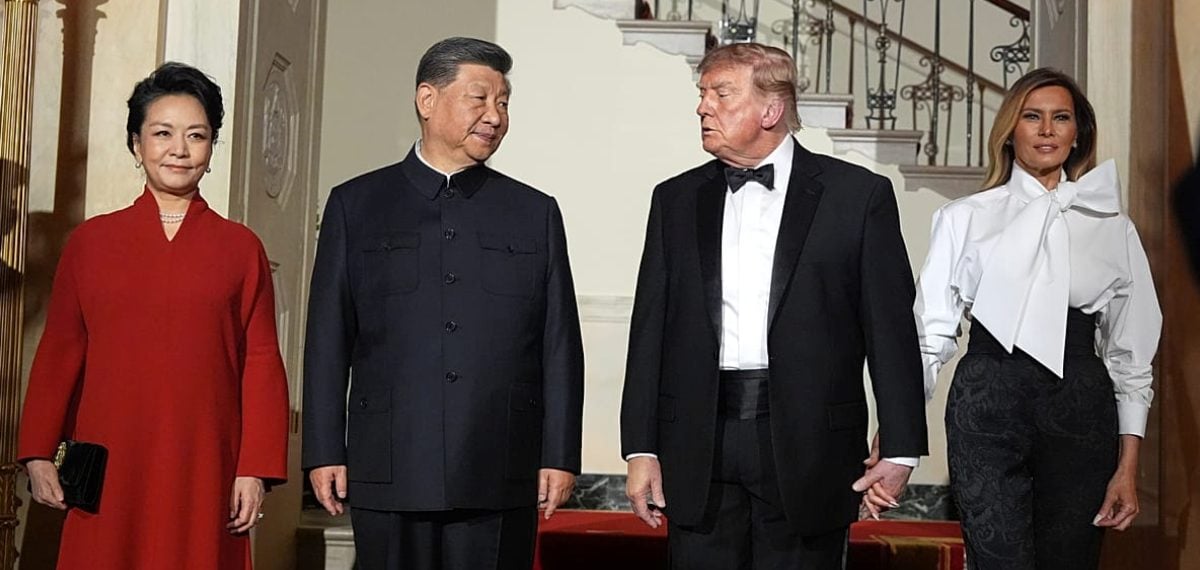
Chinese President Xi Jinping is due to conclude a three-day summit with US President Donald Trump on American soil, his first such visit in 11 years, with European governments closely monitoring decisions that could affect their economic interests.
The talks have covered artificial intelligence, the war in Iran and trade. On trade, the US and China agreed on Wednesday to extend a fragile truce for another two months. The agreement had been due to expire in November.
Ian Lesser, a Distinguished Fellow at the German Marshall Fund, told Euronews’ Europe Today programme that the discussions were focused more on “managing the rivalry” between Washington and Beijing than establishing a new relationship.
“There was nothing deeply negative,” he said. “On the other hand, there wasn’t a lot of progress on a lot of the substantive issues of trade and tech and other things people were looking for.”
European officials are also watching for the potential impact of US-China tensions on trade flows. Increased Chinese exports to Europe could further widen the EU’s already significant trade deficit with China.
The EU has set its own deadline for addressing the trade deficit, with the beginning of October identified as a key point. European Commissioner for Trade Maroš Šefčovič previously told Euronews that failure to address the issue could lead to “harsher measures”.
More than a dozen EU ministers are due to meet in Munich on Saturday to discuss ways of strengthening the bloc’s migration priorities.
Among those attending will be European Commissioner for Migration and Internal Affairs Magnus Brunner.
Ministers from Greece, Germany, Austria, Denmark and the Netherlands are also expected to continue discussions on so-called return hubs, or third-country deportation centres.
The five ministers met in Copenhagen at the beginning of September and agreed to pursue a common model for deportation centres outside Europe.
The first agreement between the EU and a non-EU government on such a return hub is expected around the New Year, although the identity of the potential international partners remains unknown.
Marion Maréchal, a member of the far-right European Conservatives and Reformists group, told Europe Today that return hubs would strengthen Europe’s defences.
Speaking in French, she said several proposals could make it easier for the EU to intercept and return undocumented migrants from European territory.
The French MEP, who comes from the Le Pen family, made the comments in Ceuta, the Spanish city that has become associated with one of Europe’s most vulnerable points in the migration system.
The comments come after an incident in July in which more than 80,000 people from Morocco stormed the Spanish enclave of Ceuta.
Rome subsequently reintroduced temporary border controls and criticised Madrid over its handling of the arrivals.
In the weeks that followed, Spanish Prime Minister Pedro Sánchez was increasingly isolated among Europe’s right-leaning governments over migration policy.
Migration is expected to be a central issue at the next European Council summit in October.
At the end of a competitiveness council meeting in Brussels on Thursday, Danish Minister of Business and Competitiveness Martin Lidegaard discussed critical rare earth minerals, European competitiveness and the recently agreed Washington-Nuuk-Copenhagen deal.
Lidegaard said there was “a huge desire in Greenland to grow, to create new jobs, and also when it comes to mining, have a bigger sector than today”.
He said the agreement could provide other countries with access to Greenland’s critical minerals.
“And I think that the Americans are very happy about the fact that they have a huge access to the Greenlandic territory when it comes to military bases, but also when it comes to minerals,” Lidegaard said.
European Central Bank board member Isabel Schnabel has announced that she will resign in January 2027.
Schnabel has accepted the position of Financial Counsellor and Director of the Monetary and Capital Markets Department at the International Monetary Fund in Washington.
“This decision was not easy for me. Serving on the Executive Board of the ECB and working with all of you has been one of the greatest privileges of my professional life,” Schnabel wrote in an email to colleagues seen by Euronews.
ECB President Christine Lagarde thanked Schnabel for her “invaluable” contribution, saying she had played an important role in the ECB’s efforts to bring inflation towards its 2% medium-term target.
Schnabel’s successor will be appointed by the European Council.
Her departure could mark the beginning of a wider reshuffle at the ECB, with Lagarde herself expected to leave before the end of her mandate. Chief Economist Philip Lane is also due to depart when his mandate ends in May 2027.
The changes come as the eurozone faces continued uncertainty. Energy-price volatility linked to ongoing conflicts in the Middle East and Ukraine is complicating the ECB’s efforts to keep inflation under control.
On Sept. 10, Lagarde announced an interest rate increase and said the ECB’s 2% inflation target would not be reached by the end of next year.
The European Commission is increasing pressure on Ukraine to accelerate reforms considered necessary to unlock €20 billion in financial assistance.
The funding is particularly important as Ukraine’s budget deficit grows and Russia intensifies its war.
EU officials have raised concerns over the slow pace of legislation in Ukraine’s parliament, the Rada, where several measures remain stalled.
Two payments, worth €3.9 billion and €2.9 billion respectively, have been delayed as a result.
The situation contrasts with public appeals from President Volodymyr Zelenskyy and his deputies for allies to provide additional resources to cover a €23 billion gap in the Ministry of Defence.
Ukraine also faces a €32.6 billion shortfall in next year’s budget.
The European Commission is seeking to shift the focus of the discussion towards reforms before further financial assistance is considered.
European electric vehicle registrations increased by nearly 63% in August 2026 compared with the same month a year earlier, as fuel prices reached new records in the EU. German carmakers, however, have struggled to benefit from the broader recovery in the European car market.
Russia is reportedly recruiting up to 25,000 North Koreans to assemble drones, according to data cited in the source. North Korea has supported Russia’s invasion of Ukraine, while the UN says as many as 25,000 North Koreans are assembling drones in Russia and that most of their wages are taken by Kim Jong-un’s regime.
EU governments are also pushing back against Brussels’ plans to reshape electricity network costs. Member states are seeking to water down proposals for coordinated tariffs as disputes over the bloc’s costly and congested electricity grids become increasingly political.
The UN General Assembly is continuing in New York.
European Commission Executive Vice-President Henna Virkkunen is due to meet Greenlandic Prime Minister Jens-Frederik Nielsen in Nuuk.
European Commissioner for Financial Services and Investment Union Maria Luís Albuquerque is scheduled to meet Financial Services Ireland in Dublin.
European Commissioner for Internal Affairs Magnus Brunner is due to visit the Drone Competence and Defence Centre of the Bavarian State Police in Erding, Germany.