24 Kasım 2026
kısa süreli hafif yoğunluklu yağmur


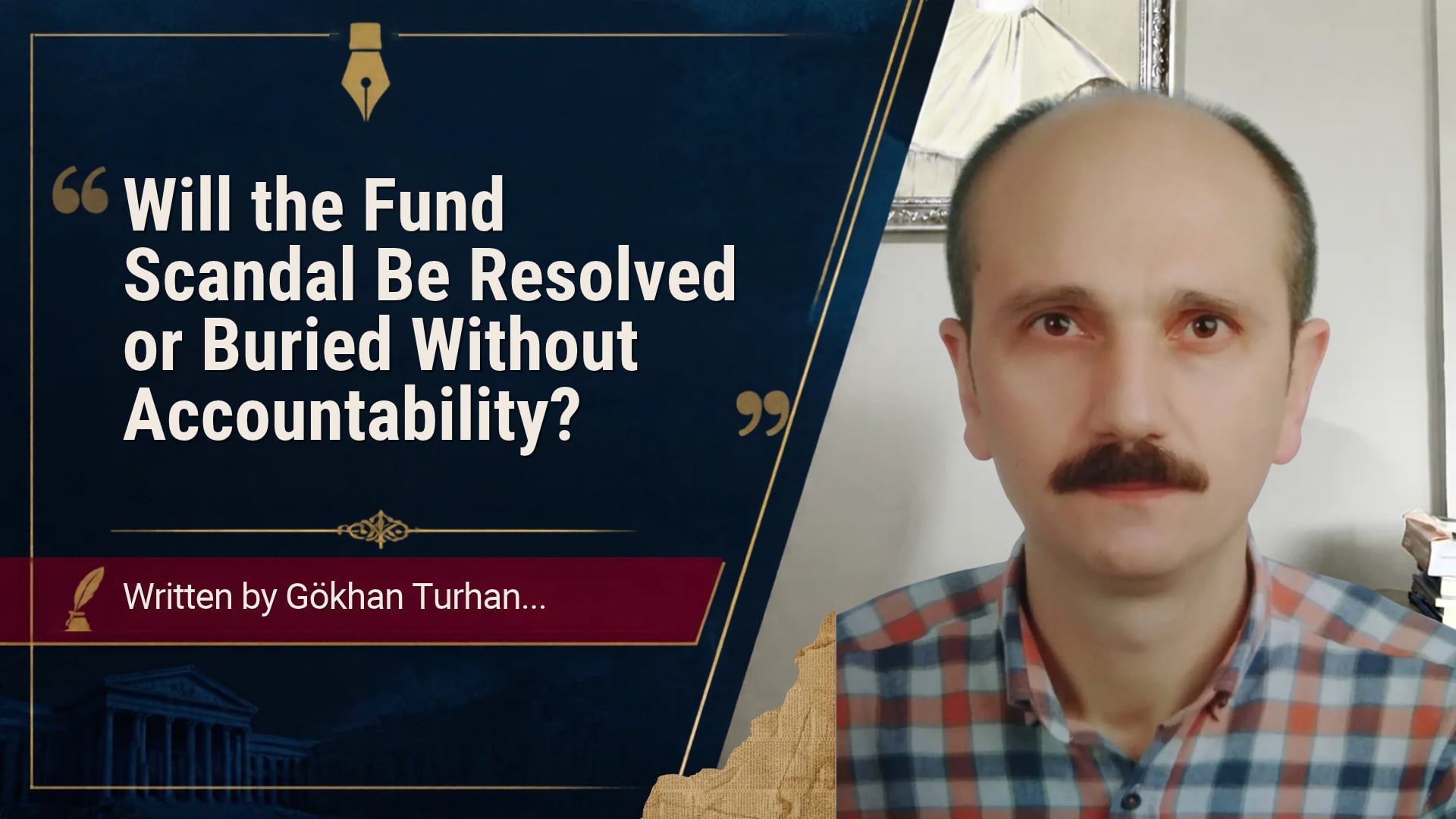
Türkiye is facing one of the biggest financial crises of confidence in its recent history. The crisis, which erupted in September 2026 following the liquidation of 131 funds belonging to seven portfolio management companies, primarily the Pusula and Tera groups, has affected more than 455,000 individual investors. Assessments indicating that the total volume of the funds exceeded TRY 800 billion make it clear that this is not merely a matter involving a handful of companies or executives.
This is not just a problem for investors who have lost their money. It is a major systemic crisis testing the state’s supervisory capacity, the credibility of institutions, the independence of the judiciary and the political establishment’s accountability.
The fundamental question is this: How were the savings of hundreds of thousands of people drawn into such a crisis, and where were the institutions and officials responsible for preventing it?
When investors put their money into a bank, fund or capital market instrument, they do not simply trust a company’s balance sheet. They also place their confidence in the regulatory authorities, the state responsible for supervising the market and the legal system that is supposed to protect their rights when problems arise.
What has been shaken today is not merely investors’ account balances, but this entire relationship of trust.
According to a statement by Justice Minister Akın Gürlek on November 22, 2026, the investigation involves 632 suspects, nearly 130 people have been arrested, and trustees have been appointed to 91 companies. The minister also announced that more than TRY 44.5 billion had been recovered and included in the restitution process.
These figures reveal the scale of the investigation. However, the number of suspects and arrests alone does not mean that justice has been served.
Among the allegations raised by opposition representatives are claims that relatives of former politicians and political figures obtained unjust financial gains through transactions involving the funds. Naturally, all such allegations must be assessed by the judiciary on the basis of concrete evidence. No one should be declared guilty solely because of their political connections. But equally, no one should be exempt from investigation because of their political position, office or relationships.
The principle here is clear: The law must apply equally to everyone.
If a bureaucrat neglected their duties, they must be held accountable. If a fund manager unlawfully used investors’ money, they must face prosecution. Those who failed to fulfil their supervisory responsibilities must also answer for their actions.
But will the same determination be shown when political connections are involved?
The true test of justice begins when not only the powerless but also the powerful are held accountable.
The government says efforts are underway to compensate victims using assets recovered through the relevant mechanisms. However, there is a crucial point that must not be overlooked.
Investors are not merely asking for the return of their original capital. In an economy experiencing high inflation, repaying the nominal amount invested years ago does not constitute genuine compensation for their losses.
If an investor who lost TRY 1 million receives the same TRY 1 million years later, that does not eliminate the economic damage. The purchasing power of that money is no longer the same.
For this reason, it is entirely understandable that victims are demanding compensation not only for their principal investments but also for inflation-related losses.
Moreover, the issue is not simply about money. People invested savings accumulated through years of hard work to secure their futures. Some were planning for retirement, others for their children’s education, a home or their family’s financial security.
Their losses cannot be reduced to figures in an accounting statement.
The state’s responsibility is not merely to recover assets, but to ensure that victims receive fair compensation for their actual losses.
Following the fund crisis, developments involving former executives of the Capital Markets Board (SPK), Borsa İstanbul, Takasbank and the Banking Regulation and Supervision Agency (BDDK) became public.
The investigation’s focus on financial-sector figures and supervisory officials may be important. But a much bigger set of questions must also be answered:
How did this system operate? Who supervised it? Who turned a blind eye? Who profited? Who suffered the losses?
Why did supervisory mechanisms fail to intervene while these financial structures were expanding for years? Were the risks not identified in advance? If they were identified, why was no action taken?
Placing all the blame on a few fund managers and bureaucrats without questioning the entire system could mean closing the case without examining its underlying failures.
When institutions fail to fulfil their duties, the problem is not necessarily limited to the mistakes of a few employees. How those institutions are managed, how supervision operates and what influence the political establishment has over these mechanisms must also be examined.
Political accountability is not the same as individual criminal liability under criminal law. However, those who make decisions on behalf of the public, oversee supervisory mechanisms and bear responsibility for public confidence have an obligation to answer for their actions.
No one should be presumed guilty, but no one should be exempt from accountability either.
The rejection of parliamentary motions calling for an investigation, transparency concerns raised by victims and the opposition, legal proceedings involving members of the press, and public debate over the lifting of certain asset freezes have all increased public concern.
Meanwhile, government representatives maintain that the case is not being covered up, that the State Supervisory Council (DDK) was brought into the process on the President’s instructions, and that a three-stage action plan is being implemented to address victims’ losses.
But statements alone are not enough in a crisis of this magnitude. The public wants to see concrete results.
How much money was lost in each fund? Where was that money transferred? Who benefited from these transactions? At what stage did supervisory mechanisms fail to perform their duties? How much of the assets reportedly transferred abroad has been recovered?
These questions must be answered openly, with documented evidence and in a way that everyone can understand.
Transparency is not a political favour that the government may choose to grant or withhold. Accountability is an obligation when public resources, investors’ savings and the country’s financial credibility are at stake.
The international dimension of the fund crisis must not be overlooked either. According to statements by the ministry, TRY 13 billion identified as having been transferred to nine countries has been frozen. However, bringing these assets back to Türkiye, liquidating the companies and completing the legal proceedings could take years.
Such delays may deepen victims’ financial losses while also creating the risk that public attention will gradually fade.
That is precisely why this issue must not be treated merely as a temporary headline.
The losses investors are experiencing today do not guarantee that a similar crisis will not emerge in another sector tomorrow. Healthy capital markets require not only new regulations but also effective supervision, an independent judiciary and strong accountability.
A country’s financial markets do not grow solely through stock market figures. They grow through the confidence of the people who invest in them.
People want to believe that when they invest their money, they will not later find themselves exposed to political connections, bureaucratic relationships or supervisory failures.
When that confidence disappears, it is not just money that is lost. Trust in the economy’s future is also damaged.
There are three fundamental expectations:
First, victims must receive fair compensation for their principal investments and inflation-related losses.
Second, all transactions, financial flows and chains of responsibility that led to the liquidation of the funds must be uncovered.
Third, everyone found responsible must be held accountable under the law, regardless of their political or bureaucratic position.
Until these conditions are met, it is impossible to say that this case has been closed.
The suffering of more than 455,000 people cannot be erased through a few public statements, a number of arrests or the recovery of a certain amount of money.
Money can be returned. Companies can be liquidated. Executives can be prosecuted. But lost trust can only be restored through the full and impartial administration of justice.
The question today should not be how much political damage this crisis will cause the ruling government, but how Türkiye will repair the damage it has inflicted on its legal system, institutions and economy.
Political governments change, officials come and go. But the state’s reputation, the credibility of the rule of law and citizens’ confidence in the future must endure.
The fund crisis is not a financial scandal to be swept under the rug. It is a test of accountability that must be fully investigated in every respect.
The outcome of this test concerns not only the victims of the fund crisis, but everyone in Türkiye who has entrusted their money and future to the institutions of this country.
Gökhan Turhan