22 Kasım 2026
parçalı az bulutlu


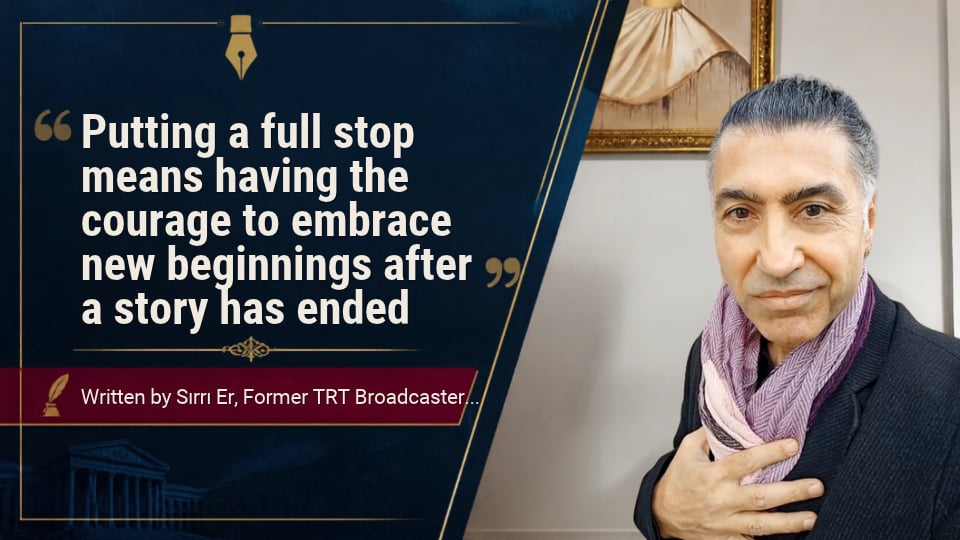
Putting a full stop means having the courage to embrace new beginnings after a story has ended.
Why do they ask about the full stop?
A full stop is the courage to bid farewell to a weary story in its own season while opening up a crystal-clear sky for tomorrows yet to be written.
A tree that the wind cannot bend or twist sends its roots deeper into the darkness of the rock.
The moments when human beings are tested begin in much the same way: at thresholds where breathing becomes difficult, shadows grow longer, and all familiar shelters retreat.
At the breaking point, every wound turns into an invisible source of resilience, while pain ceases to be a temporary burden and becomes a compass deep within the soul.
Yet not every upheaval automatically ends in victory. Standing firm after the storm is possible not by denying the wound, but by finding meaning in the mark it leaves behind.
What we carry when rising from where we have fallen is not our former arrogance, but a composure forged through trials. Even the sharpest blades find their way only after passing through fire and the blows of a hammer.
Thus, the strength that remains ceases to be a noisy act of defiance and settles into a quiet depth.
Every burden that does not break us redefines the limits of what our shoulders can bear. This resilience is more than merely surviving; it is the ability to keep walking while knowing and accepting one’s own weight.
Amid endless noise and incomprehensible haste, we are, in fact, all leading characters trying to make our voices heard amid the cacophony of life.
“What does not kill me makes me stronger,” Friedrich Nietzsche wrote in his book Twilight of the Idols.
Yes…
What does not kill me/us makes me/us stronger.
Since we have not died, we are strong!
#cat
“>Neden nokta diye soruyorlar? Nokta: Yorgun düşmüş bir hikâyeyi kendi mevsimine uğurlarken, henüz yazılmamış yarınlara tertemiz bir gökyüzü açma cesaretidir. Tertemiz yarınlar için videonun altına bir nokta bırakınız, lütfen. Bu küçük davranışı bir gelenek hâline getirelim ki umudumuz dâim tazelensin. Rüzgârın eğip bükemediği ağaç, köklerini kayanın karanlığına daha derin salar. İnsanın sınandığı anlar da böyle başlar; nefesin daraldığı, gölgenin uzadığı ve alışılmış tüm sığınakların geri çekildiği eşiklerde. Kırılma noktasında her yara, görünmez bir dirence dönüşürken, acı geçici bir ağırlık olmaktan çıkıp ruhun derinliğinde bir pusulaya dönüşür. Ancak her sarsıntı kendiliğinden bir zaferle sonuçlanmaz. Fırtınanın ardından ayakta kalmak, yarayı inkâr etmekle değil, onun bıraktığı izi anlamlandırmakla mümkündür. Düşülen yerden kalkarken taşınan şey eski kibir değil, sınanmış bir sükûnettir; en keskin bıçaklar bile ateşin ve çekiç darbelerinin içinden geçerek kendine bir yol bulur. Böylece geriye kalan güç, gürültülü bir meydan okuma olmaktan çıkar ve sessiz bir derinliğe yerleşir. İnsanı yıkmayan her yük, omuzların istîab haddini yeniden belirler. Hayatta kalmanın ötesinde, kendi ağırlığını bilerek yürüyebilmektir bu direnç. Bitmek bilmeyen gürültü ve anlaşılmaz telaş arasında, aslında hepimiz hayatın rabarbası içinde kendi sesimizi duyurmaya çalışan birer başrol oyuncusuyuz. "Beni öldürmeyen şey, güçlendirir." demişti Friedrich Nietzsche, Putların Alacakaranlığı isimli kitabında. Evet… Beni/Bizi öldürmeyen şey, güçlendirir. Ölmediğimize göre güçlüyüz! #cat
— Sırrı Er (@konusmasanati) November 20, 2026