29 Eylül 2026
kapalı


Human rights groups say some 5,000 returnees could face violence, persecution and forced conscription.
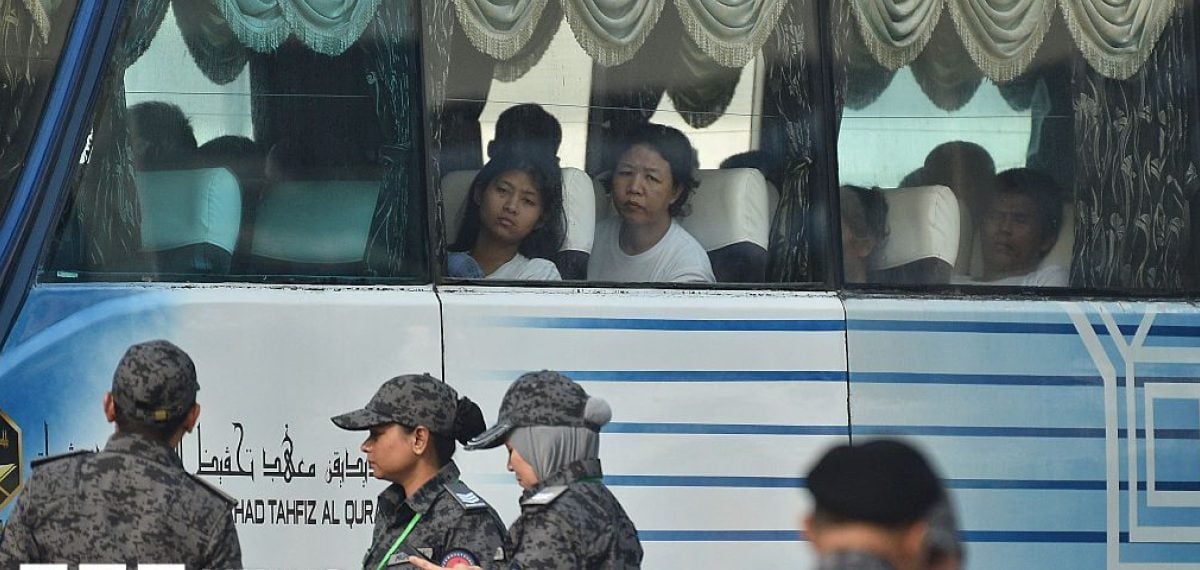
Malaysia has begun repatriating around 5,000 asylum seekers to Myanmar under a controversial agreement reached with Myanmar’s military ruler Min Aung Hlaing.
Three Myanmar navy ships are due to leave Malaysia later today carrying the first 1,476 people being returned.
Human rights organisations have condemned the move, warning that those sent back could face violence, persecution and forced conscription into the Myanmar army.
Malaysia says the repatriation is voluntary. However, the UN refugee agency has been barred from accessing or screening the returnees, who have been held in detention centres.
Malaysian Prime Minister Anwar Ibrahim said the group would include Rohingyas, a persecuted Muslim minority that has sought refuge in Malaysia after being driven from Myanmar, where they are not recognised as citizens.
Anwar, whose popularity has fallen sharply this year, said the decision was a response to growing public hostility towards Malaysia’s large Rohingya population. He has also argued that Malaysia has no choice but to negotiate with the Myanmar government over their return.
The policy marks a significant change from Anwar’s previous position. A former political prisoner, he has presented himself as a defender of human rights and freedom and has called for greater support for the Rohingya.
Under his government, Malaysia has refused to recognise Min Aung Hlaing’s regime and has been among the strongest voices in Southeast Asia calling for a negotiated end to Myanmar’s civil war.
Two developments have contributed to the shift.
The first is increased economic pressure on lower-income Malaysians since the Covid pandemic, which has contributed to resentment towards the Rohingya population.
The second is the unstable political environment in Malaysia since 2018, when a historic election removed the United Malays National Organisation (UMNO), the ethnic Malay party that had dominated politics for more than 60 years.
The election ushered in a succession of unstable coalition governments.
For years, many Malaysians expressed strong sympathy for fellow Muslims fleeing Myanmar.
In August 2017, a campaign by the Myanmar military forced three quarters of a million Rohingyas from their homes in Rakhine State into neighbouring Bangladesh.
Since then, poor conditions in Bangladeshi refugee camps have prompted some Rohingyas with sufficient resources to undertake dangerous sea journeys to Malaysia in search of safety and work.
Malaysia’s navy and coastguard have long attempted to prevent Rohingya boats from reaching the country. Many nevertheless entered through other routes and were tolerated for a long period.
More than 200,000 Rohingyas are now believed to live in Malaysia, with most surviving through manual labour.
Public sentiment began to change during the Covid pandemic, which severely affected Malaysia’s economy. Amid heightened fear over the coronavirus, accusations against Rohingya migrants spread online, accompanied by calls for their deportation.
The government at the time responded by taking a harder stance, saying Malaysia could accept no more refugees and ordering raids on communities suspected of sheltering undocumented migrants.
Similar tensions have emerged again in 2026.
In May, an online complaint alleged that Rohingyas had failed to properly dispose of animal waste following the Muslim Eid al Adha festival. The claim triggered a viral social media campaign that falsely accused Rohingya leaders of demanding land and citizenship in Malaysia.
Soon afterwards, a Change.org petition calling for Rohingyas to be expelled from Malaysia gathered more than 400,000 signatures before it was removed.
Given Anwar’s previous reputation as a champion of liberal values, he might have been expected to resist the wave of hostility and misinformation.
He has said Rohingyas should be treated humanely.
“We can arrest them, but do not beat, intimidate or humiliate them,” he said in a recent podcast interview.
Human rights groups, however, have accused Malaysian officials of exactly such treatment in immigration detention centres.
Despite this, Anwar has insisted that Rohingyas must leave Malaysia.
“They have clearly become a burden,” he said in the same interview. “A security burden, an economic burden and a source of hostility among the people.”
Some former supporters have accused Anwar of abandoning his principles.
Latheefa Koya, a former head of the Malaysian Anti-Corruption Commission, described the decision as “disgraceful, amoral, and shames the nation in the eyes of the international community”.
Anwar is facing significant political pressure. Once described as a perpetual prime minister-in-waiting, he secured the top office in 2022 after forming an uneasy coalition with his former political opponents in UMNO.
His popularity has since declined, while his party has lost seats in recent local elections. He must call a general election by early 2028.
“He is in a corner, at his weakest point,” said Tricia Yeoh, director of the Asian Institute for Policy and Engagement at the University of Nottingham Malaysia.
Yeoh said Anwar had been forced to make concessions to his UMNO partners, while corruption scandals and divisions within his own party had further weakened him.
She said voters were increasingly unwilling to accept the argument that maintaining the fragile coalition required such concessions.
Yeoh said ethnic Malays, who account for more than half of the electorate, were responding to a longstanding UMNO narrative that they require special support and protection from the state.
She said this form of racial politics contributes to fear and resentment towards outsiders.
“It’s the same narrative you hear in the rest of the world, about immigrants taking jobs, that we should not be spending our public funds on facilities for them,” she said.
It remains unclear how Rohingyas can be repatriated to Myanmar, where they are not recognised as citizens.
They are not permitted to travel freely within Myanmar and are allowed to live only in Rakhine State, which borders Bangladesh.
Much of Rakhine State is now controlled by the insurgent Arakan Army and is facing continued bombardment by Myanmar’s air force.
On Monday, the day before the planned repatriation, the Arakan Army said two bombs had killed 49 people at a market in the town of Kyauktaw.
The only location where Rohingyas could potentially be returned is the state capital, Sittwe. But the city is besieged and isolated, while Rohingyas there remain confined to camps facing severe shortages of food and medicine.
Rights groups also fear that men among the returnees could be forcibly conscripted into Myanmar’s army and sent to fight in the civil war.
Neither Malaysia nor Myanmar has explained how these obstacles will be overcome or how the planned repatriation can comply with humanitarian principles.
“We all dream of being able to return home one day,” said Nur Sadek, a Rohingya refugee rights advocate.
“But we want to return because it is safe and because we choose to — not because we are forced to.”
“For me, the most important thing is that Rohingya and other refugees affected by this decision are listened to and treated with dignity.”