17 Temmuz 2026
parçalı bulutlu


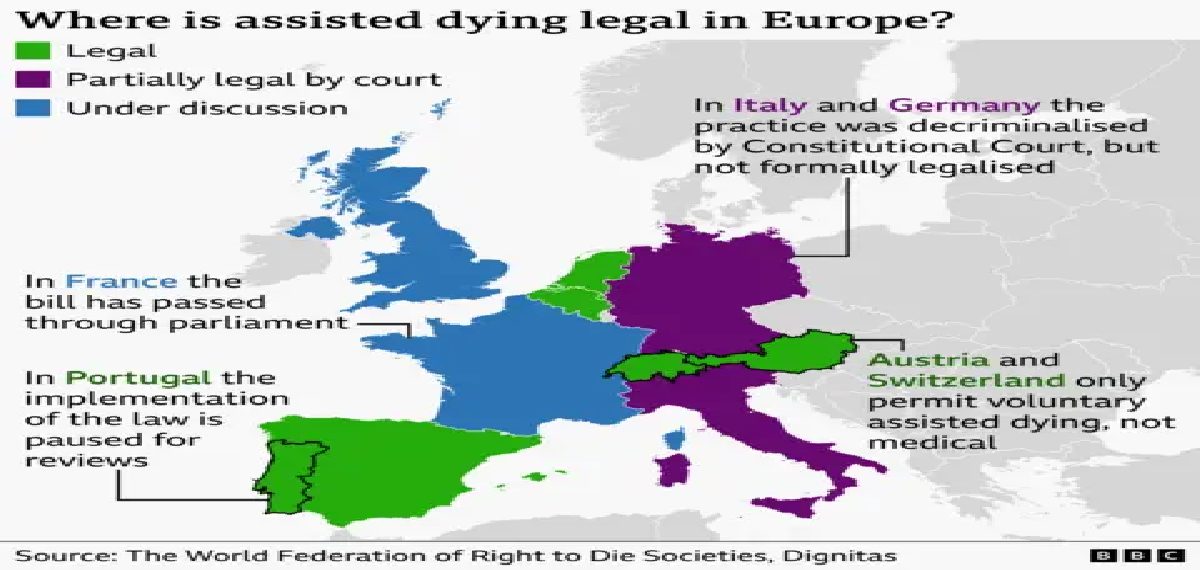
France legalizes assisted dying after a heated parliamentary vote, marking a pivotal shift in end-of-life care and national policy.

France’s National Assembly voted 291 to 241 to create a legal right to assisted dying for adults with a “serious and incurable” life‑threatening illness, after years of debate and repeated rejections in the Senate. Prime Minister Sébastien Lecornu said he will refer parts of the bill to the Constitutional Council before it can become law.
The law would permit assisted dying for patients in an advanced or terminal stage whose condition causes constant physical or psychological suffering that is unbearable or resistant to treatment. The patient must freely manifest their intention to a physician, who then confirms the request after consultation within 15 days.
After a mandatory two‑day reflection period, the patient must self‑administer a lethal substance; if unable, a doctor or nurse may do so. The physician must verify the patient’s decision on the day of the procedure.
Wednesday’s vote moves France toward joining European countries that allow some form of assisted dying, such as the Netherlands and Belgium, which legalized physician‑assisted death in 2002, and Switzerland, where assisted suicide is permitted under strict conditions.
Opposition has been persistent: the Senate, dominated by right‑wing parties, previously rejected similar texts three times. The Catholic Church and segments of the medical profession have voiced strong objections, while opinion polls show broad public support for offering terminally ill people the choice between palliative care and assisted dying.
The parliamentary approval marks a major shift in France’s approach to end‑of‑life rights and is likely to reshape medical practice, legal oversight and public debate. If validated by the Constitutional Council, hospitals and care facilities will need to update protocols, train staff and address conscience clauses for practitioners opposed on ethical grounds. Financial and regulatory frameworks will also be tested as demand, safeguards and oversight mechanisms unfold.
Politically, the move highlights a tension between legislative momentum and cautious executive oversight: Prime Minister Lecornu’s referral signals concerns about implementation details, including the two‑day reflection window, consent for those under legal protection, and the role of palliative institutions.