10 Eylül 2026
açık


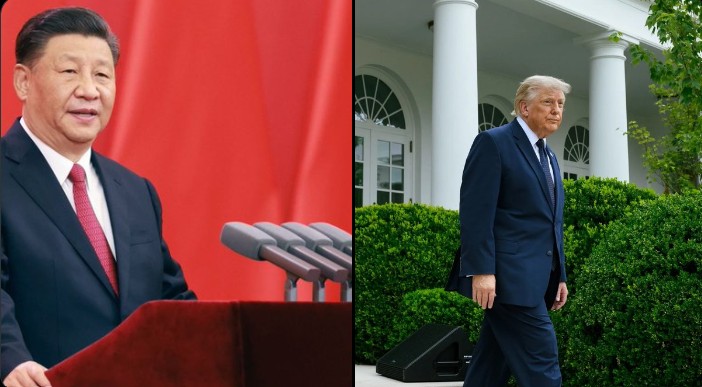
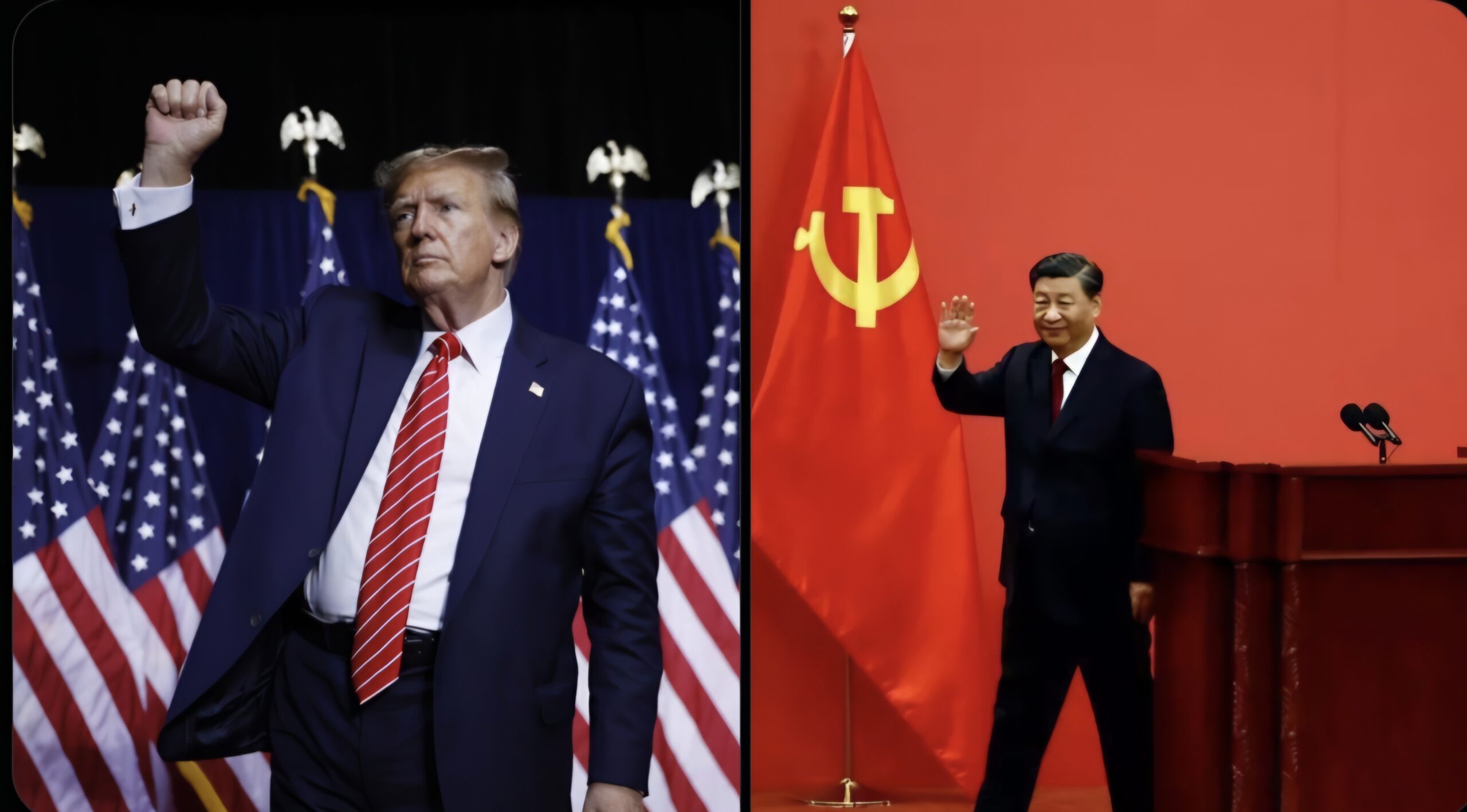
China’s move next week could become the United States’ biggest nightmare.
For the first time in his life, Xi Jinping will attend an artificial intelligence conference next week.
At first glance, it looks like an ordinary visit.
But that single step could mark the first visible move in a war that has been unfolding quietly. No weapons, no noise—just a battle for the greatest prize in history.
Let me explain.
For the past century, one thing has ruled the world.
Oil.
Whoever controlled oil controlled both the economy and military power. Wars were fought over it, and governments were toppled because of it.
Now that throne is changing hands.
The new oil is artificial intelligence.
AI is no longer just another application. It is the intelligence that will drive factories, militaries, financial systems, medicine—virtually everything.
Whoever masters that intelligence will shape the 21st century.
That is why the world’s two superpowers, the United States and China, have entered a silent but relentless race.
Let’s first look at where America stands.
The United States has invested everything in this race. I’m not exaggerating—the numbers speak for themselves.
The U.S. economy expanded during the first half of 2025. But if you remove AI and data center investments from that growth, what remains is just 0.1% growth—essentially flat. That calculation was made by a Harvard economist.
There is only one thing keeping the country afloat.
Artificial intelligence.
The same applies to the stock market. A handful of AI companies breaking historic records are carrying the rest of the market.
America’s entire prosperity depends on one assumption proving true.
We will win the AI race.
But this goes far beyond wealth.
The United States has entrusted not only its economy but also its future to artificial intelligence.
Today it carries $39 trillion in debt. Under normal conditions, that debt is nearly impossible to pay off.
The only escape is for AI to generate enough economic growth to prevent the country from collapsing under its debt burden.
The clearest voice saying this is the world’s richest man.
Elon Musk says that if AI and robotics fail, America will go bankrupt. Nothing else can solve this debt problem.
For America, this is not simply a competition—it is a necessity. It has to win.
What about China?
For years, many believed China was lagging behind while American companies led the race.
Then one morning, that belief was shaken.
In January 2025, a Chinese company called DeepSeek emerged. It demonstrated an AI model capable of achieving what American giants spent billions on—for only a few million dollars.
That day, the U.S. stock market was rattled.
Nvidia lost $589 billion in a single day—the largest one-day market value loss in corporate history.
Think about it.
One of the world’s most valuable companies lost value equivalent to the budget of an entire nation between morning and evening. The cause was neither war nor financial crisis. It was simply a low-cost AI model from China.
If one Chinese company could do that with a single model, what happens when the full weight of the Chinese state stands behind it?
That is where the bigger picture begins.
This is not merely a software race.
Artificial intelligence rests on three pillars: energy, manufacturing, and semiconductors. Now divide those three pillars between America and China.
First: energy.
Electricity is the real fuel of AI. A single data center can consume as much electricity as a mid-sized city. Whoever wants to win this race must first secure that power.
China is already ahead. It produces more than twice as much electricity as the United States. More importantly, every year it adds far more new generating capacity to its grid than America does. The gap is widening, not shrinking.
Second: manufacturing.
Artificial intelligence is not a cloud—it has a physical form. Servers, cooling systems, robots, and massive factories all matter. China builds that physical foundation. America designs the brain; China builds the body that carries it.
Third: semiconductors.
This is the one area where America still leads. It designs the world’s most advanced AI chips and has banned their export to China in an effort to preserve that advantage.
But that strategy backfired. Unable to access those chips, China mobilized the full power of the state to develop its own. DeepSeek had already demonstrated that powerful AI can be built with fewer chips and at much lower cost.
America leads in only one of the three pillars—and even that advantage is beginning to erode.
That is why Xi Jinping’s decision to personally attend next week’s conference matters.
When a national leader shows up in person, the issue is no longer just business—it becomes a top state priority.
Xi’s appearance sends one unmistakable message.
China is putting its full weight behind artificial intelligence.
That is why the entire world will be watching Xi Jinping’s speech next week.
Especially Wall Street.
Because a single sentence from that podium could shake the narrative supporting America’s financial markets.
In reality, this is nothing new.
History has always worked this way.
Britain dominated an era through steam power. America dominated the next through oil and industrial capacity. Now the question is who will dominate artificial intelligence.
More than 2,500 years ago, Sun Tzu wrote: The greatest victory is the one won without fighting.
Next week Xi Jinping will simply walk into a conference hall.
But by doing so, he may signal that the defining battle of the 21st century has already begun.
This time, the prize is not a country or an oil field.
It is an entire century.
This is my personal analysis.
I will continue following developments and keep you updated.
Kaynak: Penguin X @ThePenguinBTC