29 Ekim 2026
parçalı bulutlu


Bitcoin dips under $80,000 as a tech-led selloff triggers broad cryptocurrency losses and investor caution across markets.
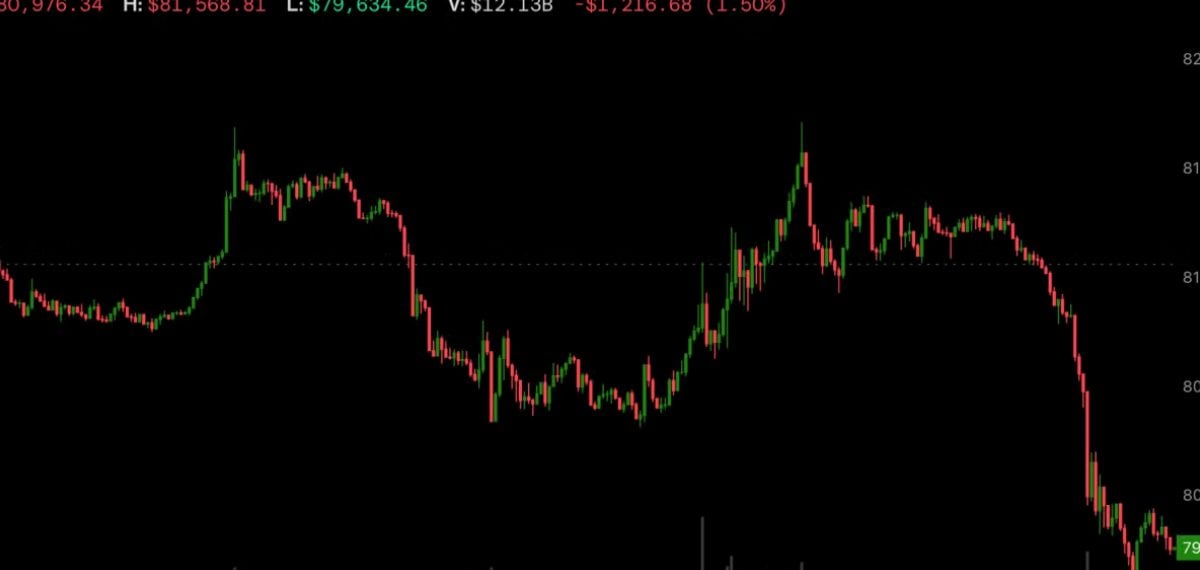
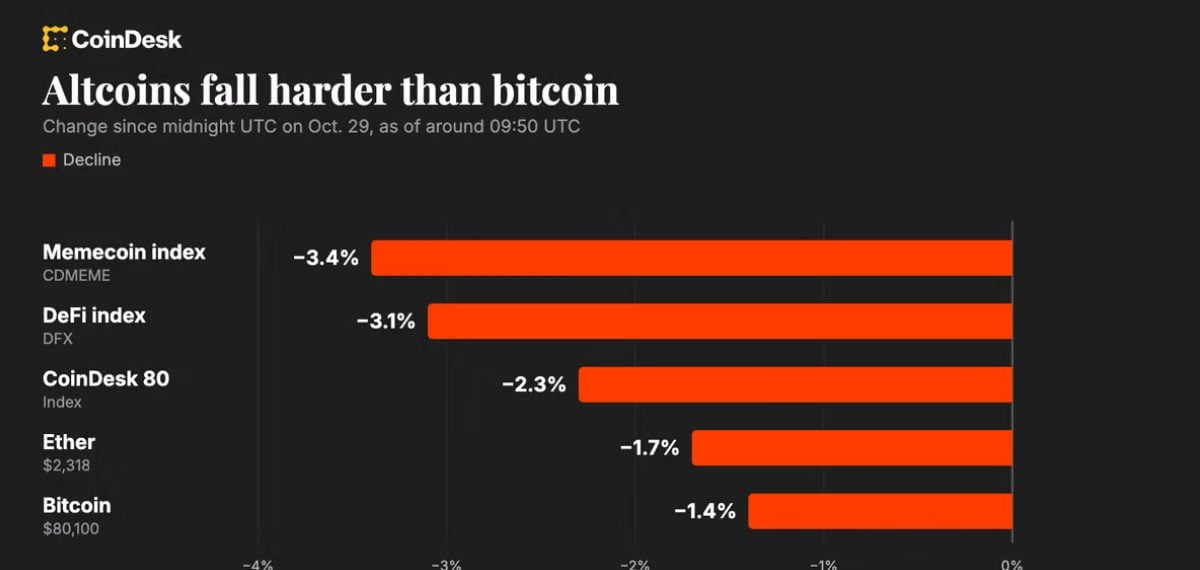
Bitcoin fell below $80,000 during Thursday’s Asian trading session, reversing a two-day rebound and dropping from above $81,700 to around $79,800, which dragged the broader crypto market lower and triggered liquidations among traders who had bet on a rally.
The selloff began in Asia after Samsung shares declined more than 5% when its semiconductor division narrowly missed analyst expectations, reporting operating profit of 106.5 trillion won for the three months through September versus an average analyst estimate of 108.5 trillion won and announcing projected capital expenditure of 84.4 trillion won for the year.
Market reactions included a more than 2% fall in South Korea’s Kospi and a 1.4% decline in Nasdaq futures, with that weakness rippling into cryptocurrencies including bitcoin, ether, XRP and solana and pulling prices lower across tokens.
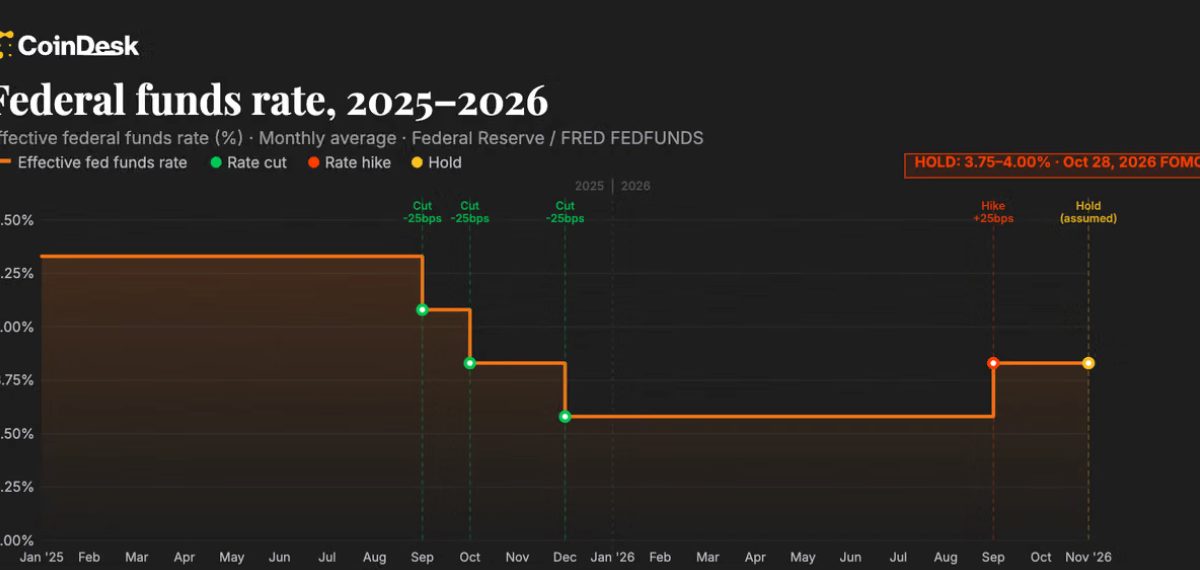
Overnight the Federal Reserve held its benchmark interest rate unchanged in the 3.75%–4% range and delivered what was described as a hawkish hold, with Chair Kevin Warsh noting that progress on inflation is happening but price pressures remain too high.
Rick Rieder, BlackRock’s Chief Investment Officer of Global Fixed Income and Head of the Global Allocation Investment Team, advised caution by recommending against a “heroic directional call” on rates and favoring a moderate duration posture to capture income opportunities while remaining patient as the economy evolves.
For cryptocurrencies, a sustained hawkish tone from the Fed could keep real yields elevated and limit capital inflows into riskier speculative assets, presenting downside pressure for markets sensitive to changes in fixed-income returns.
Bitcoin’s drop below $80,000 reflects heightened correlation between global technology equities and the crypto market when risk aversion intensifies, as demonstrated by the transmission of losses from Samsung’s semiconductor results through regional equity indices and into crypto prices.
The Fed’s hawkish hold reinforces a backdrop in which attractive real yields and elevated fixed-income income can reduce the appeal of speculative assets, increasing the probability of further volatility and capital rotations away from crypto until clearer easing of price pressures emerges.
Derivative market data showing $356 million of liquidations in the past 24 hours, with long positions accounting for $205 million, underscores how rapid price moves can amplify selling through futures and margin-driven exits across bitcoin and ether markets.