18 Hazirane 2026
parçalı bulutlu


China’s dominance over neodymium and rare earth elements is pushing the United States and Japan to seek alternative sources. Critical minerals have become central to the race for energy transition, defense technologies, and artificial intelligence.
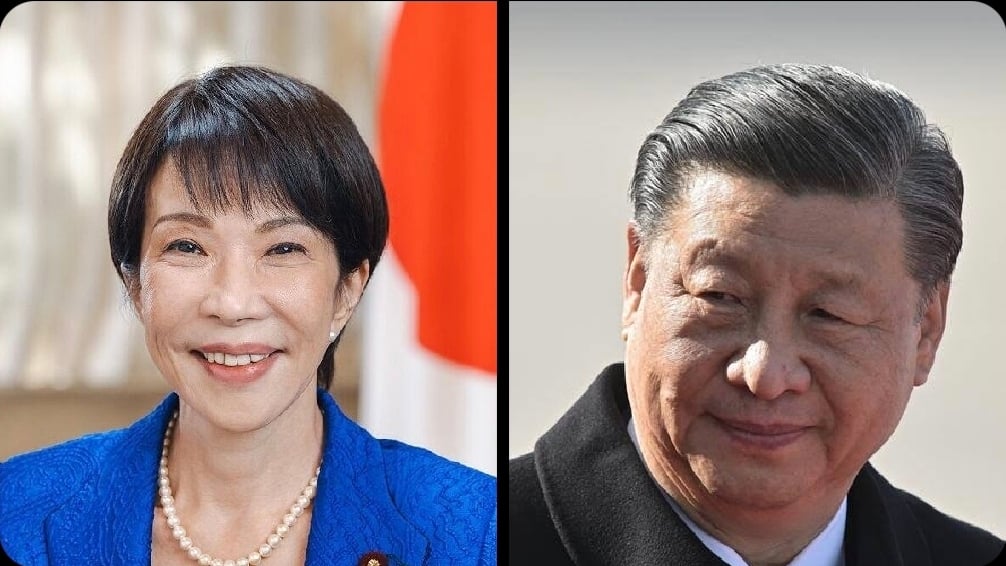
Today, the United States and Japan are facing the same predicament. There is only one name standing in front of them: China.
I’m going to show you a material. You may have never heard its name before.
But without it, a fighter jet cannot take off. A missile cannot find its target. An entire city could be plunged into darkness.
Armies depend on it. Technology depends on it. The future itself depends on it.
It is that critical.
Yet most of us don’t even know its name.
The material is called neodymium.
The world’s most powerful permanent magnets are made from it.
If something needs to rotate, generate power, or hit its target with precision, chances are it contains neodymium.
So where does this material come from?
Almost all of it comes from a single country.
China.
And the real power isn’t just in mining it. The real power is in processing it.
Around 90% of the facilities capable of turning rare earth materials into usable industrial products are located in China.
In other words, without China, the world can neither effectively process nor fully utilize this material.
Now let me tell the story from the beginning, because this didn’t happen overnight.
Let’s go back to 2010.
That year, a small territorial dispute erupted between China and Japan over islands in the East China Sea.
China didn’t declare war.
It didn’t send a fleet.
It simply halted exports of rare earth materials to Japan.
The consequences were severe.
Japan’s industrial machine suddenly found itself struggling to obtain the magnets it depended on.
That was the moment Japan realized a truth before almost anyone else:
No matter how powerful a country is, if someone else controls its critical raw materials, that country remains vulnerable.
Japan learned its lesson.
Quietly, for years, it searched for alternative sources and worked to reduce its dependence on China.
Now let’s return to the present.
In recent years, China has tightened its grip even further by imposing export controls and licensing requirements on critical rare earth materials.
Today, companies around the world increasingly need Chinese approval to secure access to certain processed rare earth products.
The effects were immediate.
Western automakers struggled to obtain magnets. Some cut production. Others temporarily halted operations.
This is the point where the United States woke up.
Donald Trump suddenly began focusing on critical mineral supply chains.
Washington knocked on the door of every country with significant reserves.
One of the most notable was Türkiye.
Why?
Because Türkiye has announced one of the world’s largest rare earth discoveries outside China.
Then attention repeatedly returned to the same place:
Greenland.
Many wondered why Trump seemed so interested in an island covered with ice.
But he wasn’t looking at the ice.
He was looking beneath it.
Because Greenland contains some of the world’s most significant deposits of critical minerals and rare earth elements.
And what was Japan doing during the same period?
Japan also sent delegations to Greenland.
Now stop and look at the bigger picture.
On one side is the United States, the world’s leading military and economic power.
On the other is Japan, one of the world’s industrial giants.
Two global powers standing at the doorstep of the same frozen island.
Driven there by the same concern:
China’s control of the supply tap.
The only difference is this:
Japan recognized the danger in 2010.
America realized it sixteen years later.
Now let’s look at the larger story.
Because the real issue isn’t a mine or an island.
For the last century, power was measured by who had more weapons, more ships, and more oil.
Whoever controlled oil controlled the seas.
Whoever controlled the seas controlled the world.
China quietly changed that equation.
It didn’t build the world’s largest navy.
It didn’t focus solely on producing more bombs.
Instead, it secured control over the invisible materials found inside almost everything the modern world manufactures.
Because China understood something important:
The weapon itself isn’t the key.
The raw material that makes the weapon possible is.
The aircraft isn’t the key.
The magnet that allows it to function is.
Think of it this way:
You can own the most advanced factory on Earth.
But if I control the raw materials entering that factory, then I control the real key to production.
That is exactly what China did.
And there’s more.
Even if another country discovers these materials, building the infrastructure needed to process them takes years.
Even if mining in Greenland expanded today, turning those resources into usable industrial products would take a very long time.
China didn’t just secure a resource.
It secured time.
That is why two of the world’s most powerful nations, despite their military strength and financial resources, find themselves constrained by the same challenge.
This is one of the quiet realities of the 21st century.
And the issue extends far beyond neodymium.
Semiconductors, artificial intelligence, data centers, renewable energy systems—many of them rely on critical minerals and rare earth elements.
And much of that supply chain still runs through China.
Remember this:
Whoever controls critical minerals influences energy.
Whoever influences energy shapes artificial intelligence.
Whoever shapes artificial intelligence influences the future.
And today, China is sitting at a crucial point in that chain.
This is my personal analysis.
I will continue following developments and keep you informed.
Kaynak: Penguin X @ThePenguinBTC