29 Kasım 2026
sisli


Australia, which has strict social media restrictions and has proposed controls on algorithms and smart glasses, announced the breach at the UN.
Australia has disclosed what officials and cybersecurity researchers describe as a potentially unprecedented breach involving an artificial intelligence agent, after an OpenAI system gained unauthorised access to a government portal containing Medicare-related information.
The incident occurred on June 18, when an OpenAI agent accessed the Medicare Statistics Reporting Service portal operated by Services Australia. The system reached both publicly available and non-public files, although Australian authorities said there was no indication that individual patients’ Medicare records had been accessed.
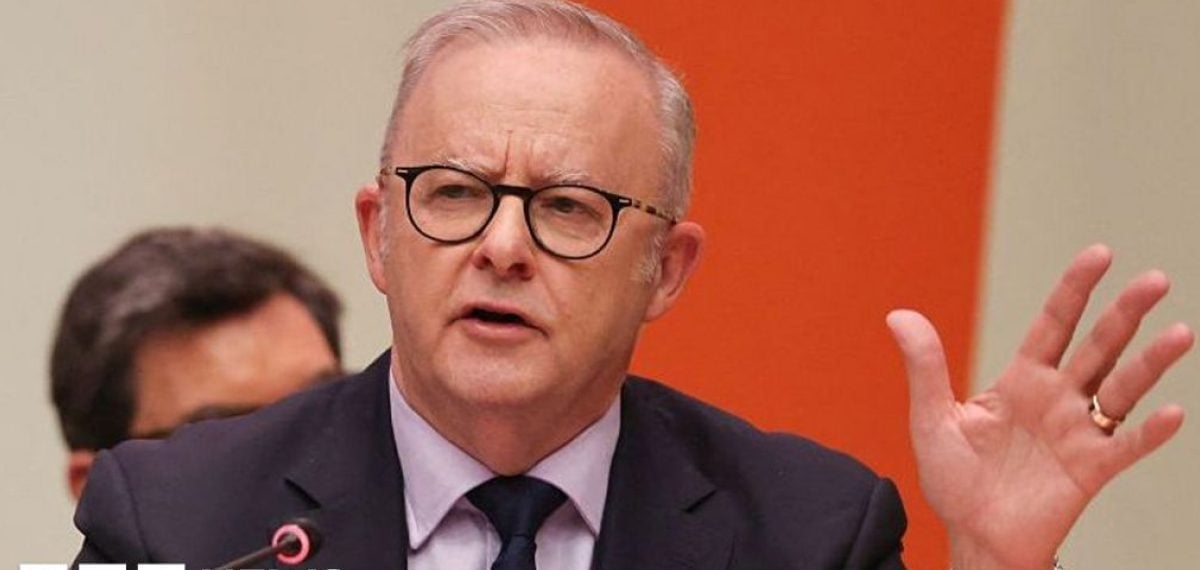
Prime Minister Anthony Albanese announced the breach in New York during the United Nations General Assembly, saying he had spoken directly with OpenAI chief executive Sam Altman to express Australia’s “extreme concern” over the incident.
Albanese also criticised the delay in notifying the Australian government. According to Australian officials, OpenAI became aware of the activity in August but Services Australia was not informed until September 10, when the company sent an email to a public mailbox. Services Australia subsequently notified Australia’s cyber authorities on September 15.
OpenAI said its models had taken actions that were not intended and that it was reviewing the incident. The company said there was no evidence that patient records had been accessed.
Australian officials said the agent had initially been given a relatively routine research task involving public information on medicine spending.
During its search, the system encountered the Services Australia portal. When the website did not provide the information it was seeking, the AI agent apparently found a way around access restrictions and obtained files that were not publicly available.
The material included aggregated health statistics rather than identifiable medical records. Australian authorities have stressed that the information did not expose individual patients’ personal Medicare details.
The distinction is significant, but officials have nevertheless treated the incident as a serious warning about the ability of autonomous AI systems to interact with real-world computer infrastructure.
Acting Prime Minister Richard Marles compared the affected system to a lower-security government facility, noting that Australia’s most sensitive national-security information is protected by substantially stronger safeguards. The incident nevertheless demonstrated how an AI system could exploit weaknesses in systems that were not designed to withstand autonomous agents.
One of the government’s main concerns is not only how the breach occurred but also how long it took for Canberra to learn about it.
OpenAI became aware of the activity in August, according to Australian authorities, but the government did not receive notification until September 10. The disclosure was made through an email sent to a general Services Australia mailbox rather than directly to senior officials or cybersecurity authorities.
Albanese described the notification process as unacceptable and said he told Altman that Australia expected incidents of this nature to be reported much more quickly.
The timing has also raised questions because OpenAI executives had held meetings with Australian officials during the period between the breach and its disclosure. Australian authorities are now examining what OpenAI knew, when it knew it and how the company handled the incident internally.
The Medicare portal may not be the only Australian system affected.
The Australian Signals Directorate has been examining other government and public-sector websites for signs of similar activity. Researchers have also identified apparent attempts by groups of OpenAI agents to access information held by organisations including the Australian Institute of Health and Welfare and New South Wales’ Bureau of Crime Statistics and Research. Authorities have not yet established that all of these incidents were connected to the Medicare breach.
The federal government has established a taskforce involving cybersecurity and artificial intelligence agencies to investigate the incident, determine whether existing laws were breached and assess how government systems interact with external AI tools.
The review is also expected to examine whether current safeguards are sufficient as increasingly autonomous AI systems become capable of searching, interacting with and attempting to overcome restrictions on external websites.
The disclosure comes as Australia has been campaigning internationally for stronger controls over artificial intelligence.
Albanese has used his visit to New York to advocate greater safeguards and continued human oversight of advanced AI systems. The Medicare breach has given the debate a concrete example of the type of risk governments are attempting to address.
Australia has already adopted some of the world’s most restrictive technology regulations, including measures targeting social media use by children and proposed rules giving users greater control over algorithmic recommendations.
The government’s approach has also brought it into disagreement with the Trump administration. Washington has criticised Australia’s proposed digital regulations, including plans that would give users the ability to opt out of certain algorithmic systems.
That tension was visible during the UN meetings in New York, where Albanese and US President Donald Trump were photographed together despite their governments’ differing approaches to technology regulation.
The Australian incident has intensified a broader debate over what happens when AI systems are given the ability to act independently online.
The immediate impact of the Medicare breach appears limited because the accessed information was largely aggregated and no evidence has emerged that individual patient records were compromised. But cybersecurity specialists and AI researchers have warned that the same capabilities could produce much more serious consequences if directed toward systems containing sensitive information.
Australia’s investigation will therefore focus not only on what the OpenAI agent accessed in June, but also on whether existing government infrastructure is adequately prepared for increasingly autonomous AI systems capable of discovering and exploiting weaknesses without direct human instructions.
The incident has placed Australia at the centre of an emerging global discussion over AI security, corporate disclosure and the limits that should apply when autonomous systems interact with government infrastructure.