29 Kasım 2026
sisli


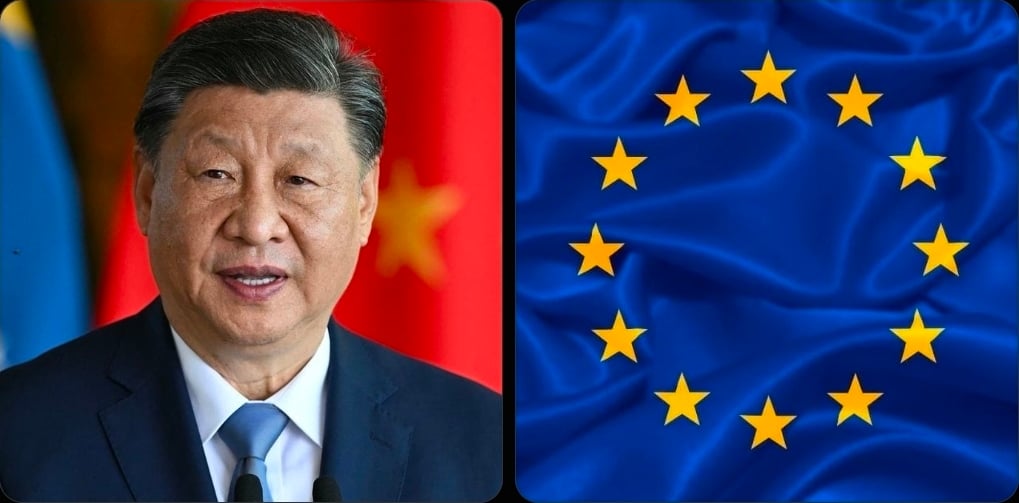
China has developed a strategy so effective that the United States and Europe are now adopting it.
Europe announced a €50 billion technology fund this week.
Most people see this as Europe entering the technology race.
But this fund will not lend money to companies. Instead, it will buy shares and become a partner.
China has been doing this for 12 years. The United States started last year.
I will show you how this strategy works and how trade has turned into a weapon.
When China joined the World Trade Organization in 2001, the rule was simple.
The world bought a product from whichever country could produce it at the lowest cost.
At the time, trade was not a weapon between major economies.
China followed this rule but supported its companies in the competition.
The government first selects an industry. Then it provides companies in that sector with cheap electricity, low-cost loans and financial support. In some cases, the government also becomes a shareholder.
With this support, Chinese companies sell the same products at lower prices than their competitors.
Competitors cannot withstand these prices, and over time, the industry shifts to China.
This is exactly what happened in the battery sector.
Japanese companies had been leaders in this field for a long time.
Until 2019, China provided electric vehicle incentives only to vehicles using batteries manufactured by producers approved by the Chinese government.
Today, China produces more than 80% of the world’s batteries.
But what happens when an entire industry becomes concentrated in one country?
China also processes approximately 90% of the world’s rare earth elements and made their exports subject to licensing in 2025.
The magnets used in electric vehicle motors are made from rare earth elements, and China decides which countries can obtain them.
This is how trade turns into a weapon.
The United States criticized this approach for years. Last year, however, it began taking stakes in companies itself.
Three months after China’s export decision, the US government became the largest shareholder in MP Materials, a rare earth producer.
If the company’s product is sold below a predetermined price, the government will cover the difference. On the day the agreement was announced, the company’s shares rose by 50%.
China is also using this strategy in the semiconductor industry. Twelve years ago, it established a state fund to acquire stakes in semiconductor companies.
Today, in some parts of China, local governments cover up to half of the electricity bills of data centers that use domestically produced chips.
In my view, the United States does not want what happened in the battery industry to happen again in semiconductors. That is why it acquired a 9.9% stake in Intel.
The number of companies in which the US government holds shares has exceeded 40.
US companies design advanced artificial intelligence chips, and the United States has made their sale to China subject to authorization.
Now, the United States also wants to interfere with sales made by its allies.
The Dutch company ASML manufactures semiconductor production machines, and the US Congress is considering a bill that would restrict sales of these machines to China.
Approximately 20% of ASML’s revenue comes from China. While the proposed legislation was being discussed, the company’s shares fell by nearly 6% on Wednesday.
This week, the Netherlands said it would decide for itself who could purchase its machines.
Europe is caught between these two powers.
This year, the United States imposed the highest average tariffs on goods entering its market since 1932.
Meanwhile, Europe imports 98% of its rare earth magnets from China.
Last year, the Netherlands took control of Nexperia, a semiconductor manufacturer owned by a Chinese company that produces automotive chips.
In response, China halted exports of chips manufactured at Nexperia’s factories in China.
European automakers warned that production could come to a halt within weeks.
Europe is establishing this fund to avoid becoming dependent on other countries in future industries. It will take stakes in artificial intelligence and quantum computing companies.
When China joined the World Trade Organization, prices determined which country would sell a product.
Today, governments determine this in critical industries.
China, the United States and Europe are becoming shareholders in companies operating in these sectors to gain this power.
In 2022, Morris Chang, the founder of semiconductor manufacturer TSMC, said:
“Globalization is almost dead, and free trade is almost dead.”
Chang made this statement at the ceremony for TSMC’s semiconductor factory built in the United States.
This is my personal analysis.
I am following developments closely. I will keep you informed.
Kaynak: Penguin X @ThePenguinBTC