30 Kasım 2026
sisli


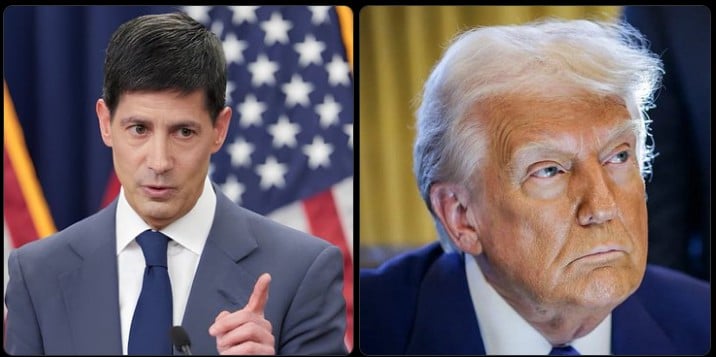
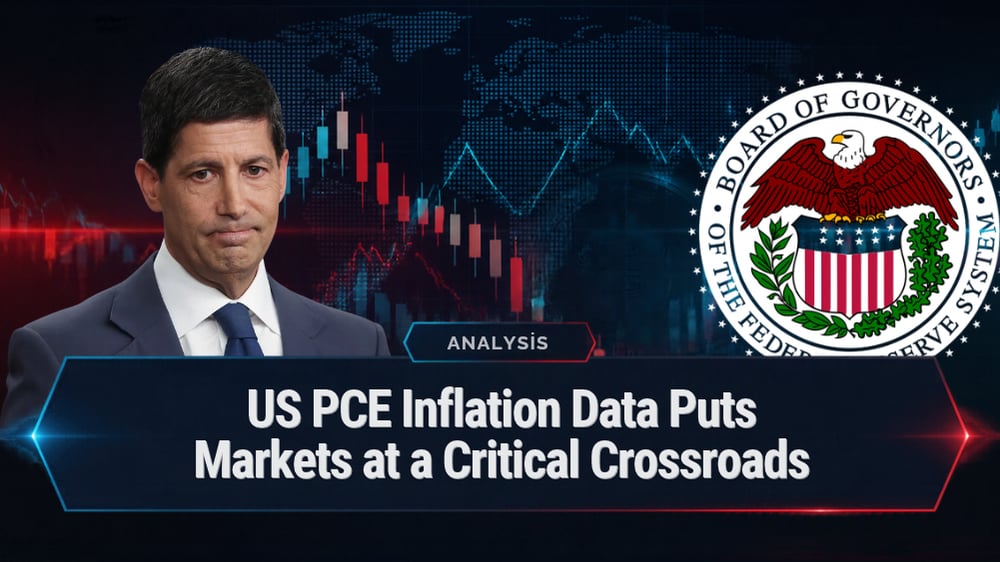
When will markets finally catch their breath? The answer was written by the Fed’s chairman in 2025.
Trump appointed Kevin Warsh to lead the Federal Reserve because he wanted interest rates to come down.
Yet after taking office, Warsh did not cut rates. He raised them.
And yet the same Warsh had argued in an article he wrote in 2025 that interest rates should be lowered.
So why would someone who wants lower interest rates raise them instead?
Once you understand the reason, you will also see when markets might finally recover.
I will explain the reasoning behind this decision and the signals I am watching.
In his article, Warsh described an optimistic future.
Artificial intelligence would make companies more productive, inflation would fall, and the Fed would be able to cut interest rates.
Today, the opposite is happening.
AI companies first have to build data centers. These facilities require chips and electricity, and the prices of both are rising.
Many Fed officials say these investments are currently pushing inflation higher.
After becoming Fed chairman, Warsh also said he believed this spending would drive prices up.
The idea in his article was not necessarily wrong. But AI brought higher costs first, while the promised lower costs were pushed into the future.
I believe Warsh is raising interest rates to deflate the AI bubble.
But why do I call it a bubble?
Borrowing for data centers has exceeded $680 billion this year, five times the level recorded three years ago.
In its November report, the Fed also accounted for major technology companies’ commitments, including rental and guarantee payments. The total exceeded $3 trillion.
Investors are also buying stocks with borrowed money, and this debt has reached a record $1.5 trillion in the United States.
This year, stock valuations relative to companies’ earnings over the past decade have approached levels seen during the dot-com bubble of 2000.
Investors are valuing Anthropic, an AI company that has yet to generate consistent profits, at more than $1 trillion.
When debt grows this large and stock prices become this expensive, I call it a bubble.
The weak point of this bubble is debt.
As interest rates rise, companies borrow at higher costs, build fewer data centers, and reduce pressure on prices.
A gardener prunes a tree’s branches first to help it grow better.
What Warsh is doing is similar: he is raising interest rates first so that he can lower them later.
The Fed does not describe its decision this way. Its official justification is inflation.
Oil prices, which have risen because of the war in Iran, are also pushing inflation higher.
The Fed cannot make oil cheaper, but it can slow spending financed through borrowing.
AI companies, however, are not slowing down. They plan to spend even more next year.
If interest rates fall today, these companies will borrow even more.
That is why the Fed is preparing for another rate hike.
This situation reminds me of the year 2000.
Even after internet stocks peaked that year, the Fed continued raising interest rates and did not make its first rate cut until the following year.
First the bubble burst. Only then did interest rate cuts follow.
So when will markets recover?
The answer is written in Warsh’s article.
The very thing that is driving prices higher today—artificial intelligence—will eventually be what brings interest rates down.
I am watching four signals to determine when that relief might arrive.
1. The Fed’s December 9 Meeting
The Fed will announce its interest rate decision that day and release its updated projections.
2. Corporate Spending Plans
We will see the spending plans of major technology companies in their earnings reports at the beginning of the new year.
The first company to announce spending cuts will be the most important signal.
3. Banks
Seven banks have failed in the United States this year.
If bank failures increase, the Fed could lend money to banks even without cutting interest rates, injecting liquidity into the market. This is what happened when major banks failed in 2023.
4. The U.S. Debt Ceiling
The United States is likely to reach the debt ceiling set by Congress in the first months of 2027.
After that point, the U.S. Treasury will be unable to issue additional debt and will begin spending the money it has in its account.
There is currently approximately $900 billion in the Treasury’s account.
Even if the Fed does not cut interest rates, this money will flow into the markets as it is spent.
If you are waiting for interest rate cuts, you are unknowingly waiting for AI companies to reduce their spending.
The first injection of liquidity, however, could come sooner from the Treasury’s cash reserves.
Former Fed Chairman William McChesney Martin said in 1955:
“The Federal Reserve is the chaperone who has ordered the punch bowl removed just when the party was really warming up.”
Warsh is doing the same thing today.
When the bubble finally bursts, repaying the accumulated debt will become increasingly difficult, and the Fed will have no choice but to cut interest rates.
This is my personal analysis.
I am following developments closely. I will keep you informed.
Kaynak: Penguin X