20 Ekim 2026
parçalı bulutlu


The opposition in Venezuela has slammed her for not setting even a tentative date for elections.
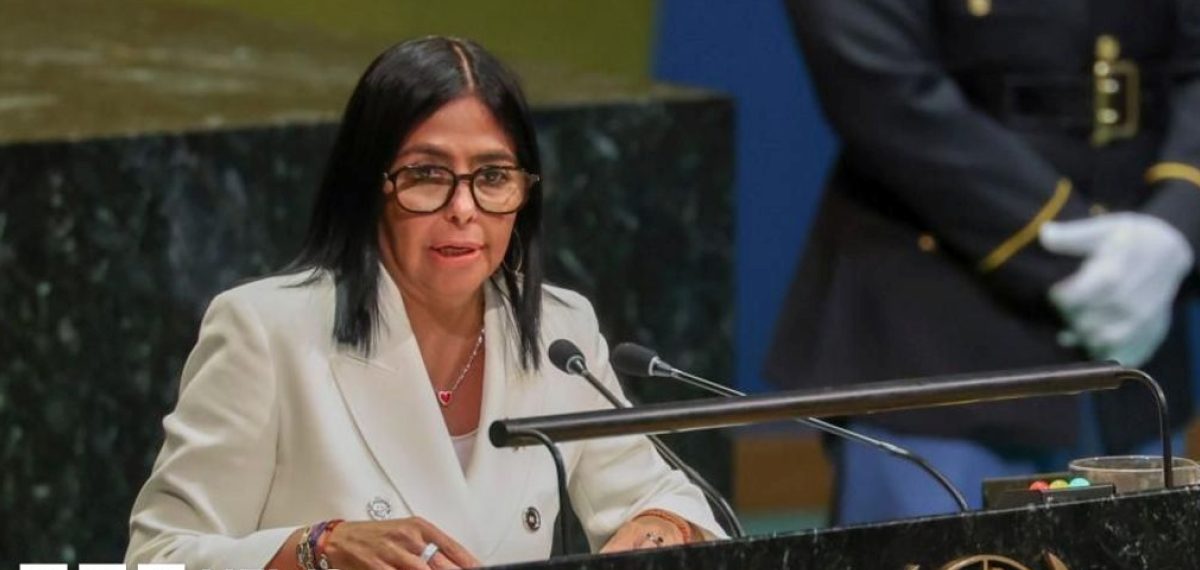
Venezuela’s interim President Delcy Rodríguez has pledged that the country will hold elections as part of a transition toward what she described as “full democracy,” but stopped short of providing even a provisional date for the vote.
Speaking at the United Nations General Assembly in New York, Rodríguez said Venezuelans themselves would determine when elections should take place. She also said her administration had begun political discussions with parts of the opposition and would seek conditions that allow competing political forces to participate.
Rodríguez took office after Nicolás Maduro was removed from power in a U.S. military operation earlier this year and subsequently taken to the United States to face criminal charges. Before becoming interim president, Rodríguez had served as Maduro’s vice president and was a senior figure in his government.
Her failure to announce an election timetable has drawn criticism from Venezuelan opposition figures, who have argued that a democratic transition requires a clear path toward a vote.
Rodríguez also used her UN address to emphasize improving relations with Washington. She thanked U.S. President Donald Trump for supporting dialogue and said Caracas and Washington were working to overcome their differences through cooperation in areas including energy, security, the fight against transnational crime and economic development.
Her remarks contrasted with Trump’s own speech to the General Assembly, in which he strongly criticized Maduro, describing the former Venezuelan leader as an “outlaw dictator” and “a real criminal.” Trump also highlighted the major oil agreement reached between Washington and Venezuela’s interim authorities. The White House has said the arrangement gives the United States majority control over more than 65 billion barrels of proven Venezuelan oil reserves.
Trump did not mention elections in his UN address. Earlier this month, however, he told the Los Angeles Times that he did not believe Venezuela was yet ready for elections.
Trump and Rodríguez held a brief meeting in New York on the sidelines of the General Assembly. U.S. Secretary of State Marco Rubio, who participated in the discussions, said elections were among the subjects addressed.
Rubio said Washington wanted the electoral process to follow a broader political transition designed to rebuild Venezuela’s institutions and establish conditions for free and fair elections. He argued that holding a vote before the country’s political and economic institutions had been restored could leave an elected government facing severe instability.
The U.S. secretary of state also pointed to negotiations between Rodríguez’s interim administration and sections of the opposition as evidence that the transition process was moving forward.
The talks have also faced criticism because María Corina Machado, one of Venezuela’s most prominent opposition figures, is not participating.
Machado has remained outside Venezuela since leaving the country late last year. Previous negotiations over the political transition have proceeded without her direct participation, a development that has prompted concern among her supporters.
Machado remains barred from holding public office under a restriction imposed during Maduro’s rule. Her political future and potential participation in any eventual election remain among the unresolved issues surrounding Venezuela’s transition.
For now, Rodríguez has committed her administration to holding elections but has left the central question of when Venezuelans will vote unanswered. The timetable, the participation of opposition forces and the rebuilding of the country’s political institutions are expected to remain key issues as negotiations continue.