23 Eylül 2026
kapalı


UK Prime Minister Starmer receives France’s Legion d’honneur in recognition of UK-France ties and steadfast support for Ukraine.
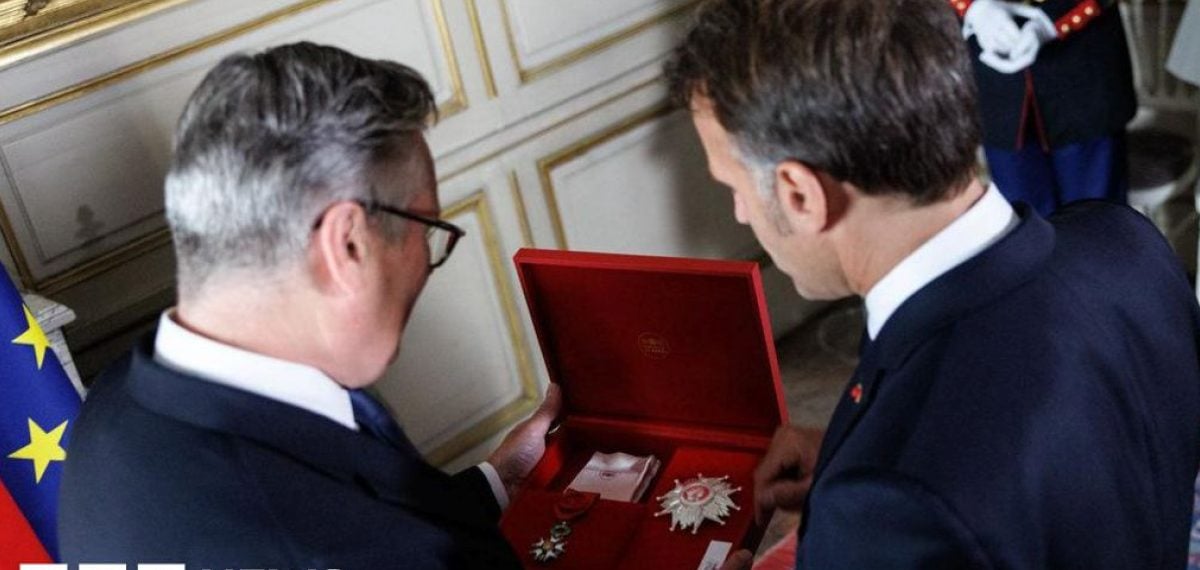
British Prime Minister Keir Starmer received France’s highest distinction, the Legion d’honneur, at the conclusion of a Coalition of the Willing meeting co‑led by President Emmanuel Macron to coordinate support for Ukraine following Russia’s 2022 full‑scale invasion. Macron publicly praised Starmer’s “decency” and thanked him for commitments to his country, European security and the Franco‑British relationship; Ukraine’s President Volodymyr Zelensky and German Chancellor Friedrich Merz also paid tribute at the French presidential palace.
The decoration was presented as Starmer prepares to leave office next week. Macron said he wanted to express the gratitude of the French people for Starmer’s years as prime minister and highlighted the former premier’s human qualities and reliability as a partner.
The Legion d’honneur is awarded annually to roughly 2,000 French nationals and about 200 foreign recipients for “outstanding merits.” Historically it has recognised leaders such as Winston Churchill (awarded the Grand Croix) and, controversially, figures ranging from Nelson Mandela to Vladimir Putin and Muammar Gaddafi. Only one foreign recipient, former Panamanian President Manuel Noriega, has been stripped of the honour; recent revocations under Macron included Harvey Weinstein after sexual‑misconduct convictions.
While the ceremony underlined diplomatic appreciation for Starmer’s role in European security coordination, it also recalled debates over the order’s political and moral legacy given its long history and varied roster of honorees.
Diplomatically, the award cements a public acknowledgement from France of the United Kingdom’s continuing role in European security frameworks despite political turnover at home. For Ukraine, the decoration signals sustained high‑level solidarity from Western partners, reinforcing coalition cohesion at a moment when military and economic support remain crucial.
Politically, bestowing a symbolic national order on a serving foreign prime minister can amplify domestic perceptions of international legitimacy and influence bilateral ties beyond immediate policy cooperation. Media attention on the ceremony may also revive discussions about the order’s historical contradictions and the criteria for honouring contemporary leaders.