25 Eylül 2026
az bulutlu


According to TUIK data, the Turkish economy grew by 2.5% year-on-year in the first quarter of 2026. The information and communication sector recorded the strongest growth at 9.5%, while the industrial sector contracted by 0.8%.
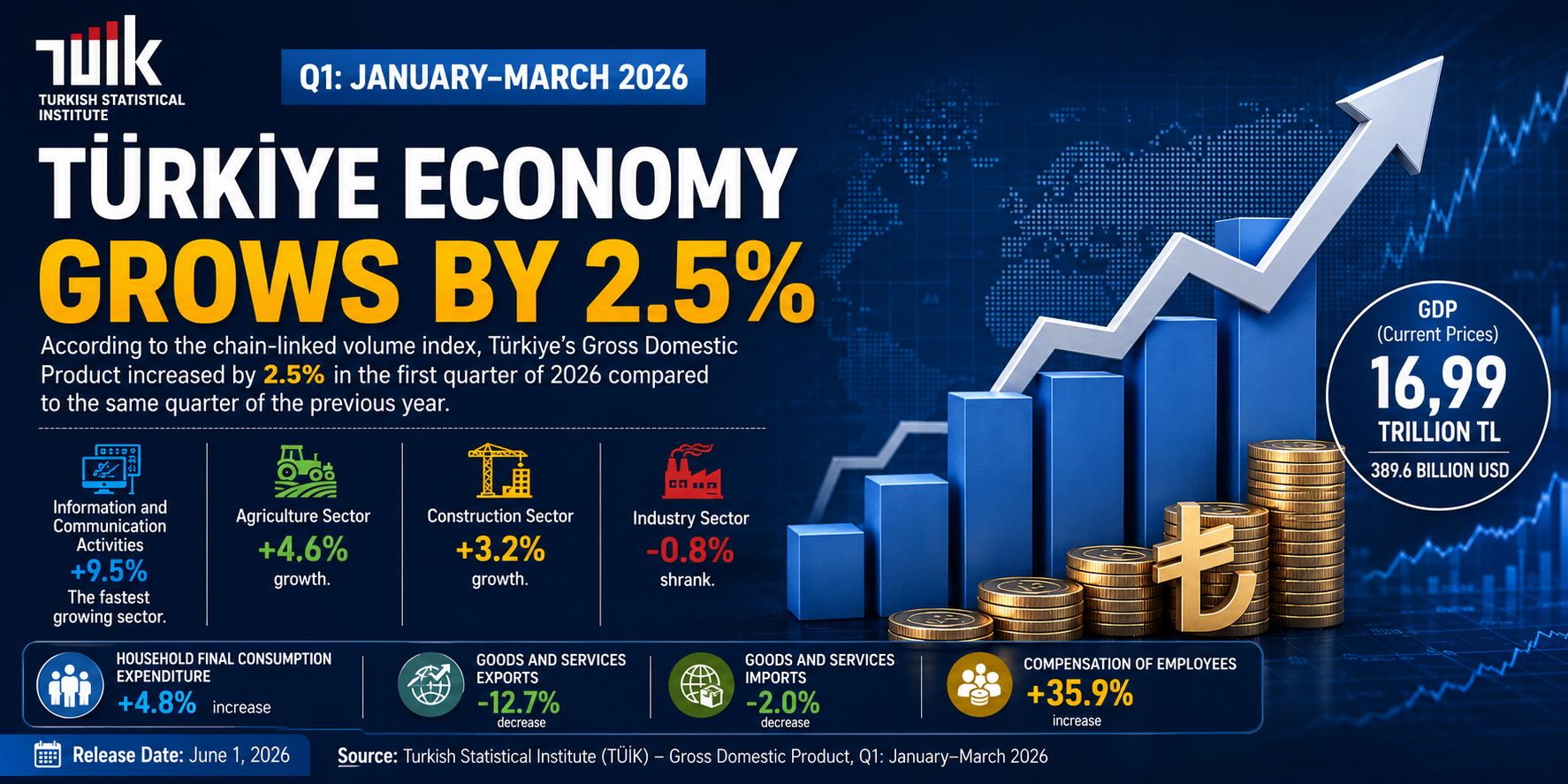
The Turkish Statistical Institute (TUIK) has released Gross Domestic Product (GDP) data for the January–March period of 2026. According to the figures, Turkey’s economy expanded by 2.5% in the first quarter of the year compared to the same period last year, based on the chain-linked volume index.
While the data indicate that economic growth continues, significant differences among sectors drew attention. Information and communication activities were among the leading contributors to growth, posting an increase of 9.5%. Other service activities grew by 5.2%, agriculture by 4.6%, and trade, transportation, accommodation, and food services by 3.7%.
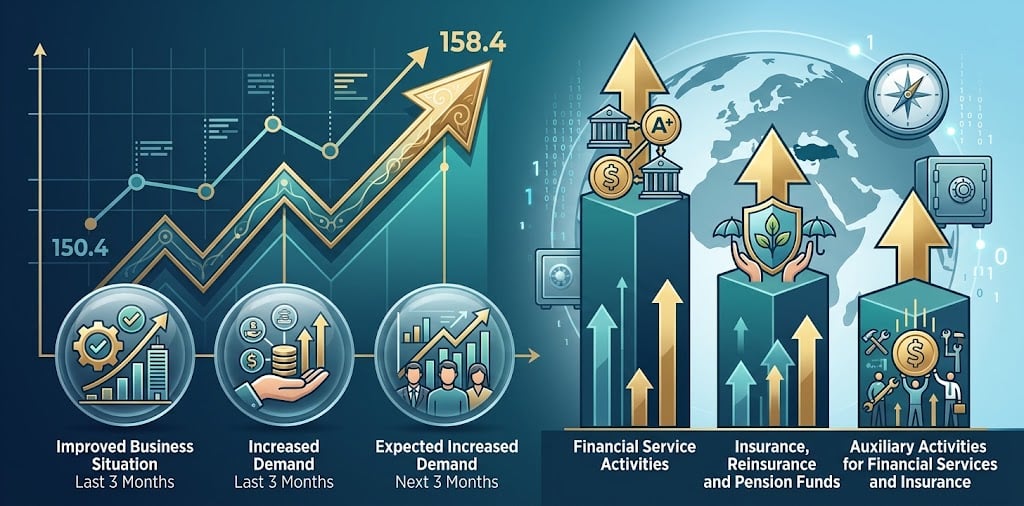
Financial and insurance activities increased by 3.5%, construction by 3.2%, and real estate activities by 3.0%. In contrast, the industrial sector contracted by 0.8%, emerging as one of the weaker areas of the economy.
Seasonally and calendar-adjusted data showed that the economy grew by 0.1% compared to the previous quarter, while the calendar-adjusted annual growth rate reached 2.6%.
At current prices, Turkey’s GDP increased by 35.7% year-on-year in the first quarter, reaching 16.999 trillion Turkish lira. In U.S. dollar terms, the economy was valued at approximately $389.6 billion during the same period.
According to the expenditure-based approach, household final consumption expenditure increased by 4.8%, government final consumption expenditure rose by 2.1%, and gross fixed capital formation grew by 3.0%.
On the foreign trade front, the figures revealed a notable trend. Exports of goods and services declined by 12.7% in the first quarter, while imports decreased by 2.0%. This development once again highlighted the impact of slowing global demand and external market conditions on the Turkish economy.
Income-based calculations showed that labor compensation increased by 35.9% year-on-year, while net operating surplus and mixed income rose by 34.4%. The share of labor compensation in Gross Value Added remained unchanged at 42.7%.
Editor’s Note:
Although GDP data indicate that the economy continues to grow, the pace of expansion appears more moderate compared to previous years. In particular, the contraction in the industrial sector and the double-digit decline in exports point to ongoing production and external demand risks. On the other hand, continued growth in household consumption suggests that domestic demand remains the primary driver of economic activity. Strengthening production capacity, productivity, and export performance will be essential for achieving sustainable and high-quality economic growth.