31 Ağustos 2026
açık


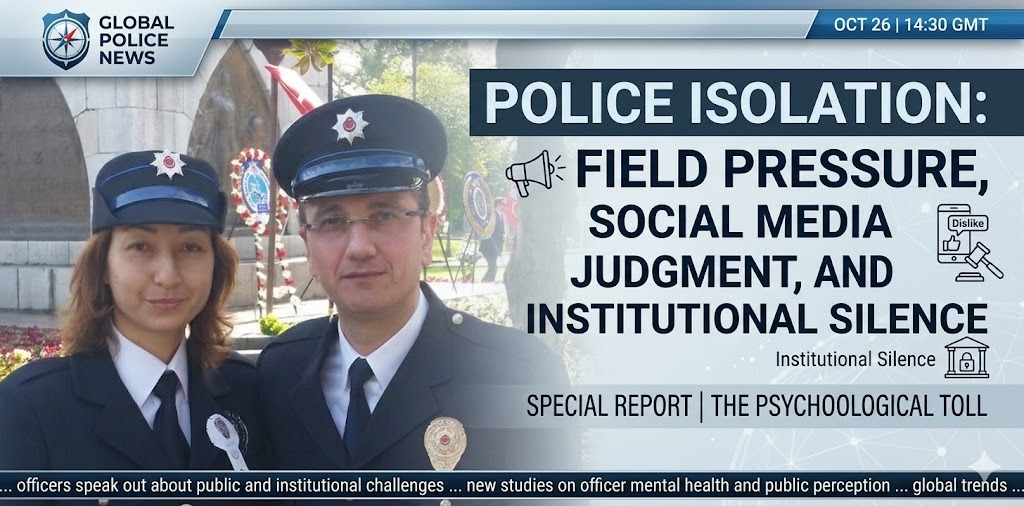
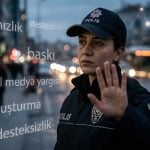
Seeing a police officer in the middle of an incident is easy. What’s difficult is reading what lies behind that image.
Because what we see on the street is often a result. The outward reflection of a decision moment, a tension, tens of minutes—sometimes hours—of buildup. Yet we usually look only at those few seconds. And from those few seconds, we draw a conclusion.
The police operate right in the middle of these rapid judgments. On one side, the obligation to ensure security; on the other, every move being instantly recorded and interpreted. When these two pressures rest on a single person’s shoulders at the same time, what emerges is not just a duty, but a delicate and heavy balancing act.
Sometimes a moment of intervention circulates on social media. Everyone says something. Everyone speaks with certainty. But very few ask a simple question: What happened before that moment?
That is the critical point. Because security incidents are often like “films with the beginning cut off.” There is a middle and an end, but the beginning is missing. And when the beginning is missing, interpretation replaces reality.
Within this incomplete narrative, the police are the most visible figure—yet also among the least understood. One side finds them too harsh, the other too passive. Two opposing judgments can emerge from the same event. That alone shows something important: the issue is not just intervention, but perception.
There is another striking dimension. Today, officers in the field are no longer dealing only with the incident itself, but also with how that incident appears. This is a new burden. In the past, evaluations were based more on outcomes; today, they are shaped by seconds-long images.
Naturally, this affects behavior on the ground. When every move is recorded and every decision instantly debated, it creates an invisible pressure on the officer. This pressure is not only professional—it is human.
Because one thing must not be forgotten: policing is a systemic duty, but the person carrying it out is not free from emotion or error. That person hesitates, fears being misunderstood, and calculates the next step.
So how much does society actually see this person?
Often, it forms opinions based on what it does not see. Because what is seen is not a complete story, but a cut fragment. And incomplete information produces the fastest judgments.
That is why certain questions must be asked:
Why did an intervention reach that point?
What were the alternatives?
What risks existed on the ground at that moment?
How quickly was the decision made?
And most importantly: What did the person in that moment know that we do not?
Without asking these questions, every judgment remains incomplete. Sometimes even misleading.
Another critical issue is institutional balance. The officer in the field does not only face the incident itself, but also the process that follows. This process can be fast, controversial, and sometimes shaped by public pressure. It creates a new equation in the officer’s mind: “What should I do to be understood correctly?”
This is a dangerous question. Because security work should not turn into a constant search for approval. Yet under intense pressure, that risk becomes real.
Amid all this, the least discussed issue is the human burden carried by the officer. This burden does not appear on camera, nor is it written in reports. But it shapes everything on the ground.
Perhaps the fundamental problem is this: we talk about security, but we do not talk enough about the person who provides it. When we fail to see that person, we end up discussing only the outcomes. Yet outcomes alone explain nothing.
In the end, the issue is not only about the police, nor only about society. It is about seeing each other incompletely. Every incomplete view produces an incomplete judgment. And incomplete judgment does not expand reality—it narrows it.
Perhaps what is needed is not louder opinions, but more complete questions.