24 Eylül 2026
açık


Poland says the aircraft stayed in its skies for 42 seconds, forcing the Nato member to scramble its fighter jets.
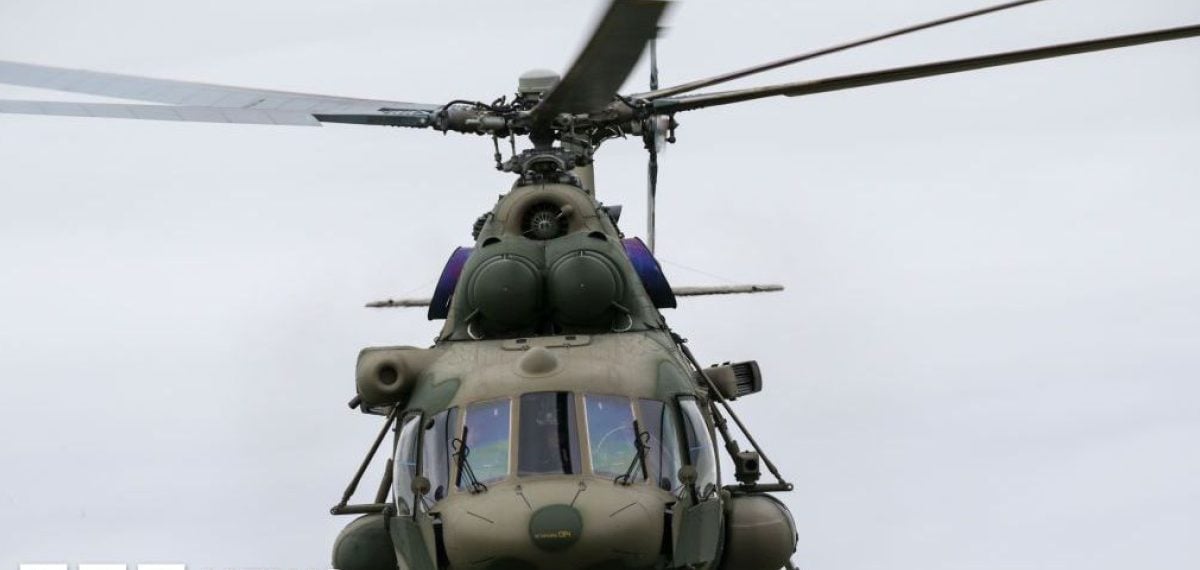
Poland has said a Russian military helicopter briefly violated its airspace, forcing the Nato member to scramble fighter jets while ground forces remained on alert.
Its military said the Mi-8 aircraft had crossed from the Russian exclave of Kaliningrad on Wednesday morning, penetrating Polish airspace to a depth of about 300 metres (328 yards) and staying for 42 seconds north of Braniewo.
It said “the nature of the incident indicates that Russia is once again testing the readiness of our air defence”. Moscow did not comment immediately.
Poland and other European Nato members have recently said Russia may be preparing attacks to test their commitment to supporting Ukraine – Moscow denies this.
Russian President Vladimir Putin has repeatedly said Moscow does not plan to attack Nato states.
By contrast, Russian Foreign Minister Sergei Lavrov said this month that it was Europe that was constantly talking about preparing for war, and he warned: “If Europe attacks Russia, it will be a completely different war [from that in Ukraine], and it will be very short.”
Putin launched a full-scale invasion of Ukraine in 2022, and Moscow currently controls about 20% of Ukrainian territory, including the Crimea peninsula annexed in 2014.
In a statement, the Polish Army Operational Command said the brief incursion had happened at 11:08 (09:08 GMT), and the helicopter had been tracked by radar.
Poland’s air defence units were operating around the clock ready to “ensure the safety of Polish airspace”, it added.
A number of Russian drones and one unarmed Russian missile have landed in Poland since the start of Russia’s invasion of Ukraine, which is not a member of Nato.
Last week, Polish Prime Minister Donald Tusk suggested Russia was planning drone and missile strikes against Poland and other countries on Nato’s eastern flank.
“In recent weeks, the Russian hybrid threat against Europeans… has intensified,” he said.
“The intent is to intimidate us and break our effort to support Ukraine. The result will be the exact opposite. We are not intimidated because we know that our security today and tomorrow is at stake in Ukraine.”
French President Emmanuel Macron said shortly afterwards that his country had been targeted by Russian hybrid attacks in the past few weeks, vowing that this would not be left “without a response”.
Macron said he had already ordered a plan to protect the country’s critical infrastructure and defence industry sites.
Hybrid warfare or hybrid attacks are loose terms which tend to describe non-military methods, for example cyberattacks, sabotage or misinformation, designed to exert pressure and destabilise an adversary.
These are quite often employed using proxies, but Russia always denies involvement in such attacks despite growing evidence to the contrary.
There have recently been a number of suspicious fires and blasts at defence facilities in a number of European Nato members from Italy to Bulgaria to Estonia, with some of the affected countries blaming Russia.
Earlier this month, Germany said Russia was responsible for August’s drone attack at Leipzig airport – an accusation denied by Moscow as “absurd”.
And earlier this week, Lithuania’s prime minister told the BBC that his country had already made evacuation plans in the face of threats from Russia, but added they would “not surrender” if attacked.
Meanwhile in Ukraine, a Russian drone hit a passenger train near the border with Poland on 13 September shortly after former UK Prime Minister Boris Johnson and top European security officials had passed through along the same line.
Ukraine said the drone’s target “could have been the diplomatic train”, while the Russian military said only that it had struck “railway infrastructure”.