29 Kasım 2026
sisli


Europe would incur greater costs and security risks if international support for Ukraine weakens, urging sustained political and military backing.
European leaders’ debate over funding for Ukraine in the EU budget has raised warnings that reduced financial support could increase defence spending and security threats across the continent, Kyiv School of Economics President Tymofiy Mylovanov told Euronews. He said that calls from some EU members to cut assistance coincide with a European Commission proposal for an additional loan of up to €45 billion for 2027 intended to cover roughly two thirds of Ukraine’s estimated €70 billion financing shortfall.
Mylovanov linked Ukraine’s rising defence costs to both larger-scale Russian attacks and more sophisticated battlefield technology, noting that Russia’s greater spending on the war forces Ukraine to respond with more advanced systems. He highlighted the growing need for interceptors as drones, missiles and other platforms equipped with advanced sensors, software and artificial intelligence become more expensive.
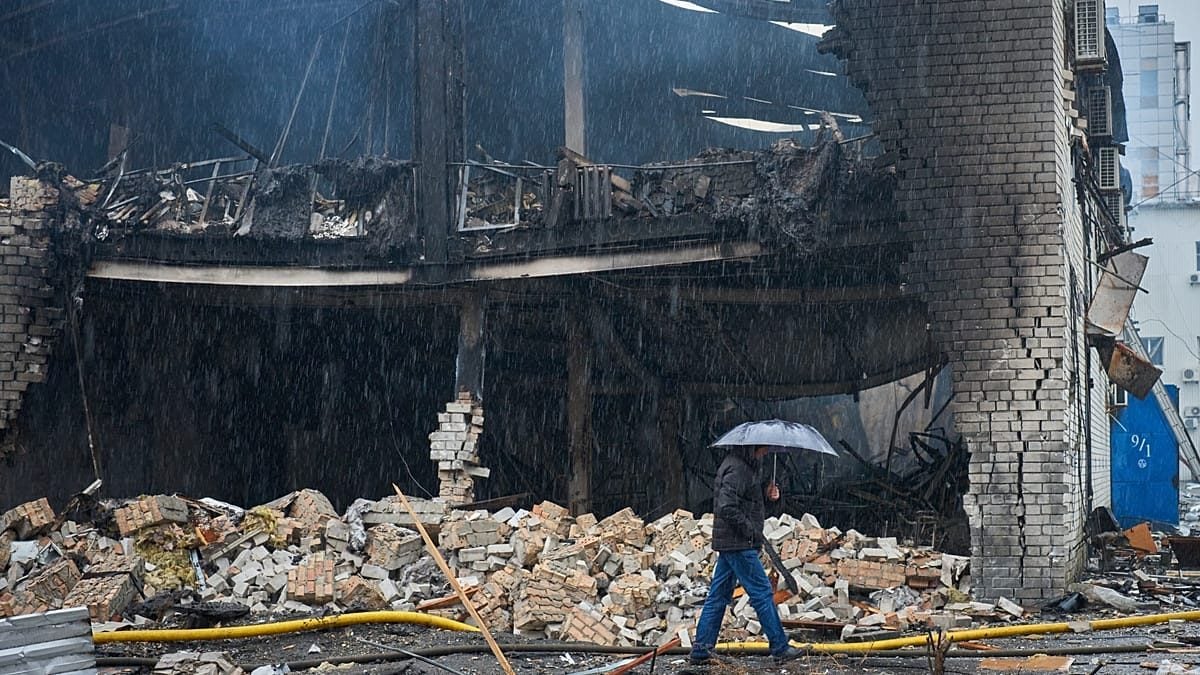
He also described the wider economic consequences of Russian strikes on energy and transport infrastructure, saying these attacks disrupt logistics, public transport and access to education and place additional strain on the Ukrainian economy as winter approaches.
Ukraine’s resistance is buying Europe time
Mylovanov argued that continued assistance to Kyiv should be viewed as an investment in Europe’s security, warning that weakening Ukraine risks triggering a political or military crisis that would enable Moscow to threaten other European countries. He said that as long as Ukraine contains Russia, Europe gains breathing space to build up capabilities and defence, and that funding Ukraine remains the cheaper option for European security.
Mylovanov identified the Baltic states, Poland and southern Europe as regions that could face consequences if Western assistance to Ukraine is withdrawn, and he rejected the notion that withholding funds would hasten the end of the war by forcing Kyiv to concede, citing Russia’s record of violating previous agreements.
Talk is cheap, actions are costly
Expressing scepticism about renewed US mediated diplomacy, Mylovanov said Moscow had not shown genuine willingness to end the war. He suggested that partners should aim to create conditions that compel Russia to engage in substantive negotiations rather than rely solely on assurances from the Kremlin.
Drawing on his economics background, Mylovanov said that since talk is cheap and actions are costly, Kyiv and its partners should pursue limited, tangible agreements such as prisoner exchanges, temporary halts to attacks on energy infrastructure, a Black Sea ceasefire or geographically limited truces to demonstrate real commitments.
He welcomed European negotiator involvement but questioned enforcement mechanisms for any future agreement, suggesting possibilities such as troop deployments, joint security budgets, military training and technology sharing.
What would make a deal last?
Mylovanov cautioned against assessing a prospective settlement solely by concessions, arguing the crucial question is how to ensure a deal is final and prevents a resumption of war in subsequent years. He said lasting settlement would require a clearly demarcated contact line supported by credible security arrangements, including observers and troops separating the sides.
Mylovanov frames sustained support for Ukraine as a cost effective investment in European security that preserves time for Europe to strengthen defences. His argument links battlefield technological escalation and infrastructure attacks to rising Ukrainian spending needs while warning that reduced Western assistance could enable broader Russian operations in Europe. He advocates incremental, verifiable confidence building measures and robust enforcement mechanisms to increase the chance that any settlement endures.