26 Eylül 2026
az bulutlu


The European Commission in sounding the alarm over Ukraine’s slow pace of reforms, which is complicating access to critical financial assistance.
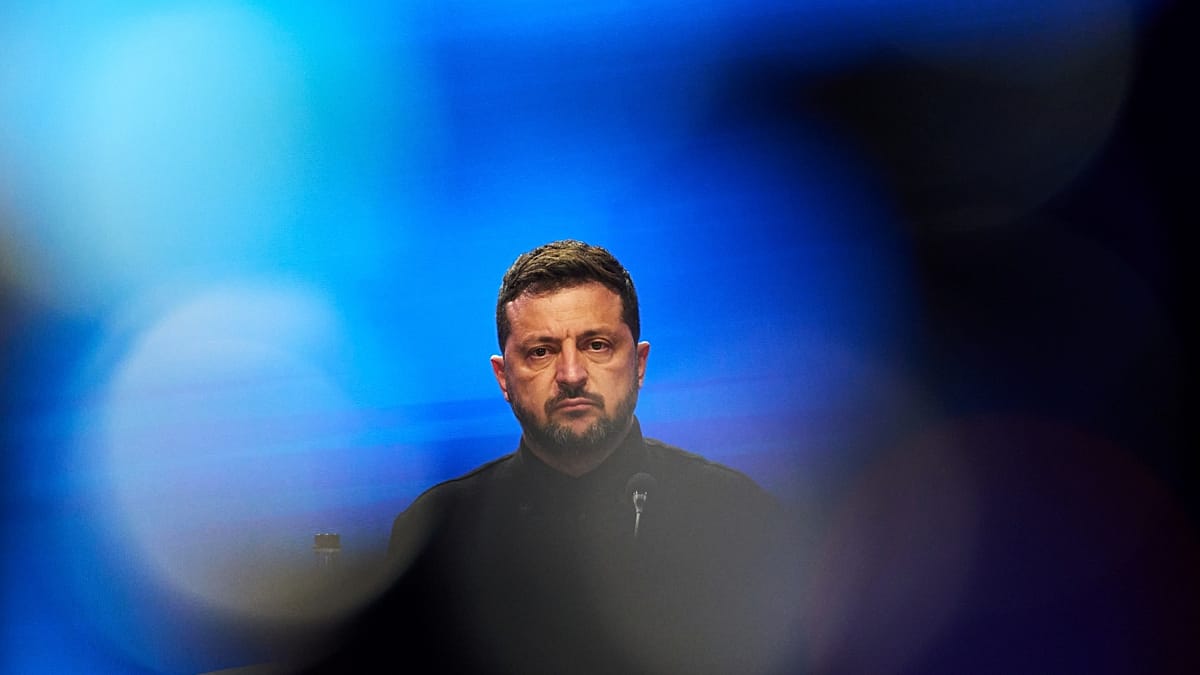
The European Union is urging Ukraine to accelerate reforms required to unlock roughly €20 billion in financial assistance, as Kyiv faces a widening budget deficit and intensified Russian attacks.
“It is essential that Ukraine continues to deliver on the reforms and policy conditions jointly agreed with the European Union,” a European Commission spokesperson said, stressing that timely implementation was necessary for the release of funds.
The Commission is holding intensive discussions with Ukrainian authorities to establish the precise scale of the country’s financing gap. The International Monetary Fund is also involved through a separate assistance programme.
Ukrainian President Volodymyr Zelenskyy initially identified a $27 billion (€23.75 billion) shortfall in the Defence Ministry, a figure that surprised EU officials and prompted questions about how it had been calculated.
Ukraine is separately facing a projected $32.6 billion financing gap next year.
Zelenskyy has proposed bringing forward part of the EU’s €90 billion support loan, originally planned for 2027, into 2026. The loan is divided into two €45 billion tranches, meaning that advancing funds would reduce the amount available the following year.
The Ukrainian president has also suggested using immobilised Russian assets to help address the shortfall, an approach that the EU previously attempted without success.
Brussels, however, has argued that Ukraine should first complete reforms it has already committed to implementing, several of which remain stalled in the Verkhovna Rada, Ukraine’s unicameral parliament.
The reforms are required to access two financial packages: €13.5 billion under the support loan and €6.45 billion through the Ukraine Facility.
A combined payment of €2.9 billion was approved on Thursday. A further €3.9 billion payment has been delayed because of the slow progress of legislation.
The issue led European Commissioners Valdis Dombrovskis and Marta Kos to write to Rada Speaker Ruslan Stefanchuk, warning of the consequences of further delays.
They said timely passage of the required legislation was necessary to secure available EU financing, maintain momentum toward Ukraine’s EU accession and strengthen the country’s economy and public finances.
The letter, seen by Euronews, contained an annex listing reforms that Brussels wants Ukraine to adopt and implement in the short term.
Measures concerning SME insolvency, the civil service and VAT simplification are already being considered by lawmakers. Other reforms covering state aid, anti-money laundering rules and the disciplinary system for prosecutors have yet to be submitted to parliament.
Another contentious measure would remove a duty-free exemption for international parcels. The proposal has faced opposition among Ukrainian lawmakers partly because of the popularity of Chinese online marketplaces such as Temu and AliExpress.
The bill was rejected twice by parliament before being approved at first reading last week. A further reading is still required.
Additional reforms are needed to release the remaining €17 billion available to Ukraine for this year. Parliament is currently in recess until mid-October, although Stefanchuk has said he is prepared to convene an extraordinary session once the legislation is ready.
European Commission President Ursula von der Leyen raised the reform issue during a meeting with Zelenskyy on the sidelines of the UN General Assembly in New York earlier this week.
A Bloomberg report characterized the meeting as “tense”, while Zelenskyy subsequently described his discussions with von der Leyen as “absolutely positive”.
Zelenskyy has asked the EU to show greater flexibility over the reform timetable, citing the impact of Russian airstrikes on the work of Ukraine’s parliament.
The European Commission acknowledged the difficult circumstances facing Ukraine, saying the country had maintained its reform efforts during more than four years of Russia’s war.
At the same time, the Commission reiterated the importance of sustaining the pace of reforms needed to access EU financial support.