14 Ekim 2026
kapalı


The media agenda has been dominated by the AK Party’s Sakarya camp. For days, discussions have centered on what happened during the gathering. A song prepared for President Erdoğan seemed to carry the one-man rule approach into music as well. Following a performance reminiscent of a national team anthem, the main debate became who stood up, who applauded, and who did not.
But isn’t the real question this? Is a person truly captive to their surroundings, or have those surroundings become captive to political power?
The public discussion revolved around those who stood up, those who applauded, and those who remained seated. But were the country’s real problems discussed? Were injustices, the grievances of victims of emergency decrees (KHKs), economic decline, trustee appointments, controversial judicial decisions, and the deepening crisis of the rule of law placed on the table?
From what we have seen, the only issue discussed was whether Bülent Arınç, Binali Yıldırım, İsmail Kahraman, and Cemil Çiçek stood up or remained seated. The level to which politics has fallen is overshadowing the difficult reality the country is facing.
I had expected this camp to address injustice, economic hardship, and the growing despair among young people, and to seek solutions. Instead, it appears that positions, status, and political calculations have taken precedence over courage.
The real question is not who stood up, but why no genuine assessment has been made of twenty-four years in power. At a time when the country is burdened with such profound challenges, shouldn’t the party’s elder statesmen have been asking these questions?
I asked a friend, “What did you do?”
He replied, “I neither stood up nor applauded.”
It inevitably makes one wonder:
Is there also a list of those who chose not to applaud?
Time will tell.
Morality does not seek applause. A person is truly moral if they can listen to the voice of their conscience even when no one is watching. Those who build a system of obedience through fear are ultimately the ones who bear its burden. People who refuse to mortgage their minds and who preserve their conscience and compassion do not remain silent in the face of injustice.
As Egyptian novelist Naguib Mahfouz once wrote:
“Morality is how a person responds to the situations life places before them.”
Truth can only be reached through a free mind—not by living according to someone else’s calculations.
If someone cannot see the networks of political interests, corrupt loyalties, and the destruction of meritocracy, they are either deceiving themselves or have surrendered their own will. Those who surrender their will value the approval of their masters more than the truth. Even when the oppressed speak the truth, power and personal interests matter more to them.
Today, politics is drifting away from being a space for dialogue and is increasingly becoming a mechanism for preserving the existing order. A system is being built in which power—not truth—determines outcomes, while fear, propaganda, legal pressure, and alliances of interest take center stage.
There was once a slogan that said, “Power for the people.” Today, however, the conversation has shifted to the price the people are made to pay in order to preserve political power.
Where every means is considered legitimate for the sake of the end, morality inevitably deteriorates. The resources of the state become instruments of political calculation. Ethical politics, however, is defined by remaining faithful to one’s principles while pursuing one’s goals. Instead, a new political culture has emerged in which hierarchical loyalty is rewarded above all else.
Strong individuals are being elevated instead of strong institutions. Those who know how to “get things done” are valued more than those who genuinely know their jobs. Some who once described themselves as victims have now become participants in a new system of domination, empowered by the very authority they once opposed.
How can those who refuse to believe what they plainly see claim to believe in truths they have never witnessed? It is a contradiction similar to that of someone who knows death is inevitable yet makes no preparation for it.
Fyodor Dostoevsky, in his novel The Double, masterfully portrays the hypocrisy of human nature.
From time to time, people sincerely ask me:
“Why did you support this political movement during its founding years?”
I respect that criticism. But I also believe this saying should never be forgotten:
“A person is not innocent of a sin they have never been tested by.”
The words of Ahmet Cevdet Pasha remain just as meaningful today:
“Without knowledge there can be no insight; without insight there can be no politics; and without politics there can be no true leadership.”
June 30, 2026
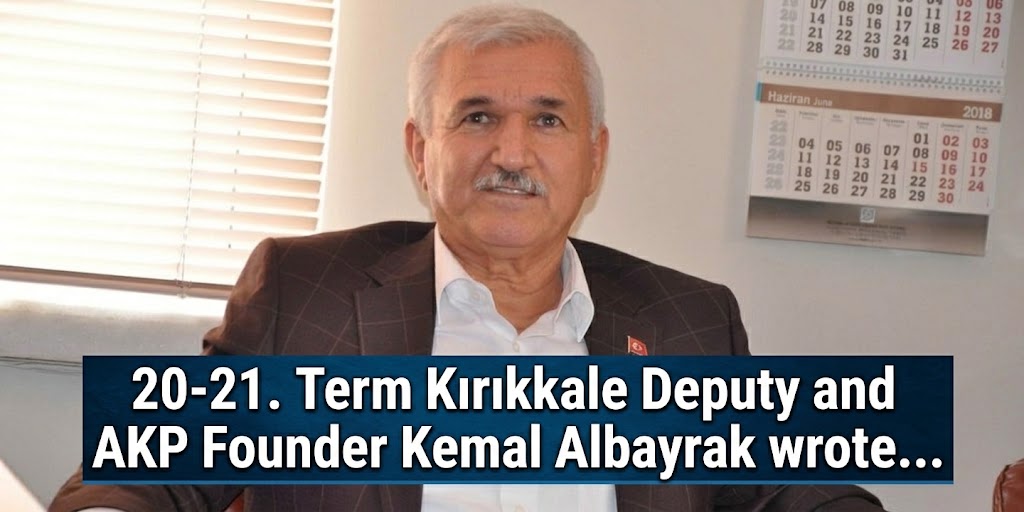
Kemal Albayrak