06 Kasım 2026
parçalı bulutlu


Iran warns Europe: using US bases to attack Iran could prompt missile strikes, escalating tensions and risking wider conflict.

Iranian lawmakers threatened missile strikes on European countries hosting US military bases, saying that if America uses its bases in Europe against Iran those bases would be targeted and Europe would face consequences.
Ahmad Bakhshayesh Ardestani, a member of parliament’s National Security Committee, told Euronews that in previous conflicts Iran had not struck Europe but that this time it would not allow European assistance to the United States to go without consequence. He said Iran would strike any base used against it and would also target the material and non-material assets of countries that assist America.
The Islamic Revolutionary Guard Corps issued a statement on the anniversary of the 1979 seizure of the US embassy in Tehran pledging an immediate and effective response without geographical limits to every level and type of threat. The statement cited orders attributed to Ayatollah Mojtaba Khamenei calling for updating Iran’s target bank and placing the enemy’s material and non-material assets within range.
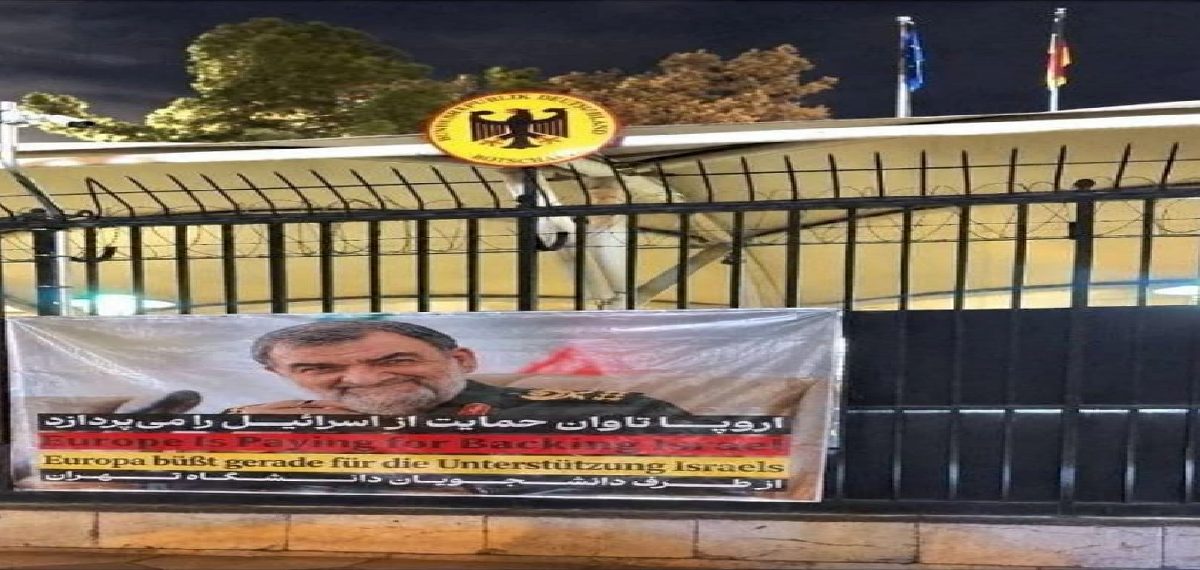
A banner outside the German embassy in Tehran quoted Mohsen Rezaei saying that Europe would pay the price for supporting Israel, and Fars news agency identified those responsible as members of the student Basij at the University of Tehran. Euronews sought comment from the German embassy in Tehran and Germany’s foreign ministry but both were unreachable at the time of publication.
Fars reported that Iran warned Germany its military assets across the region would be treated as legitimate defensive targets if Berlin entered open military confrontation with Iran, a claim that could not be independently verified. Tehran has summoned Germany’s ambassador in recent weeks over Berlin’s support for Israel.
Kayhan newspaper, supervised by a representative of Ayatollah Mojtaba Khamenei, wrote that Iran’s range of potential targets could extend to the heart of Europe, citing an order attributed to Khamenei for a military response without geographical limits. Mohsen Rezaei wrote on X that the US response to Iran’s demands had been not convincing and that Washington would need to meet Iran’s seven conditions in full before reopening the Strait of Hormuz.
Parliament speaker Mohammad Bagher Ghalibaf welcomed the Republicans’ defeat in the congressional elections in a post on X, saying the American people had said no to war and that Iran supported that message. He warned that if the US government ignored the public will to act in favour of managers who pay bribes and engage in international blackmail it would realise that Iran’s no comes with a nightmare.
When asked whether he planned to take a tougher line against Iran, US President Donald Trump gave an ambiguous answer saying he would examine the matter and act if needed.
The statements by Iranian lawmakers and the IRGC signal a broadened public posture in which threats are framed to include European territory and assets if European bases are used by the United States. The invocation of updated target lists and references to the heart of Europe indicate a rhetorical escalation intended to deter allied use of European bases in any confrontation. Diplomatic interactions such as summons of Germany’s ambassador and the placement of hostile banners at the German embassy reflect increasing bilateral tensions that could complicate regional and transatlantic calculations.