15 Kasım 2026
parçalı bulutlu


Xi Jinping’s visit to North Korea reshapes East Asian power dynamics. Nuclear tensions, Russia–China rivalry, and US diplomatic moves are creating a new crisis axis in the region.
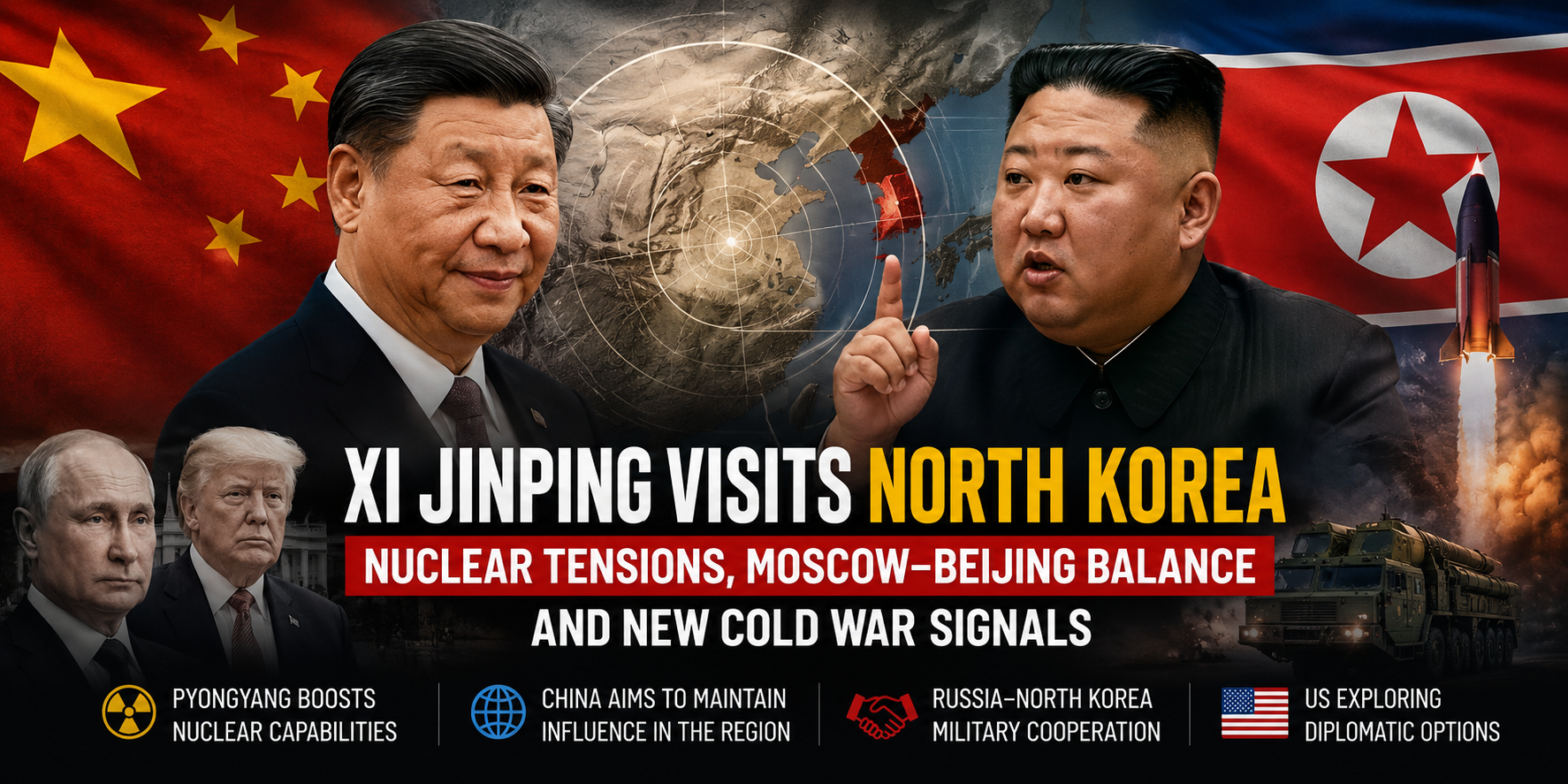
Xi Jinping’s visit to North Korea is being interpreted as a sign of a new phase in regional and global power dynamics. The timing of the visit, amid rising nuclear tensions and intensifying great-power competition, has drawn significant attention.
The announcement by the administration of Kim Jong-un regarding a uranium enrichment facility ahead of the visit is seen as Pyongyang’s attempt to emphasize its nuclear capabilities as a diplomatic bargaining chip. This move is widely interpreted as a demonstration of strength ahead of talks with China.
Meanwhile, the growing military alignment between Russia and North Korea has made Beijing’s efforts to maintain influence in the region even more critical. China is reportedly seeking to prevent Pyongyang from drifting fully into Moscow’s strategic orbit.
On the USA side, renewed diplomatic channels and potential negotiation frameworks are being discussed. The administration of Donald Trump is said to be evaluating new strategic options regarding regional tensions.
Experts suggest that the emerging trilateral balance between Beijing, Moscow, and Pyongyang could significantly reshape the global security architecture.