26 Eylül 2026
az bulutlu


China’s president Xi Jinping begins a highly anticipated state visit to the United States as thorny issues dominate the talks, saying the “two countries shoulder a historic responsibility”.
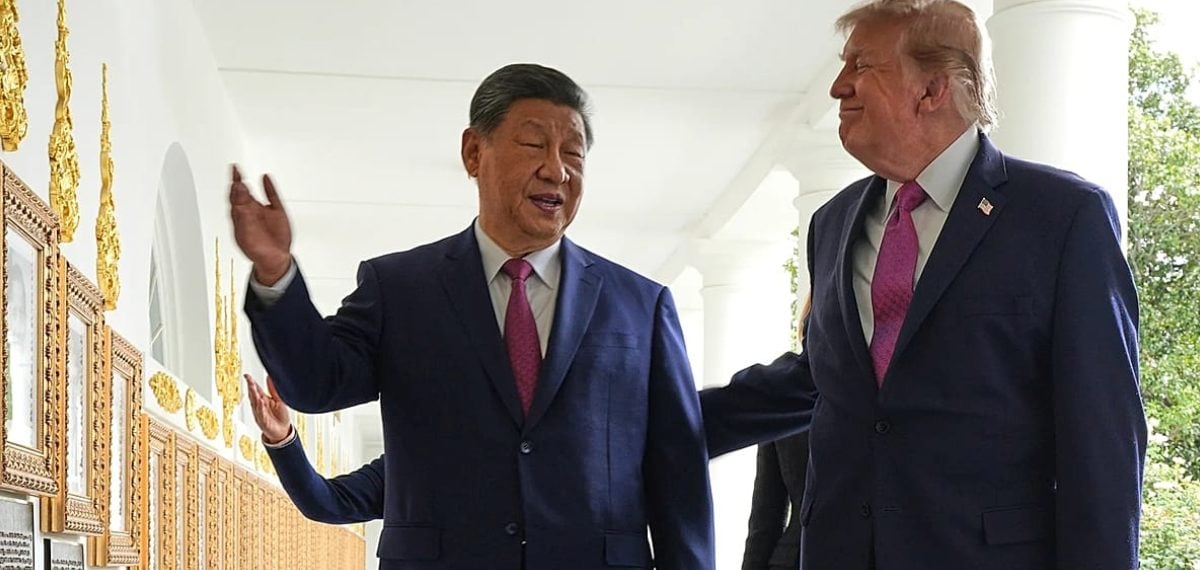
US President Donald Trump welcomed Chinese President Xi Jinping to the White House on Thursday by highlighting what he called their “truly great friendship,” as the two leaders opened talks covering trade, artificial intelligence, Taiwan, security and the war in Iran.
Xi, making his first White House visit in more than a decade, struck a similarly conciliatory tone while urging Washington and Beijing to prevent their rivalry from escalating into direct confrontation.
The Chinese president said the world’s two major powers had a responsibility to maintain dialogue and guide their relationship toward greater stability. He called for both countries to avoid conflict and confrontation and said competition should remain within defined limits.
“We can certainly find the right path for two great countries to get along,” Xi said, arguing that sustained dialogue could help the two sides better understand each other while managing their differences.
Trump, meanwhile, pointed to the relationship he has developed with Xi since his first presidential campaign in 2016. He said the talks would address foreign policy, trade, financial cooperation, security and AI, which has emerged as one of the most strategically sensitive areas of US-China competition.
Artificial intelligence is expected to be one of the most consequential issues in the negotiations.
Xi said Washington and Beijing should ensure that the development of AI remains under human control and serves public interests. He argued that both countries have the technological capacity and responsibility to develop and manage AI safely.
Trump has also placed AI high on the summit agenda, including his concept of “superintelligence.” Earlier Thursday, he said he wanted the technology to remain on its current trajectory and indicated that China shared that position.
The two governments are also discussing mechanisms for dealing with AI-related incidents. US and Chinese finance officials met earlier in the week, with Washington proposing a system under which the two countries could notify each other about significant AI incidents.
The issue reflects a broader tension in the bilateral relationship: both governments want to benefit from rapid advances in AI while maintaining their technological advantages and addressing concerns about security and control.
Trade remains another major issue.
The United States and China agreed on Wednesday to extend their existing trade truce by two months as they seek a longer-term arrangement. The agreement had been due to expire in November.
Trump said Washington was seeking a more balanced trading relationship, while Xi called for Chinese companies to receive fair treatment in the United States and said American businesses would remain welcome in China.
Xi also framed the economic rivalry in terms of competition rather than confrontation, saying the two countries should seek to advance alongside each other rather than treat their relationship as a contest in which one side must defeat the other.
Despite the temporary easing of trade tensions, major disagreements remain over tariffs, advanced semiconductor exports, technology restrictions and market access.
The summit is also taking place against a backdrop of major geopolitical disputes.
Taiwan remains one of Beijing’s most sensitive concerns. China has repeatedly called for an end to US arms sales to the island, which Beijing considers part of its territory. Washington maintains longstanding security ties with Taipei.
Iran is another point of disagreement. The Trump administration has sought to persuade Beijing to use its economic and diplomatic influence over Tehran as Washington pursues an end to the war with Iran.
China, however, has opposed the US and Israeli military campaign against Iran and has resisted pressure to use its relationship with Tehran to advance Washington’s objectives. The issue is expected to remain part of the wider discussions between Trump and Xi.
Alongside the difficult strategic issues, Xi announced several initiatives aimed at strengthening people-to-people ties.
He said China would invite 100,000 American young people to China over the next five years for educational and cultural exchanges.
Xi also announced that two giant pandas, Ping Ping and Fu Shuang, would arrive at Zoo Atlanta within days. The animals are part of a new conservation agreement between the zoo and the China Wildlife Conservation Association.
The pandas are expected to become a visible symbol of the renewed engagement between the two countries. Atlanta’s previous pandas returned to China in 2024 after an earlier loan agreement ended.
The opening statements from Trump and Xi presented a carefully managed picture of cooperation, but the agenda of their meeting illustrates how many unresolved disputes remain between Washington and Beijing.
Trade restrictions, advanced technology, AI governance, Taiwan and Iran all involve competing strategic interests that extend well beyond the immediate economic relationship.
For now, both governments appear focused on maintaining communication and preventing those disputes from producing a wider deterioration in relations. The extension of the trade truce provides additional time for negotiations, while the leaders’ emphasis on dialogue reflects an effort to manage competition without allowing it to become direct confrontation.