29 Kasım 2026
parçalı bulutlu


The TPLF advanced toward Afdeera after taking Erebti, with at least 150,000 people feared displaced in Afar alone. The offensive targets the Djibouti corridor, through which almost all of Ethiopia’s international trade flows, giving the rebels potential leverage over the federal government.
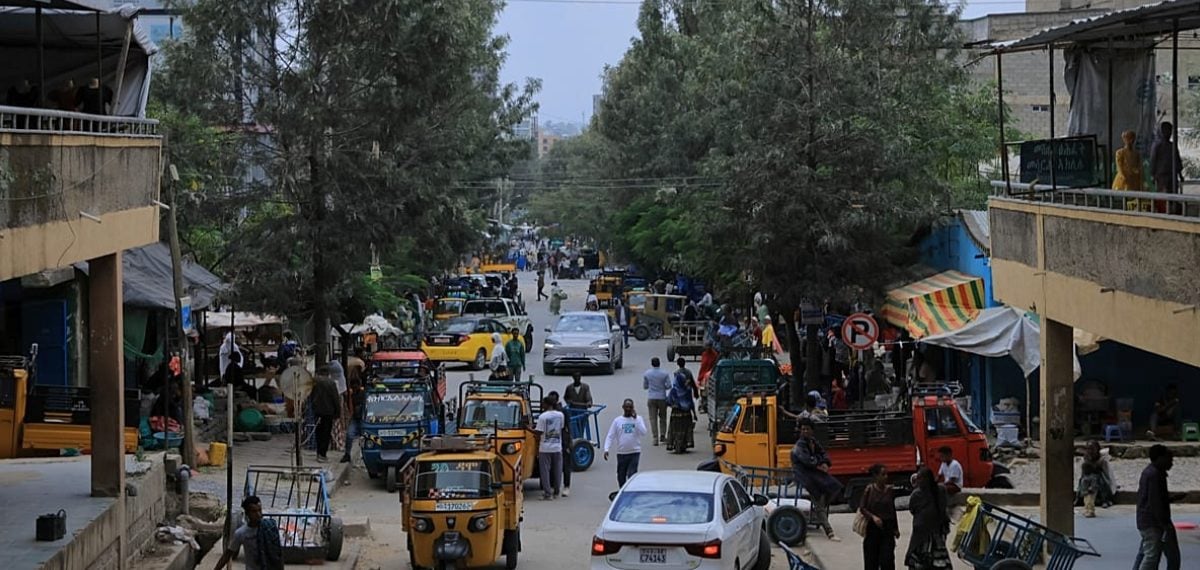
Fierce fighting in northern Ethiopia continued through the weekend, fuelling fears that the country could be heading back toward the devastating 2020-2022 conflict that is estimated to have killed around 600,000 people.
Heavy clashes between the Tigray People’s Liberation Front (TPLF) and Ethiopia’s federal government have continued since Wednesday. The TPLF has taken control of several airports and carried out attacks in the neighbouring regions of Afar and Amhara, describing its campaign as a “defensive war” against Prime Minister Abiy Ahmed’s government.
The headquarters of Tigrai TV, regarded as a key media outlet for the authorities aligned with the TPLF in the Tigrayan capital Mekelle, was struck by a drone on Sunday.
Communications across Tigray have been severely disrupted since Friday, when telecommunications providers reported major interruptions to phone and internet services. The outages have made it increasingly difficult to independently report developments from the conflict zone.
The renewed fighting has also revived concerns in Tigray over a repeat of the blockade imposed during the previous war, when electricity supplies, banking services and most humanitarian aid were cut off.
A humanitarian source said the town of Erebti in Afar, close to the Tigray border, was captured by TPLF forces on Sunday after coming under heavy artillery fire. The source said TPLF forces were then moving toward Afdeera, around 100 kilometres (60 miles) to the east.
The same source estimated that at least 150,000 people had been displaced in Afar, while stressing that precise figures could not be established.
Laetitia Bader, deputy director of Human Rights Watch’s Africa division, said the escalation was increasing risks to civilians at a time when international diplomatic attention and scrutiny had diminished amid wider crises across the region.
“The region is already facing devastating human rights and humanitarian crises,” Bader said, pointing to neighbouring Sudan, which she described as the world’s largest humanitarian crisis.
Ethiopia’s army chief, Field Marshal Birhanu Jula, on Sunday accused Egypt, Eritrea and Sudan of supporting armed groups fighting government forces in northern Ethiopia.
“We are fighting forces that are organised and allied to serve the interests of external forces,” Jula said in remarks broadcast on the army’s YouTube channel.
He claimed that neither Eritrea, referred to as “Shaebia”, nor the TPLF could achieve its objectives without backing, supplies and support from Sudan, Egypt and other external powers.
Sudan’s military rejected the accusation later on Sunday, describing the allegations as “baseless” and saying it remained committed to international law and good-neighbourly relations.
The TPLF has formed an alliance with six other armed groups under the Ethiopian Peoples’ Forces Alliance for Survival, which seeks to remove Abiy’s government and establish a transitional administration.
The alliance includes Amhara nationalist Fano militias, which fought alongside federal forces against the TPLF during the previous war, as well as the Oromo Liberation Army, an active insurgency in Ethiopia’s most populous region. Four additional groups from three other regions are also part of the alliance, representing six of Ethiopia’s 12 regional states.
The TPLF governed Ethiopia from 1991 until 2018, when Abiy’s rise to power pushed the group to the sidelines. The political tensions that followed eventually contributed to the outbreak of war in 2020.
The Pretoria Peace Agreement brought that conflict to an end and produced an uneasy period of calm until clashes resumed in late 2025.
The latest fighting appears to have seen Tigrayan forces revive a strategy used during the previous conflict, advancing south through Amhara toward the capital, Addis Ababa.
The TPLF’s offensive in Afar is aimed at cutting supply routes from Djibouti, which handles almost all of Ethiopia’s international trade cargo, including fuel.
East Africa Senior Analyst at ACLED, Dr Jalale Getachew Birru, said the federal government currently appeared to view the renewed conflict as a challenge that could be contained.
Birru said the main trade and supply corridor through Djibouti remained open, while government forces had recovered territory in and around Sekota in the Wag Hamera zone and Alamata in the Southern Tigray zone.
However, the TPLF’s advance into Afar in cooperation with Ugugumo could alter the government’s calculations if it threatens the Semera-Djibouti route, Birru said.
Any disruption to the corridor could also create tensions with Djibouti, which remains an important regional partner and does not have ties with the emerging anti-government alliance.
Control of the route could give the TPLF significant leverage over the federal government by putting Ethiopia’s main trade corridor to the port of Djibouti at risk.
UN Secretary-General Antonio Guterres’ spokesman Stephane Dujarric said the United Nations was “particularly troubled” by reports of drone use and incidents involving harm to civilians.
The African Union has called for “utmost restraint” and an immediate halt to actions that could further escalate tensions. It also urged the parties to resume talks under the Pretoria Agreement without delay.
Amid the renewed fighting, thousands of Ethiopian Orthodox Christians gathered in Addis Ababa on Sunday to celebrate Meskel, the annual festival commemorating the discovery of the “True Cross”, which Christians believe was used to crucify Jesus on Good Friday.
In a message delivered on Saturday, Abiy called on Ethiopians to unite in order to build “a great national strength”.
“Meskel has a family and social colour. Families come together, the neighbourhood gathers, the city and its surroundings converge on one square,” Abiy said.