30 Eylül 2026
kapalı


Global markets saw a sharp decline amid rising concerns over Japan’s monetary policy and carry trade unwinding. Bitcoin, gold, and tech stocks fell simultaneously.
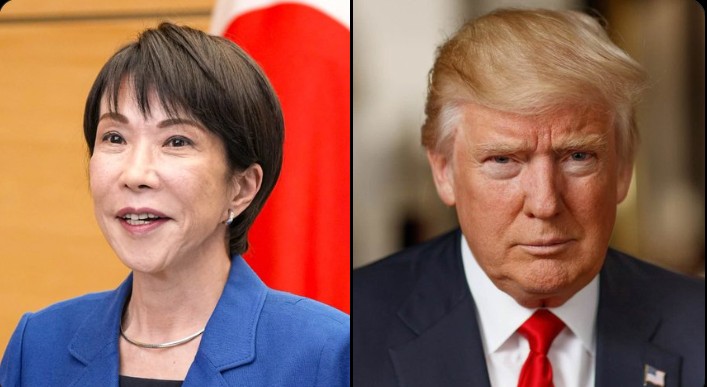
Why are markets falling? Everyone is talking about the United States. The real answer is in Japan.
Yesterday, strong employment data came from the U.S. It was almost twice the expected figure.
Everyone attributed the decline to this.
Stocks down, gold down, Bitcoin down. It seemed like this was the reason.
But this was only the spark. The real gunpowder had already been poured.
And much further away.
Because that day, it wasn’t just technology stocks that fell. Gold fell, silver fell, Bitcoin fell.
A single data point cannot do that.
Only an invisible chain connecting them all can.
And the end of that chain is in Tokyo.
Read carefully.
The first link in the chain is in the Strait of Hormuz.
In recent months, tensions originating from Iran have effectively locked this strait. Passage became difficult. Oil prices quickly rose above $100, and on some days even higher.
Just that tension in the strait suddenly increased the world’s energy bill.
Now look at where this increase is affecting. At first glance, somewhere that seems unrelated to oil: artificial intelligence.
In recent years, the hottest investment has been artificial intelligence. The world’s largest companies rushed into it.
AI data centers run huge machines. These consume constant electricity both to operate and to cool down.
So the fuel of AI is energy.
When energy becomes more expensive, the cost of this business directly increases, and expected profits decline.
Most of these investments were not made with companies’ own money, but with borrowed money.
And with the cheapest money in the world. Money coming from Japan.
At this point, it is important to understand something, because this is the foundation of the entire story.
In Japan, interest rates were near zero for years.
Smart players borrowed yen almost for free in Japan and converted it, investing it in high-yield assets around the world.
Into U.S. tech stocks, artificial intelligence, gold, Bitcoin.
The logic is simple.
Borrow cheap, invest in high yield, pocket the difference.
This is called a carry trade.
Meaning many of the assets you see on the screen today have an invisible yen debt underneath them.
As profits tightened, the first crack appeared in this debt structure. Those who entered this trade with high leverage began looking for the exit.
The second link is the yen itself.
The yen has been losing value for months. To understand why, look here.
At the interest rate gap.
In the U.S., rates are above 3.5%. In Japan, they are around 0.75%. There is almost a three-point gap.
Money is like water—it flows to where it earns more. It leaves low-yield yen and moves to higher-yield dollars. As this flow continues, the yen weakens.
To stop this depreciation, Japan recently sold dollars from its reserves and bought yen.
The goal was to push the yen higher. At the end of April, they spent about $35 billion in a single day, and tried again later.
But these interventions did not work. Even that massive amount of money could only support the yen for a few days. Then the decline resumed. And there is a limit to this strategy.
Japan cannot sell its dollar reserves forever.
Then yesterday, strong U.S. employment data arrived and completely tightened the situation.
This data alone does not break anything. Its real impact is in expectations.
Everyone thought: with such a strong economy, the U.S. will not cut rates soon. Meaning the interest rate gap between the two countries will not close anytime soon.
Investors positioned accordingly. Demand for the dollar increased, the dollar strengthened, and pressure on the yen intensified further.
Interventions are failing, the rate gap is not closing. For Japan, only one exit remains.
Raising interest rates.
That is why probability markets have priced in a 97% chance that Japan will raise rates on June 16.
And here we come to the most critical point.
When Japan raises rates, global markets shake. Everyone who follows markets knows this. But there is a nuance most people miss.
This shake-up begins not after the rate hike—but before it.
The reason is simple.
Big players do not wait for the news. They see it coming days in advance and quietly head for the exit. By the time the news is announced, they are already out.
History has proven this many times.
Japan raised rates four times in the last two years, and each time Bitcoin dropped sharply.
March 2024: about -23%
July 2024: -26%
January 2025: -31%
December 2025: around -30%
Four hikes, four declines. Too consistent to be coincidence.
The most instructive example was the last one.
Japan raised rates on December 19. But risky assets had already started falling in early October.
Bitcoin hit $126,000 on October 6.
By the time the expected December hike arrived, Bitcoin was already down 30% from its peak. On the day of the hike, the Japanese stock market did not fall—it slightly rose. Because those who needed to sell had already sold.
Now to today. The same scenario is playing out step by step again.
As the rate hike becomes more certain, the first assets to be sold are the most fragile ones: tech stocks and Bitcoin.
But the story does not end there. The real question is: if the issue is Japan and risky assets, why did gold fall? Isn’t gold a safe haven?
The answer lies in who holds these assets.
Most of them are held by the same funds—hedge funds. These funds do not look at single assets, but at the entire portfolio.
When large losses start in one corner of the portfolio, a rule kicks in.
They must quickly reduce total risk. The way to do that is not to sell losing assets, but to sell profitable ones. Because that is where the cash is.
So what has been one of the best-performing and most liquid assets in recent years?
Gold and silver.
That is why gold and silver were sold. Not because they were bad—but because they were the best. The losses were elsewhere, but the bill was paid by the strongest assets.
Now put all the pieces on the table:
Escalating energy tensions in the Strait of Hormuz. AI investments whose profitability is being questioned. A steadily weakening yen. Failed interventions. A confirmed rate hike. And forced selling by funds.
None of these alone can shake the entire market. But all of them happened in the same week.
In moments like this, there is no such thing as a safe haven. No one sells what they want to sell. They sell what they can.
Everyone was looking at the U.S. yesterday. But the real switch has been in Tokyo for years.
In my view, the market is currently pricing in Japan’s rate hike.
Years later, when we look back at this decline, we will name it: Japan’s rate hike.
This is my personal analysis.
I will continue to follow developments and keep you informed.
Kaynak: Penguin X @ThePenguinBTC