16 Eylül 2026
parçalı bulutlu


Norway upset Brazil in New Jersey as Haaland’s brace secures a dramatic World Cup quarter-final spot.
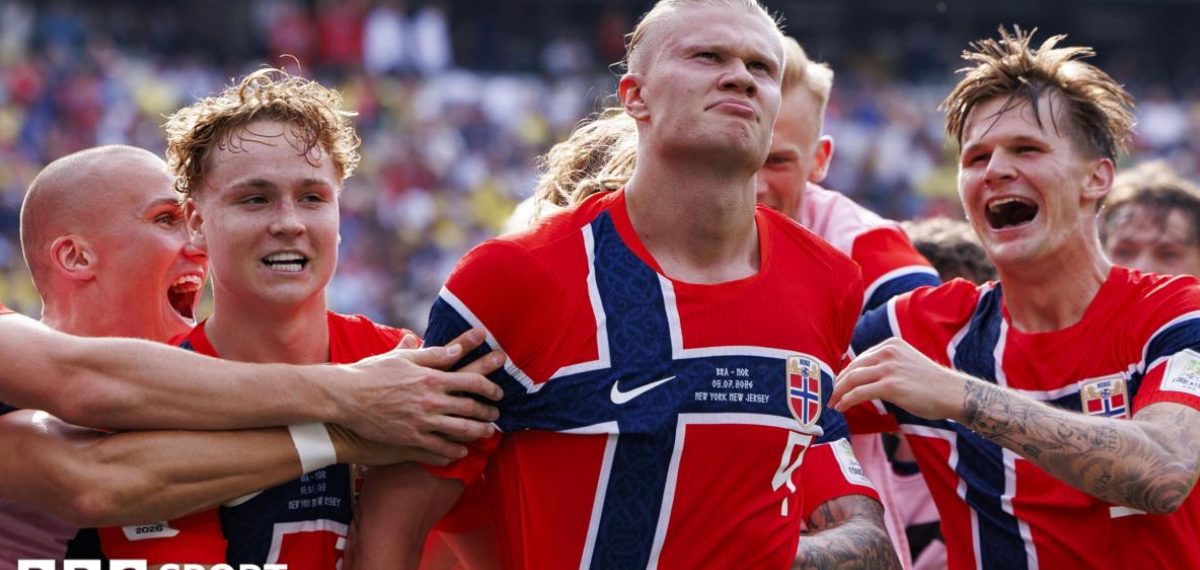
What happened: Norway defeated Brazil 2-0 in their round of 16 match in New Jersey; the result and comments about Norway’s long-term development were reported by BBC Sport and ITV commentators on the day of the match.
Where and when: The match took place in New Jersey during the World Cup round of 16 stage, with coverage and post-match reaction appearing immediately after the game.
Who commented: ITV commentator Sam Matterface highlighted Norway’s structural changes, while BBC Sport and other analysts referenced investments in coaching and youth systems; Ståle Solbakken is the Norway coach and Erling Haaland is the key player mentioned.
Main outcome: The immediate result is Norway progressing to the World Cup quarter-finals thanks to two goals from Erling Haaland; observers linked the success to Norway’s sustained investment in coaching, facilities and the National Team School.
Narratives after the match emphasized Norway’s strategic reset after years of underperformance. Commentators noted a series of reforms, including the National Team School (NTS) founded in 2013, expanded coaching courses and a large rollout of artificial pitches between 2016 and 2025.
Statistics cited include 539 new artificial surfaces built and 586 renovated in that period, reflecting a nationwide effort to broaden participation and talent development.
Haaland scored twice in the match and has been a standout performer at the tournament; he and Arsenal captain Martin Ødegaard are among NTS graduates. Of Norway’s 26-man World Cup squad, 17 played in the top four European leagues last season.
The article contrasts Norway’s pathway with Scotland’s recent setback. Scotland failed to reach the World Cup group stage and subsequently saw the national coach resign. The Scottish FA announced closure of its performance schools, originally operating since 2012, with the BBC linking the decision to limited talent emergence.
At club level, Norway’s domestic game has also changed. Bodø/Glimt’s rise since 2016, after relegation, has been cited as an example of rebuilding. Four national squad members play in Norway’s domestic league, three with Bodø/Glimt, and most squad players developed domestically.
The piece highlights contrasts in youth development: Scotland named eight players from the Scottish Premiership and ten from clubs in the Premier League and Serie A, while seven Scottish squad members did not spend youth years in Scotland.
Observers and pundits have called for reflection in Scotland, with figures such as Ian Wright urging a bolder vision and pointing to Norway’s domestic broadcast deals and player pathways as instructive examples.
The report closes by noting Norway’s progress as a product of coordinated reforms, investment in grassroots and national structures, and the emergence of top-level talent such as Haaland, all combining to produce an unexpectedly deep World Cup run.