11 Kasım 2026
parçalı bulutlu


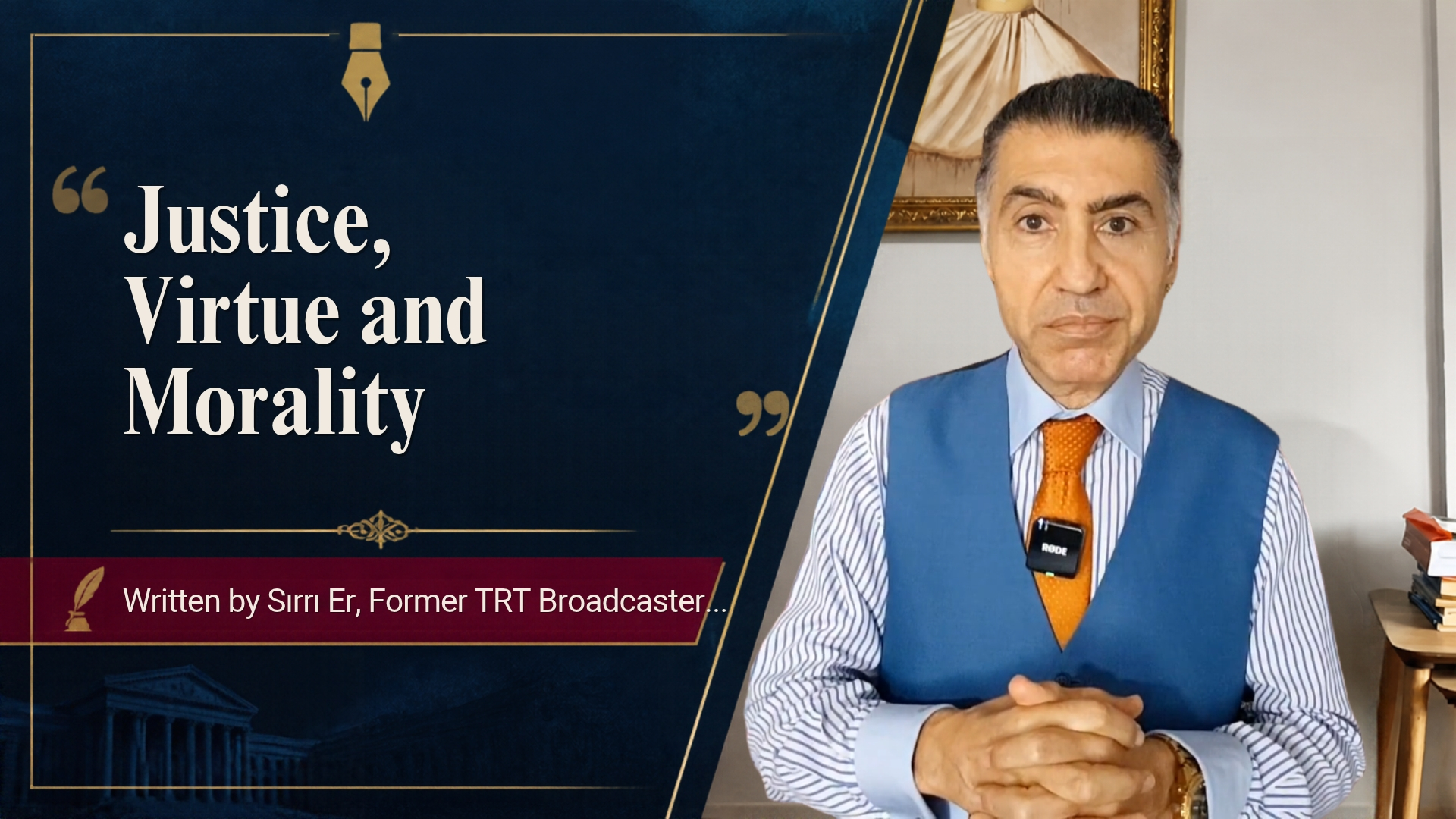
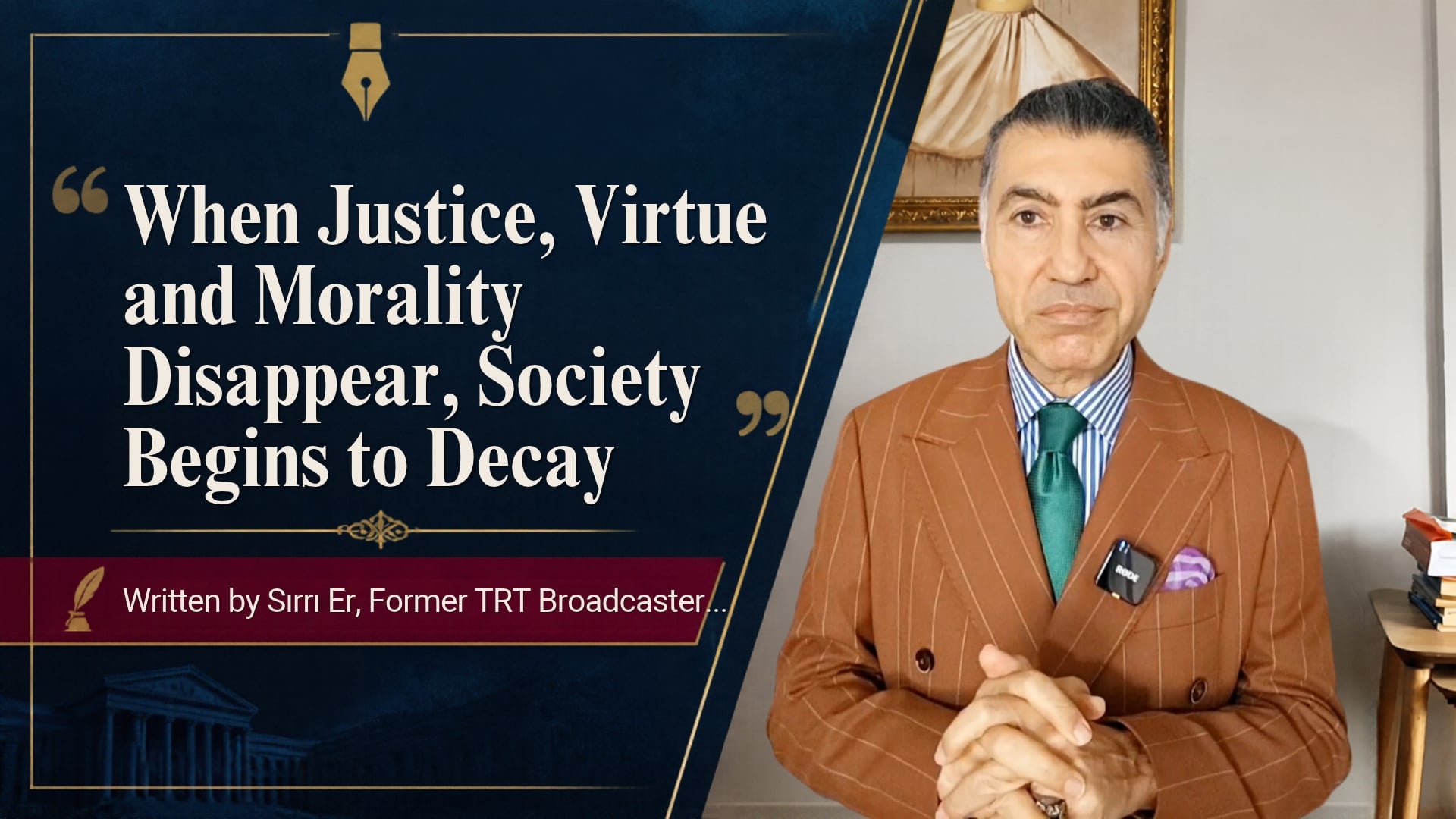
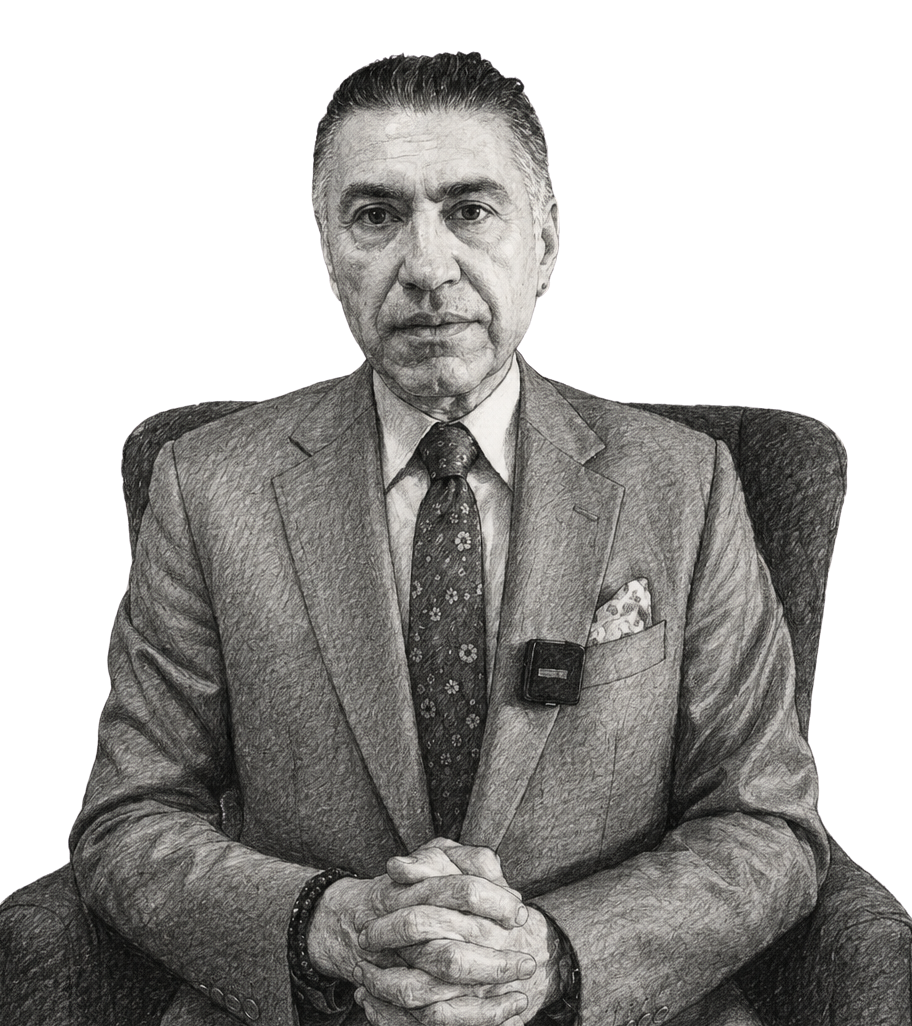
Written by Sırrı Er, Former TRT News Anchor
Three ancient voices echo in the most secluded corners of the human soul:
Justice, virtue and morality.
While almost everyone complains about the absence of these values, why do they fail to translate into practice in our shared lives and become an enduring framework that shapes society?
The roots of this profound contradiction lie in mechanisms shaped by philosophy, psychology, sociology and social structures. We can examine this situation under several fundamental headings:
People’s complaints about justice and morality often stem from expecting others to uphold these values rather than applying them to themselves.
Human psychology tends to explain its own mistakes through circumstances, saying, “I had no choice,” while attributing the mistakes of others to flaws in their character, describing them as “immoral” or “selfish.” This is moral laxity.
Mutual trust, or social capital, is essential for justice and morality to take root in a society.
If an individual believes that following the rules while others break them will make them a “fool,” while those who disregard the rules get ahead, systematic moral erosion begins.
Morality and virtue are internal, conscience-based compasses. However, for them to endure in society, they must be supported by oversight and a fair legal system.
If being virtuous and honest brings material or moral losses to individuals, while lawlessness, favoritism and injustice lead to power and wealth, the social structure begins to punish virtue and virtuous individuals.
One of the greatest obstacles to establishing timeless values is the replacement of universal moral principles with group morality.
If justice and morality are applied flexibly when it comes to “our own people,” but wielded harshly as a weapon against “those who are not one of us,” then no genuine system of values exists.
The fact that the vast majority of society complains about the absence of these values stems not so much from insincerity as from helplessness and a lack of a functioning system. People aspire to live in a just and virtuous world, yet they either refuse to bear the cost of acting justly as individuals or live in a system where that cost is unbearably high.
Yet these three concepts are like invisible pillars that make us human and hold society together.
Morality is that intimate and noble truth whispered by the soul to itself; a seed of intention that quietly takes root in an individual’s inner world and eventually bears fruit for society.
When this seed is nourished by virtue, a person does not merely avoid evil but transforms goodness into an art of living.
Virtue is morality brought to life, its most mature form, shaped by patience and grace.
Yet this maturity remains incomplete unless it is weighed on the unwavering scales of justice. Justice is the clear reflection of morality and virtue in the outside world; it is neither a desire for punishment nor merely a dry provision of law.
A virtue that fails to deliver what is rightfully owed to its owner and does not protect the vulnerable can be nothing more than a self-contained consolation.
True justice draws its strength from morality and its grace and compassion from virtue. These three sacred pillars of the human spirit never grow old.
Justice, virtue and morality!
The world becomes a better place not merely because we exist, but to the extent that we succeed in building an honorable life guided by the light of these three noble principles.
The diagnosis is clear, and the prescription is ready. What needs to be done is to begin treatment immediately by taking the prescribed medicine.
Otherwise, the vicious cycle will continue; the disease will engulf the entire body, the patient’s condition will progressively deteriorate, and eventually the patient will reach the stage of intubation.
Whether they will ever recover from that point is known only to God…
#November10