19 Kasım 2026
açık


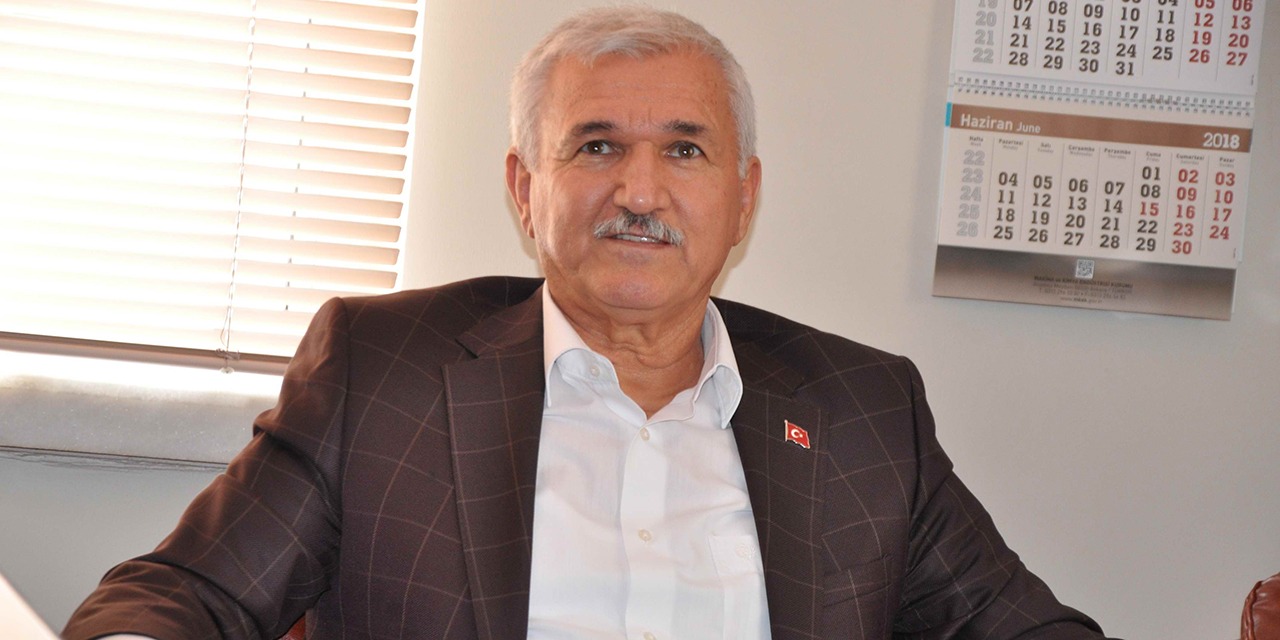
Former Kırıkkale MP for the 20th and 21st terms, Kemal Albayrak, wrote…
While listening to Cem Karaca’s song “Yağma Sofrası” (The Table of Plunder), I was reminded of the idea that “What is visible changes; what is invisible does not.”
Before this government came to power, there were many promises presented as a prescription for salvation. They said they would fight corruption, poverty and bans, as if saying, “We will save the lamb from the wolves.”
But they saved the lamb from the wolf, only for us to realize, once they gained power, that we were the ones who would be expected to eat the lamb.
They began securing the legitimacy of their position by establishing relationships with every group they had once considered an enemy, even with exploitative states. Stories such as “The fox has been appointed guardian of the henhouse” began to emerge.
Their deception of the public through religious and ideological disguises became even more serious.
On one side, religious communities were repeatedly advised that “Those who turn away from religion fall into evil and can never prosper.”
On the other side, under a secular understanding, people were told to fight ignorance by saying, “Read, write and earn a diploma.”
The paradigms of both sides collapsed.
It became clear that people lacking moral standards could conceal their immorality behind various disguises within a system whose enforcement mechanisms were themselves dishonest.
Not every act of immorality becomes moral simply because it is wrapped in religious belief; nor does every educated, responsible and diploma-holding person necessarily become moral because of those statuses.
The fundamental issue is whether a person’s beliefs are consistent with their moral values.
A prescription may be good, but if it is not implemented, it has no meaning.
If what happened in the alleged fund scandals turns out to be true, looking at the identities and statuses of those involved reminds me of an incident.
As the Cumhuriyet and Democracy Platform group, we visited the home of our esteemed professor, a respected thinker.
We discussed, in good faith, numerous issues, including the country’s problems, possible solutions, justice, governance, the alleged fund scandals and the necessity of governance based on rules.
Our host had prepared plates of food and placed them on the tables. Everyone could take what they wanted.
A small white dog named “Bulut” was also walking around the house, looking at the guests, but never touching any plate without permission.
If someone gave him food, he ate it. If no one did, he left it alone.
This caught my attention.
The training given to such a tiny creature and the restraint reflected in its behavior demonstrated an important principle.
It is thought-provoking that those who engage in plunder and take what belongs to others in our country appear to possess less dignity and sense of shame than this little dog Bulut, and even seem to have lost those qualities entirely.
We used to hear the prayer, “May God never bring shame upon you.”
Apparently, their prayers have been answered, because they feel no shame!
A wise saying by Saadi Shirazi came to my mind:
“If the ruler does not give way, the bandit cannot raid the caravan.”
One possible meaning of this saying is that in a country, evils such as lawlessness, corruption and injustice often grow as a result of the tolerance, weakness or shared interests of those in power and those responsible.
Looking at what is being discussed and the reports appearing in the domestic and international press, it is being laid bare who has been enriched by enormous unjust fortunes and who has been victimized.
Except for the privileged, it is as if everyone in this country has become subject to a KHK.
I hope all these matters are fully brought to light through justice and the rule of law.
If the “bargaining over corpses” seen in unsolved murders is applied here as well, these scandals could be postponed until next spring.
But we know that archives do not forget.
A secret known by two people is no longer a secret.
In a country where evil has become normalized, those responsible for the problems bear a significant share of responsibility.
On one side, hungry people are taking their own lives and young people are leaving the country; on the other, there is no one who has had enough and no one who seems to hear.
Is a protective approach justice?
When we hear all this, why can’t we escape an understanding of the country in which people’s enthusiasm and hopes are broken?
Why can’t we escape an understanding that has sent some of its intellectuals to prison, others to their graves and others into exile?
Those who are afraid of comedian Deniz Göktaş—why are they not afraid of justice?
Thinkers, dissidents, journalists and artists are society’s warning system.
The system or the individual?
The perpetrator or the act?
The rule or the boundary?
Restraint or insatiability?
Morality or immorality?
These are the questions that must be examined.
The Turkish Grand National Assembly is opening today.
With both the government and the opposition, let them question all of this.
01.10.2026
Kemal Albayrak