24 Eylül 2026
açık


A new ECFR study finds most Europeans still want a stronger, united Europe, but doubt it’s achievable: around 68% see decline, not renewal.
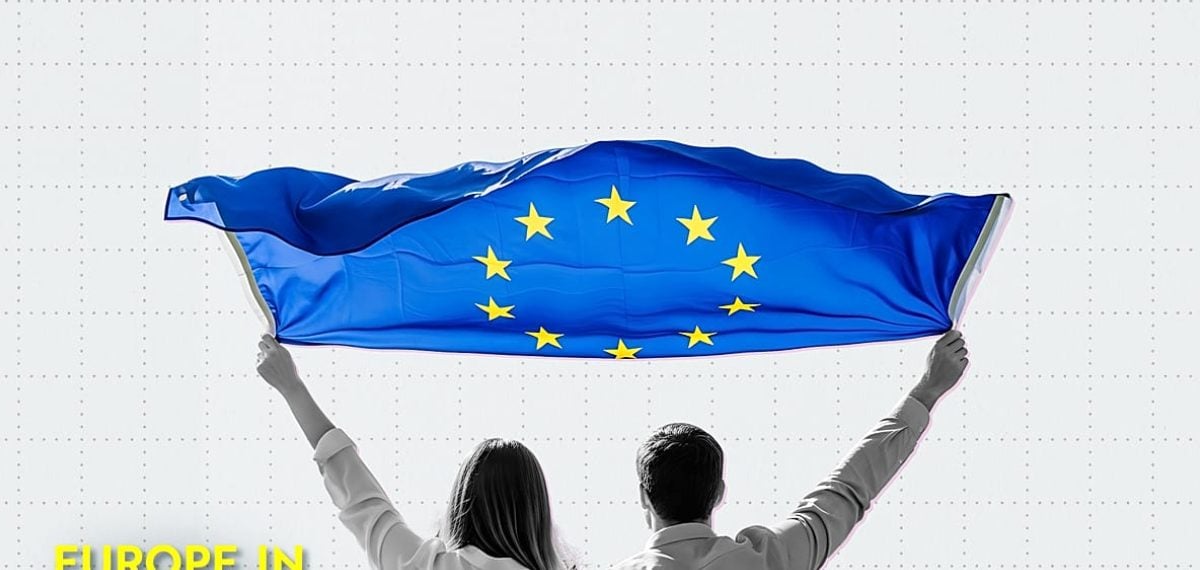
Europeans continue to express support for a stronger and more integrated continent, but a growing disconnect has emerged between what people want Europe to become and what they believe it can realistically achieve.
That is the central finding of a new report, Future Nostalgia: Europe’s Unfinished Song, produced by the European Council on Foreign Relations (ECFR) and the European Cultural Foundation (ECF).
Drawing on nearly 6,000 interviews conducted across six countries, the study describes an “imagination gap”: Europeans have not broadly rejected the European project, but many have become increasingly doubtful that the continent’s institutions can turn their aspirations into reality.
The findings come after European Commission President Ursula von der Leyen warned in her State of the Union address about a “battle of narratives” aimed at weakening public confidence in Europe.
The survey found that 68% of respondents viewed Europe’s current situation through the lens of deterioration or a loss of normality. Only 12% described the present period as one of renewal or awakening.
The perception was not uniform across the countries surveyed. More than 80% of respondents in France associated Europe’s current condition with decline, while the proportion was lower in the UK, although pessimism still represented the majority view.
Security concerns ranked as the most frequently cited challenge facing Europe. Overall, 43% of respondents identified war and security as the continent’s biggest problem. That figure reached 47% in both Poland and the UK, where the war in Ukraine and its wider consequences have had a particularly visible impact on public debate.
Economic difficulties ranked second, cited by 33% of respondents. The importance attached to the issue varied considerably. In Italy, 41% identified economic pressure as Europe’s leading challenge, compared with 23% in both Poland and the Netherlands.
Public assessments of Europe’s response were considerably more negative. Nearly three-quarters of those surveyed, 74%, said the bloc was dealing poorly with the challenges it faces.
More than half, 56%, also said they believed Europe’s future was genuinely at risk, while 21% disagreed.
Despite the widespread pessimism, the survey does not point to a broad rejection of European integration.
Some 73% of participants expressed what the researchers classified as a positive vision for Europe’s future. Only 14% held a negative vision, while another 13% were unable to articulate a clear position.
When asked what they wanted Europe to look like in 20 years, respondents most frequently mentioned greater political unity and integration. Peace and security followed, along with economic prosperity and a stronger sense of shared wellbeing.
The findings therefore reveal a significant contradiction. Many Europeans remain attached to the idea of a more united and capable Europe while simultaneously questioning whether that objective can actually be achieved.
For the researchers, this distinction is important. The problem is not necessarily declining support for the European project itself, but declining confidence in its capacity to deliver.
The survey points to several reasons for the loss of confidence.
Around 32% of respondents described Europe as too slow to respond to challenges. The figure exceeded 40% in Germany and the Netherlands, where complaints about institutional and administrative delays have featured prominently in political debate.
The issue of speed has also been highlighted by von der Leyen. In her address to the European Parliament, she argued that rapid decision-making had become increasingly important in the modern economy while advocating measures aimed at reducing administrative burdens.
Another 30% of respondents said Europe was inconsistent, particularly in terms of its ability to uphold the values it claims to defend.
A further finding illustrates the visibility problem facing European institutions: 44% of those surveyed were unable to identify even one recent example of European action that they considered successful.
According to the researchers, the lack of easily recognisable achievements makes it harder for citizens to connect their desired future for Europe with the institutions and policies operating today.
Pawel Zerka, an ECFR senior fellow and lead author of the study, argues that the findings should not automatically be interpreted as evidence of rising euroscepticism.
Instead, he says, many respondents continue to want a stronger Europe but have difficulty seeing how the continent can move from its current position towards that objective.
The report suggests that rebuilding confidence will require more than ambitious political messaging. European institutions, it argues, will need to demonstrate tangible results that citizens can see in their everyday lives.
That could mean showing more clearly how cooperation at the European level contributes to security, economic stability, public services and other areas of direct concern to citizens.
Von der Leyen has urged Europeans to resist efforts aimed at dividing the continent and weakening confidence in the European project.
The survey points to a related challenge: public confidence may depend not only on how convincingly Europe’s leaders describe the future, but also on whether citizens can see concrete evidence that European institutions are capable of delivering it.