13 Eylül 2026
kapalı


Cash resurges across Russia as mobile internet blackouts drive tax evasion and reshape informal commerce, posing risks for authorities and businesses.

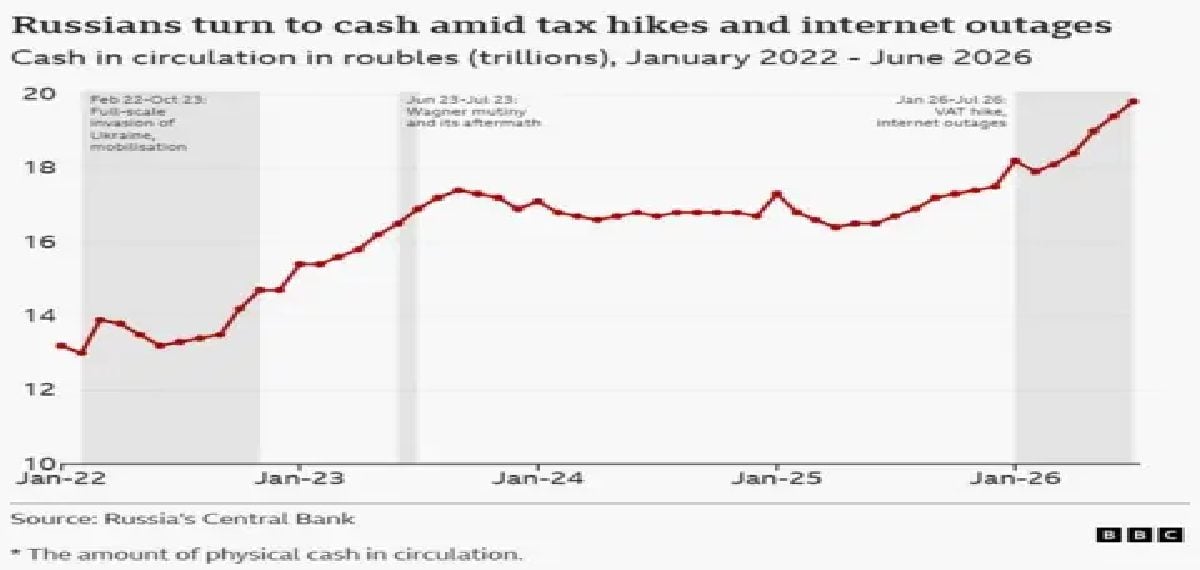
Russians have withdrawn large amounts of cash this year, driven by mobile internet shutdowns that repeatedly block card payments, the Central Bank and businesses say, leaving the state with reduced tax receipts and a widening budget gap.
Central Bank figures analysed by the BBC show 1.56tn roubles have been added to cash in circulation since the start of the year, the biggest rise for the period outside the Covid-19 pandemic. Officials cite mobile network shutdowns implemented to counter Ukrainian drone attacks as a key reason many consumers prefer cash.
People and small traders describe holding cash as a practical safeguard when card terminals and mobile payments become unavailable. Withdrawals surged after measures such as a partial mobilisation in September 2022 and during the June 2023 Wagner mutiny; in May alone Russians withdrew 550bn roubles from bank accounts, including 200bn from fixed-term deposits.
The VAT rise to 22% in January and a lower VAT threshold for small and medium-sized firms have squeezed margins, prompting some businesses to steer customers toward cash to avoid registering sales. A survey by the SME association Opora Russia found about 6% of entrepreneurs adopted “grey schemes” like avoiding receipts to cope with higher tax burdens.
Sberbank CFO Taras Skvortsov warned that cash is not returning to the banking system through ATMs or cash collection, and is instead remaining in people’s hands. Market vendors and shop owners interviewed said cash payments and envelope wages are increasingly common to understate turnover and evade payroll levies.
The Central Bank data, BBC analysis and statements from Sberbank and Opora Russia consistently indicate a rise in physical cash holdings. Mobile internet shutdowns tied to security measures and the VAT increase are both cited in the source material as drivers of this shift. Survey figures and withdrawal totals illustrate the scale of cash movement without introducing external interpretation.
The reported economic backdrop notes slower GDP forecasts and reliance on oil and gas revenue, with the VAT hike implemented to boost state income; these facts are preserved from the source text without extrapolation.