
03 Ekim 2026
hafif yağmur


A west coast pipeline project is the first to be fast-tracked and will be a major test of Carney’s promise to global investors.
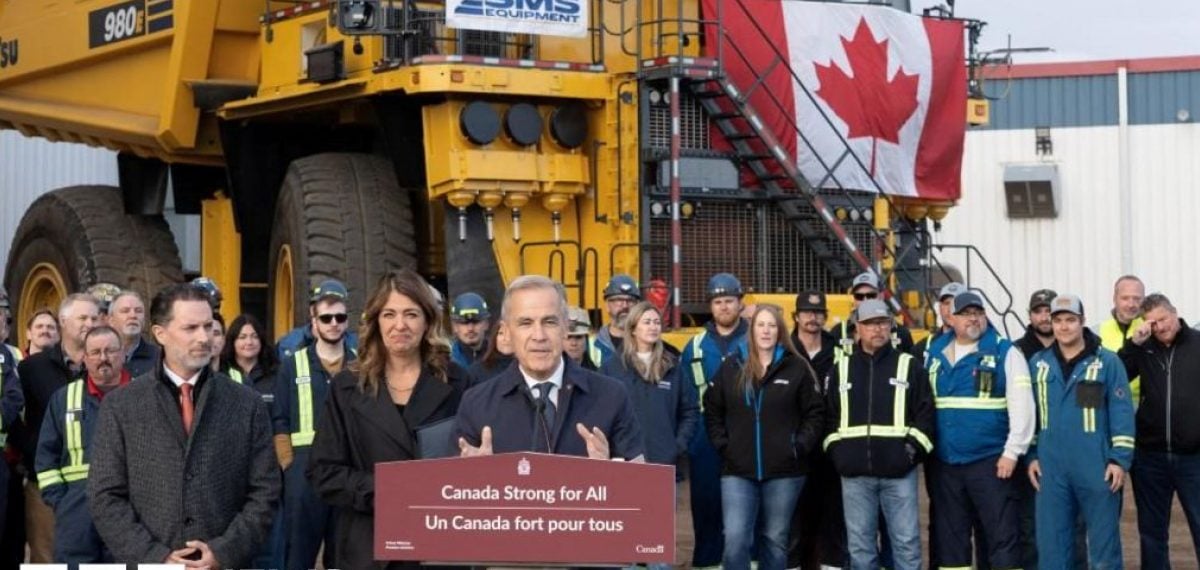
Canadian Prime Minister Mark Carney has announced that Ottawa will fast-track federal approvals for a proposed 1,250km (775-mile) oil pipeline linking Alberta’s oil-producing region with Canada’s Pacific coast.
Carney said the Pacific Link project is a matter of national interest because it would allow Canada to reduce its dependence on the US and expand its access to international energy markets.
“A pipeline to the west coast is part of our mission to transform our economy, to double our non-US exports over the next decade,” Carney said on Thursday.
The project will also test Carney’s pledge to international investors that Canada can accelerate the development of major infrastructure projects as he seeks to position the country as a global energy “superpower”.
According to the prime minister, Pacific Link could increase Canada’s GDP by as much as C$30 billion ($21 billion; £16 billion) a year and create approximately 140,000 jobs.
Carney has argued that Canada’s heavy reliance on the US has become an economic vulnerability following protectionist tariffs introduced by US President Donald Trump.
Canada sent around 90% of its crude oil exports to the US last year.
The Pacific Link pipeline would have the capacity to transport approximately one million barrels of crude oil per day from Bruderheim, Alberta, to a deep-water port near Delta, British Columbia.
The project would also include marine berths capable of handling tankers carrying up to two million barrels of oil.
From the Pacific coast, crude would be shipped to international markets, including countries across the Asia-Pacific region.
Ottawa estimates that the project could reduce Canada’s overall dependence on the US to between 65% and 70%, while opening greater access to markets including South Korea, China and Japan.
Pacific Link will be the first major project to receive fast-tracked federal approvals and regulatory reviews under legislation introduced by the Liberal government last year.
The new process is designed to provide investors with a final decision on a proposed project within one year.
Opposition to pipeline projects, combined with Canada’s lengthy and complex regulatory review process, has contributed to the cancellation of previous projects.
“People are watching very closely how Canada is handling this process,” a government official said during a media briefing on Thursday.
The official said that if the process proceeds as planned, the government expects additional private investors to express interest.
The project is currently estimated to cost between C$35.2 billion and C$43.7 billion.
The proposed pipeline is also intended to address longstanding concerns in Alberta, where the provincial government has argued that the region has been constrained in developing its natural resources because of limited access to export markets.
Albertans are due to vote later this month in a referendum on independence.
Asked whether he had a message for Alberta, Carney, speaking from Fort McMurray, described Pacific Link as “a demonstration of the power of Canada”.
The project is expected to face opposition from environmental groups, particularly over potential impacts on marine ecosystems and increased tanker traffic along the coast.
Some Indigenous communities along the proposed route are also expected to raise concerns.
Carney said discussions with many Indigenous communities had already taken place, while “intensive” consultations would continue.
If the project receives final approval, construction is scheduled to begin by 2032.
The Canadian and Alberta governments currently support Pacific Link, alongside private investor Pembina Pipeline Corporation.
Pembina has a non-binding agreement for a 10% stake during construction, with an option to acquire another 10% once the pipeline becomes operational.
At least 10% ownership will also be made available for purchase by Indigenous groups.
As part of the agreement, Alberta has committed to developing what it describes as the world’s largest carbon capture programme in an effort to reduce its overall emissions.
Ottawa has also pledged additional measures to strengthen ocean protection funding and establish rules aimed at protecting marine life that could be affected by increased tanker traffic.
Among the species identified as a concern are the endangered Southern Resident killer whales.